Snathakam: The Telugu Groom’s Ritual Before Kasi Yatra, Meaning and Steps
- What snathakam is
- Where the name comes from
- What happens during snathakam
- The sacred thread and the householder
- Kasi Yatra: what follows snathakam
- Timing on the wedding morning
- Where snathakam is performed
- What the groom wears
- What the priest and the family need
- Photography
- The same rite across South India
- Food and fasting on the morning
- When the groom flies in for the wedding
- Questions to ask the priest
- In a mixed or modern wedding
- Frequently Asked Questions
- Sources and further reading
Snathakam is the Telugu groom’s ritual on the wedding morning. It marks the end of his life as a student and his readiness to marry. It descends from the Vedic samavartana, the ritual bath of a student returning home. A priest performs a short puja, and in many families the groom receives the extra strands of the sacred thread worn by a householder. The playful Kasi Yatra follows straight after.
Planning a Telugu wedding? Free download: the ritual-by-ritual planning timeline
Every ritual of a Telugu wedding in order, with when it happens, what the family arranges and when to book it, on one printable page. Share a few details about your wedding in the form at the end of this page and the download link appears as soon as you send it.
What snathakam is
Snathakam is a short but important ritual performed for the groom on the morning of a Telugu wedding, before the ceremony. A priest leads the groom through prayers and offerings that mark his transition from brahmacharya, the stage of the celibate student, to grihastha, the stage of the householder. Only after snathakam is he considered ready to marry.
The ritual is most elaborate in Telugu Brahmin families, but many other Telugu communities perform some form of it, and its counterpart is found in Tamil, Kannada and other South Indian weddings under different names. Our Telugu wedding rituals guide places it in the full sequence of the wedding.
Where the name comes from
Snathakam comes from the Sanskrit snataka, “one who has bathed”. In the Vedic system, a young man lived with his teacher and studied the Vedas for years. When his studies were complete, he performed a ceremonial bath, the samavartana, which marked the end of his studentship and his return home. He was then a snataka, a graduate, eligible to marry and set up a household.
The domestic ritual manuals of the Vedic period, the Grihya Sutras, describe the samavartana in detail, with the bath, the new clothes, the ornaments and the gifts to the teacher. Today, almost no groom has spent years with a Vedic teacher, but the ritual survives in compressed form on the wedding morning. Snathakam is that survival.
What happens during snathakam
The details vary by family and by the priest’s tradition, but the general sequence is consistent.
| Step | What happens |
|---|---|
| Mangala snanam | The groom is anointed with turmeric and oil and bathed, usually earlier that morning. Our mangala snanam guide covers this. |
| Sankalpam | The priest states the purpose of the ritual, with the date, place and the groom’s lineage. |
| Prayers to the deities | Usually beginning with Ganesha, and offerings into a small sacred fire in many families. |
| The sacred thread | In many families the groom is given the additional strands of the yajnopavitam worn by a married man. |
| New clothes and ornaments | The groom changes into new clothes, usually a dhoti, and is given ornaments, echoing the samavartana. |
| Blessings | The elders bless him, and he is now ready for Kasi Yatra. |
The whole ritual usually takes 45 minutes to an hour. It is a ritual for the groom’s family, often attended only by close relatives, and it happens while the bride’s side is busy with its own preparations.
The sacred thread and the householder
A young man who has had his upanayanam, the thread ceremony, wears the yajnopavitam, the sacred thread of three strands, across his chest. In many South Indian Brahmin traditions, a married man wears a second set, and snathakam is where the groom receives it. It is one of the clearest signs of the transition the ritual marks.
If the groom has not had an upanayanam, many families perform a short form of it before snathakam, often on the same morning or the day before. Ask the priest early whether this is needed, because it changes the timing of the morning.
Kasi Yatra: what follows snathakam
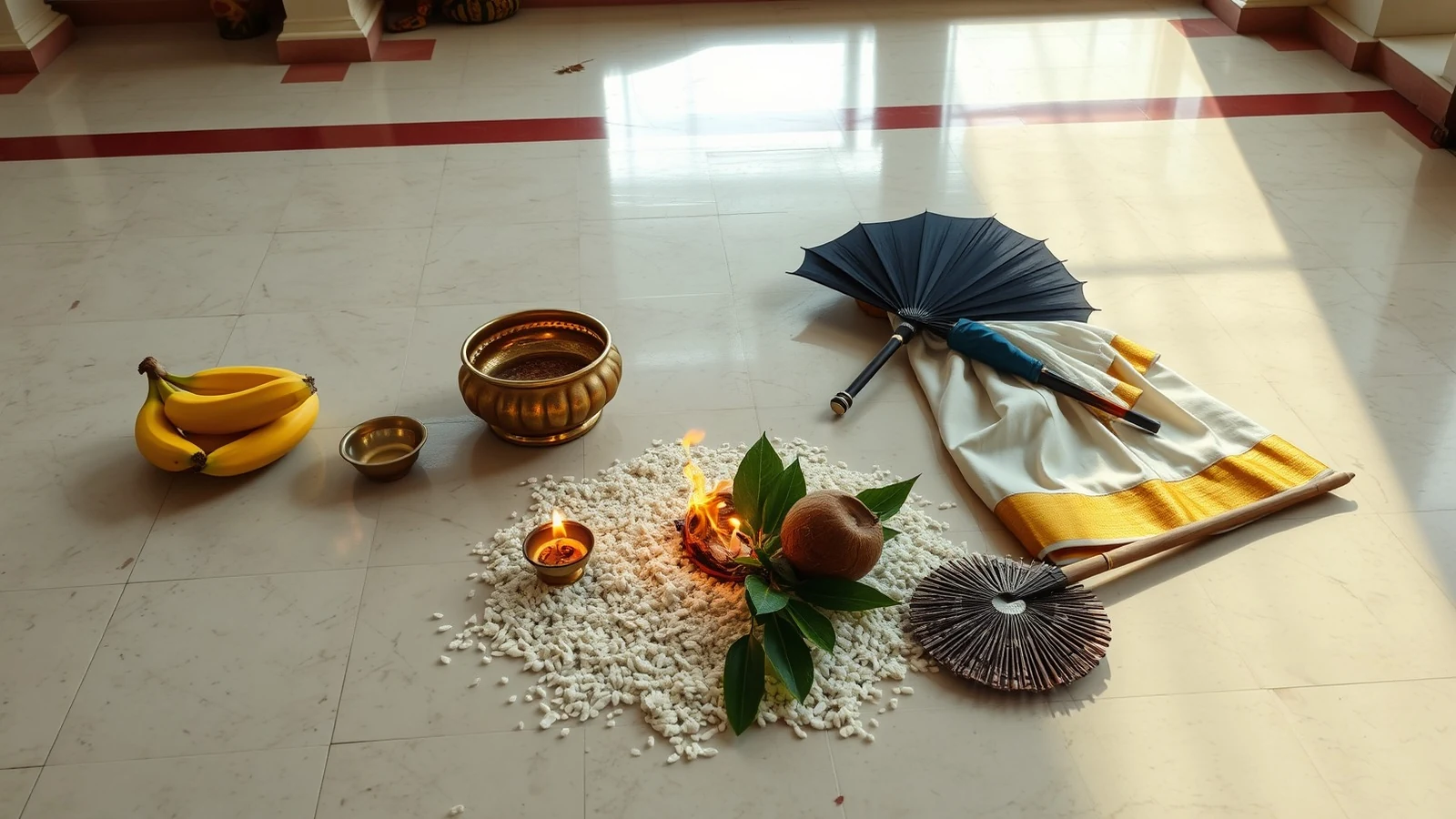
Snathakam leads straight into Kasi Yatra, one of the most playful moments of a Telugu wedding. Having completed his studies, the groom announces that he will renounce worldly life and go to Kashi, the holy city, to devote himself to learning and prayer. He sets off with a walking stick, an umbrella, a fan, slippers and a small bundle of food.
The bride’s brother stops him, and persuades him to give up the idea and marry his sister instead. The groom agrees, the brother is thanked with a gift, and the procession turns towards the mandap. It is light-hearted and everyone joins in, but it rests on the same idea as snathakam: the groom chooses the life of a householder over the life of the ascetic, and the bride’s family welcomes him.
Timing on the wedding morning
Telugu weddings are fixed at the muhurtham, the auspicious time set by the priest, which is often early in the morning or late at night. Snathakam and Kasi Yatra have to be completed before the bride is brought to the mandap, so the timing works backwards from the muhurtham. Our muhurtham guide explains how the time is chosen.
| Example (muhurtham 10.30 am) | What happens |
|---|---|
| 6.00 am | Mangala snanam for the groom |
| 7.30 am | Snathakam begins |
| 8.30 am | Kasi Yatra; the bride’s brother stops the groom |
| 9.00 am | The groom is received at the mandap; the bride’s side prepares |
| 10.30 am | Muhurtham: jeelakarra bellam |
If the muhurtham is very early, before dawn, snathakam may be done the night before, or extremely early. Agree this with the priest, because it decides when the groom’s family needs to be awake and dressed.
Where snathakam is performed
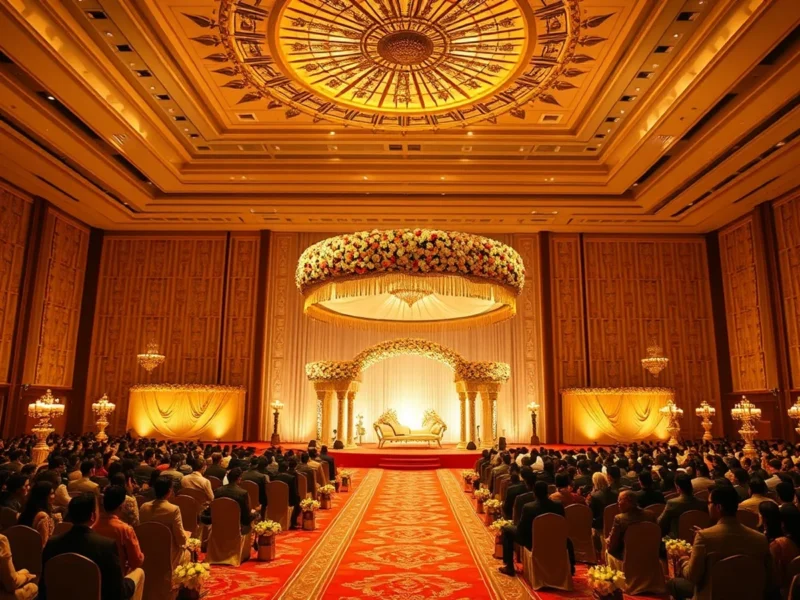
Traditionally, snathakam was performed at the groom’s home. Now it is usually performed at the wedding venue, in a separate room or a corner of the kalyana mandapam, while the main mandap is being prepared. At a hotel, ask for a small room or a covered terrace for the ritual, and check whether the small fire for the homam is allowed there. Many hotels restrict open flames indoors.
Kasi Yatra then needs a short route: from the snathakam room to the venue’s entrance or garden, where the bride’s brother intercepts him, and then to the mandap. Plan the route with the venue, and let the nadaswaram players or the band know when to start.
What the groom wears
For snathakam, the groom wears a new dhoti, usually of silk or fine cotton, often with an angavastram over the shoulders. Some families have him wear a simple dhoti for the ritual and change into his wedding dhoti and kurta for Kasi Yatra. For Kasi Yatra he carries the umbrella and stick, and many families add a turban or a decorated cap.
The bride’s family traditionally gives the umbrella and the other Kasi Yatra items, and the gift that the groom receives when he agrees to marry. Make sure they are packed and at the venue before snathakam begins.
What the priest and the family need
The priest will give the family a list of the items needed for snathakam: turmeric, kumkum, rice, flowers, betel leaves and nuts, coconuts, fruits, a new sacred thread, new clothes for the groom, ghee and samidha for the fire, and dakshina for the priest. The bride’s side has a separate list for its own rituals.
A planner’s job is to make sure the groom’s list is assembled the day before, packed into one box, and handed to one person who is responsible for it on the morning. Lost betel leaves at 7 am are surprisingly hard to replace.
Photography
Snathakam is quiet and close, and it often happens while the main photographers are with the bride. Assign one photographer to the groom’s side for the morning. The key images are the sacred thread being put on, the groom with his parents receiving the blessing, and the start of Kasi Yatra with the umbrella. Kasi Yatra itself needs video, because the persuasion and the laughter are the point.
The same rite across South India
Snathakam is the Telugu name, but the same transition is marked across South Indian Hindu weddings, especially in Brahmin families. In Tamil weddings the groom’s rite on the wedding morning is usually followed by the kasi yatrai, and in Kannada weddings by the kashi yatre, with the same umbrella, the same walking stick and the same persuasion by the bride’s brother. The names, the length of the ritual and the details of the sacred thread differ by community and by the priest’s tradition, but the meaning is shared: the groom completes his studentship and chooses married life. Our South Indian wedding traditions guide compares the wider sequences.
Food and fasting on the morning
In many families the groom fasts until snathakam is complete, and in some until after the muhurtham. The rest of the groom’s family usually eats a light tiffin after the ritual, before Kasi Yatra, and the main wedding meal is served after the ceremony on banana leaves. If the muhurtham is late in the morning, make sure that the groom’s elderly relatives have something to eat early, because they will have been awake since dawn.
Ask the family which rule applies to the groom, and plan a quiet room where he can drink water and rest between the ritual and the mandap. It is a long morning in heavy clothes.
When the groom flies in for the wedding
For NRI grooms, the wedding week is often short, and snathakam can be the first ritual he takes part in after landing. If he has not had an upanayanam, or has not worn the sacred thread for years, the priest may want a preparatory ritual before snathakam. Speak to the priest by phone weeks before the wedding to settle what is needed, so that the groom is not learning the ritual at 7 am on the wedding day. Our NRI wedding planning timeline covers the rest of the schedule.
Questions to ask the priest
- Does the groom need an upanayanam first, and when?
- How long will snathakam take, and when must it start given the muhurtham?
- Is a small homam needed, and what does it require?
- Which items does the groom’s family provide, and which does the bride’s?
- Will the same priest perform the wedding, or a different one?
In a mixed or modern wedding
When a Telugu groom marries outside the community, many families keep snathakam because it is the groom’s family’s ritual and it happens before the shared ceremony. It can be explained to the other family as the groom’s graduation into married life, which is easy to understand. Kasi Yatra is often the moment the other family enjoys most, so explain it to the bride’s brother in advance: he has a role to play.
When a Telugu bride marries a groom from another community, the groom’s family may not have this ritual at all. Some families skip it, and some ask the priest to perform a short version for the groom.
Frequently Asked Questions
What is snathakam?
Snathakam is the Telugu groom’s ritual on the wedding morning, marking the end of his student life and his readiness to marry. It is performed by a priest before Kasi Yatra.
What does snathakam mean?
It comes from the Sanskrit snataka, “one who has bathed”, the name for a student who had completed his Vedic studies with a ceremonial bath, the samavartana.
When is snathakam performed?
On the morning of the wedding, before Kasi Yatra and the muhurtham. If the muhurtham is very early, it may be performed the night before.
Is snathakam the same as Kasi Yatra?
No. Snathakam is the ritual that marks the groom’s transition; Kasi Yatra is the playful procession that follows it, where the groom pretends to leave for Kashi.
Do non-Brahmin Telugu families perform snathakam?
Many do, often in a shorter form. It is most elaborate in Brahmin families. Ask the family priest what is customary.
How long does snathakam take?
Usually 45 minutes to an hour, including the prayers, the sacred thread and the blessings.
Who performs snathakam, the groom’s priest or the bride’s?
Usually the groom’s family priest, because it is the groom’s family’s ritual. When one priest conducts the whole wedding, he performs it for the groom before turning to the bride’s side, so confirm the timing with him.
Sources and further reading
- The Grihya Sutras, Part 1 (Sacred Books of the East, vol. 29)
- The Grihya Sutras, Part 2 (Sacred Books of the East, vol. 30)
- Britannica: Hinduism
Planning a Telugu wedding in Hyderabad or at a destination? Tell us your dates and guest count and we will send a tailored plan and quote.
Begin Your Engagement
Want a real number for your wedding?
Tell us your city, guest count and dates. Team Velvet Knot will come back within 24 hours with an itemised budget.