Mameru Ceremony in a Gujarati Wedding: Meaning, the Panetar and What the Mama Brings
- What mameru is
- When mameru happens
- What the mama brings
- The panetar and the gharchola
- The mama’s role on the wedding day
- Displaying the gifts
- The songs and the welcome
- Photography and the mameru
- Food at the mameru
- A sample day with mameru and pithi
- Mameru at a destination wedding
- How the mama’s family budgets for it
- Mameru for the groom
- Mameru in a mixed wedding
- What to settle beforehand
- Frequently Asked Questions
- Sources and further reading
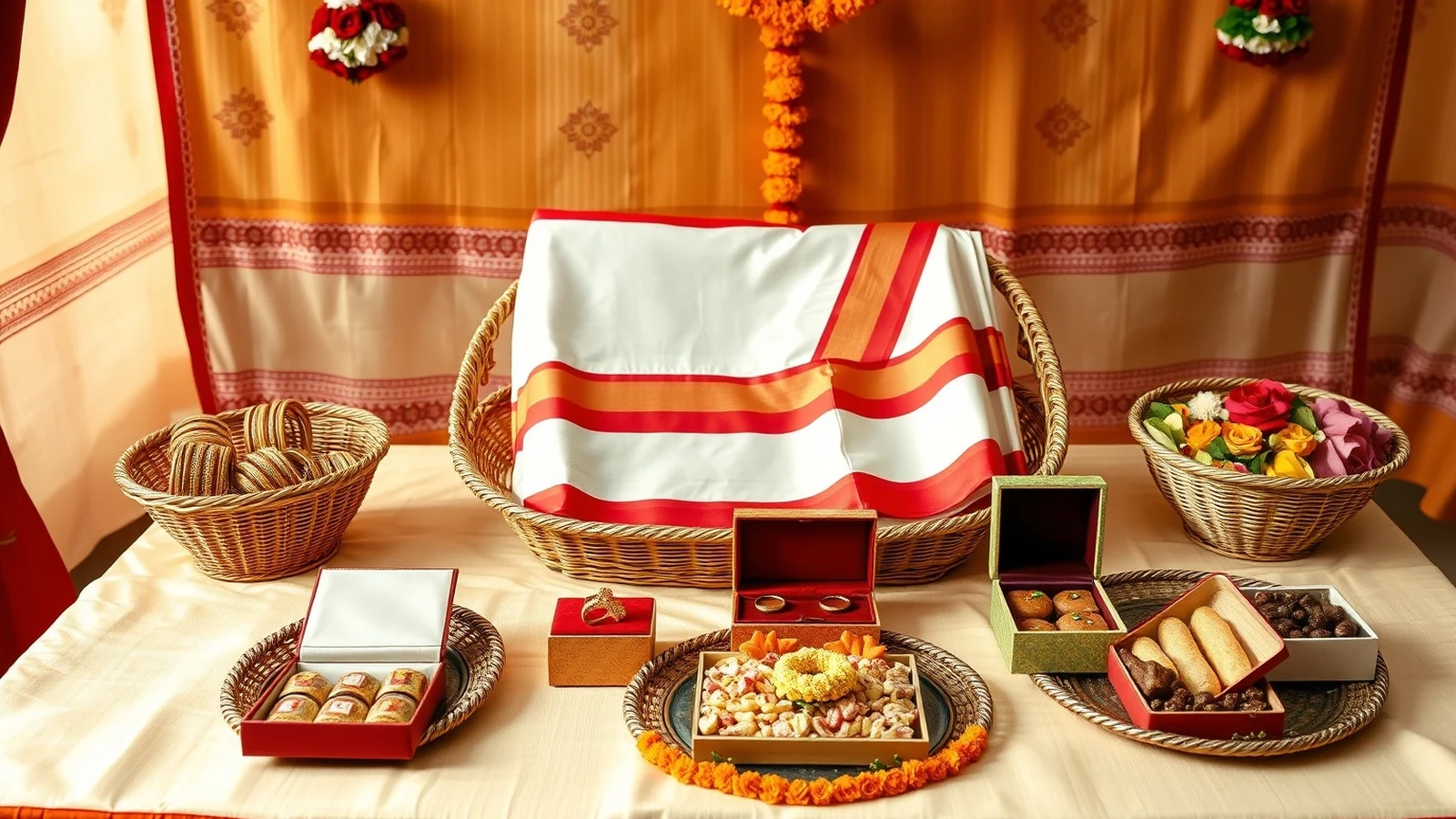
Mameru is the Gujarati ceremony in which the bride’s maternal uncle, her mama, and his family bring her gifts a day or two before the wedding. The gifts usually include the panetar, a white silk saree with a red border, along with the chudo bangles, jewellery, sweets, dry fruit and clothes for the family. The bride wears the panetar for the wedding ceremony, and the mama escorts her to the mandap.
Planning a Gujarati wedding? Free download: the ritual-by-ritual planning timeline
Every ritual of a Gujarati wedding in order, with when it happens, what the family arranges and when to book it, on one printable page. Share a few details about your wedding in the form at the end of this page and the download link appears as soon as you send it.
What mameru is
Mameru comes from mama, the mother’s brother. In Gujarati tradition, as in many Indian communities, the maternal uncle has a special place in his niece’s wedding. Mameru is his family’s gift-giving ceremony, when the mama, the mami and their family arrive at the bride’s house with decorated baskets of gifts for the bride and her family.
The gifts are displayed, blessed and admired, and the mameru becomes a small celebration in itself, with songs, sweets and the women of the family examining everything the mama has brought. In some Gujarati communities and regions, the maternal family’s gifts are also called mosalu, and the terms overlap; families use whichever word they grew up with.
Our Gujarati wedding traditions guide places mameru in the full sequence of the wedding.
When mameru happens
Mameru is usually held a day or two before the wedding, often on the same day as other pre-wedding rituals such as the mandap mahurat, when the wedding canopy is ritually begun, the griha shanti puja, or the pithi, the Gujarati turmeric ceremony. In a compressed destination wedding, it is often held on the morning of the first day, as the families arrive.
| Typical day | Ritual | Who leads |
|---|---|---|
| Two days before | Mandap mahurat and griha shanti | Both families, with the priest |
| Two days or one day before | Mameru | The mama and his family |
| One day before | Pithi, the turmeric ceremony | The women of the family |
| Evening before | Garba or sangeet | Both families |
| Wedding day | The ceremony; the mama brings the bride to the mandap | The priest and both families |
The order varies by family and region, and so does whether mameru is a separate event or folded into another. Ask the families which they expect.
What the mama brings
The contents of the mameru vary with the family’s means and customs, but the core gifts are consistent.
- The panetar. A white or off-white silk saree with a red border, often with gold work, which the bride traditionally wears for the wedding ceremony. It is the most important gift in the mameru.
- The chudo. Bangles for the bride, traditionally of ivory and now usually of white or red material with gold. Many families give them with the mameru.
- Jewellery. Often a nose ring, earrings or a necklace for the bride.
- Clothes for the family. Sarees for the bride’s mother and other women of the house, and sometimes clothes for the bride’s father and brothers.
- Sweets and dry fruit. In decorated boxes or baskets.
- Household items. In some families, utensils or items for the bride’s new home.
The gifts are carried in decorated baskets or trays, often by the women of the mama’s family, and they are set out on display for everyone to see. The display is part of the ceremony: the bride’s family and guests admire the gifts, and the mama’s generosity is recognised.
The panetar and the gharchola
A Gujarati bride often wears two significant sarees on the wedding day. The panetar comes from her maternal uncle, through the mameru, and she wears it for the ceremony. The gharchola, a red and green or red and white bandhani saree with a grid of gold or zari, comes from the groom’s family. In many families, the gharchola is draped over the bride’s head or shoulders during the ceremony, symbolising her entry into her husband’s family.
The two sarees together tell the story of the wedding: the bride arrives wrapped in her mother’s family’s gift, and leaves wrapped in her husband’s family’s. If the bride wants to wear a different outfit for the ceremony, such as a lehenga, many families still have her wear the panetar or drape it for part of the ceremony. Talk this through with the mama early, because he will be buying the panetar months ahead.
The mama’s role on the wedding day
The mama’s role does not end with the mameru. On the wedding day, he traditionally brings the bride to the mandap, escorting her from her room, sometimes carrying her in younger families’ customs, while the guests watch. It is one of the most emotional moments of the ceremony for the maternal family, and it should be planned like the bride’s entrance at any wedding: a route, music, a photographer in position and a clear aisle.
Where the mama has passed away or cannot attend, another member of the maternal family, a cousin or the mami’s son, usually takes his place for the mameru and the escort. The maternal family’s role is what matters, not the particular person.
Displaying the gifts
The mameru display is usually set up in the bride’s home or in a room at the venue, on tables covered with fabric, with the baskets arranged and the sarees fanned out. Many families now hire a decorator to make the baskets and the display, and some hire a specialist mameru packing service to wrap the gifts in elaborate trays. The display stays up for the day so that guests can see it.
At a hotel, ask for a secure room for the display, because the mameru often includes jewellery and expensive silk. Someone from the family should be with the display while it is open, and the jewellery should be locked away when it closes.
The songs and the welcome
The arrival of the mameru is a small procession: the mama’s family arrives with the baskets, the bride’s family receives them at the door with a welcome, often an aarti and a tilak, and the women of both families sing traditional wedding songs. In many families, the women sing teasing songs, fatana, at the maternal relatives, and the mama’s family sings back. It is affectionate and noisy, and it is one of the places where Gujarati wedding songs survive in their older form.
Photography and the mameru
The mameru gives the photographer the arrival procession, the display of gifts, the moment the bride receives the panetar, and the mama and mami with the bride. The display itself is worth photographing before guests arrive, while the room is quiet. On the wedding day, the mama bringing the bride to the mandap is the key image of the maternal family.
Food at the mameru
Mameru is usually a daytime event with a vegetarian lunch or snacks for the mama’s family and the bride’s close family. For Jain families, the menu follows Jain rules, without root vegetables. Many families combine the mameru lunch with the lunch for the other pre-wedding rituals of the day. Gujarati wedding food is usually vegetarian throughout, and the caterer will be the same as for the rest of the wedding.
A sample day with mameru and pithi
| Time | What happens |
|---|---|
| 9.00 am | Griha shanti puja with the priest |
| 11.00 am | The mama’s family arrives; welcome, aarti and songs |
| 11.30 am | Mameru gifts displayed and given; the bride receives the panetar |
| 1.00 pm | Lunch for both families |
| 4.00 pm | Pithi, the turmeric ceremony |
| 8.00 pm | Garba or sangeet |
A day like this is long for the bride, so give her a rest between the mameru lunch and the pithi, and keep the pithi short if the garba is the same night. The pithi stains as badly as any haldi, so hold it on a lawn or terrace, and see our haldi ceremony guide for how venues handle it.
Mameru at a destination wedding
At a destination wedding, the mameru has to travel. The mama’s family usually packs the gifts at home, carries the jewellery in hand luggage, and has the decorated baskets made at the destination or shipped ahead. If the baskets are made by a decorator at the destination, send photographs and measurements of the sarees and boxes in advance so the trays fit. The panetar should travel folded in tissue in a suitcase that stays with the mama, not in the hold.
The display then needs a room at the resort, booked as part of the event plan. Many resorts can provide a small function room or a corner of the lobby lounge for the day.
How the mama’s family budgets for it
The mameru is paid for by the maternal family, not the bride’s parents, and its size is entirely their decision. In some families it is modest, a saree, bangles and sweets. In others it is a large display that includes significant jewellery. There is no right size. What helps is for the bride’s mother to tell her brother’s family, quietly and early, what the bride would like to wear and what she already has, so that the panetar and the jewellery are things she will actually use. For the wider wedding budget, see the Vadodara wedding cost guide, which covers a typical Gujarati wedding in detail.
Mameru for the groom
In some Gujarati families, the groom’s maternal uncle also brings gifts for the groom before the wedding, in the same spirit. It is usually smaller than the bride’s mameru and is held at the groom’s home. Ask the groom’s family whether they expect it.
Mameru in a mixed wedding
When a Gujarati bride marries outside the community, mameru is usually kept, because it is her family’s ritual and happens before the shared events. The groom’s family can be invited to see the display, which they usually enjoy. When a Gujarati groom marries a bride from another community, the bride’s family may have its own maternal gift ritual, such as the Punjabi chooda ceremony, in which the maternal uncle gives the bangles. The two traditions are close cousins, and families often find it easy to recognise each other’s customs.
What to settle beforehand
- The day and time of the mameru, and whether it is combined with other rituals.
- Whether the bride will wear the panetar for the ceremony, or drape it over another outfit.
- Who will escort the bride to the mandap.
- Where the gifts will be displayed, and who will guard them.
- Whether the groom’s family expects a mameru for the groom.
For the city side of a Gujarati wedding, our Ahmedabad wedding planning page and Ahmedabad wedding cost guide cover venues and budgets.
Frequently Asked Questions
What is the mameru ceremony?
Mameru is the Gujarati pre-wedding ceremony in which the bride’s maternal uncle and his family bring her gifts, including the panetar saree, bangles, jewellery, sweets and clothes for the family.
What is given in mameru?
Usually the panetar, the chudo bangles, jewellery, sarees for the women of the family, sweets, dry fruit and sometimes household items.
What is a panetar?
A panetar is a white or off-white silk saree with a red border, gifted by the bride’s maternal uncle and traditionally worn by the Gujarati bride for the wedding ceremony.
When is mameru held?
Usually a day or two before the wedding, often on the same day as the mandap mahurat, griha shanti or pithi.
Who brings the bride to the mandap in a Gujarati wedding?
Traditionally the mama, the bride’s maternal uncle.
What is the difference between mameru and mosalu?
Both refer to the maternal family’s gifts and role in the wedding. The terms overlap, and different Gujarati communities use one or the other.
Who pays for the mameru?
The maternal uncle’s family. Its size is their decision, and the bride’s mother usually tells them quietly what the bride would like to wear, so that the gifts are things she will use.
Sources and further reading
Planning a Gujarati wedding with a mameru, a garba night and family flying in? Tell us your dates and guest count and we will send a tailored plan and quote.
Begin Your Engagement
Want a real number for your wedding?
Tell us your city, guest count and dates. Team Velvet Knot will come back within 24 hours with an itemised budget.