Pehli Rasoi: The Bride’s First Kitchen Ritual, What to Cook and How to Handle It
- What pehli rasoi means
- When it happens
- What the bride traditionally cooks
- The ritual, step by step
- Gifts at pehli rasoi
- Regional versions
- Handling it as a modern bride
- For the mother-in-law: making it a welcome
- When the two families eat differently
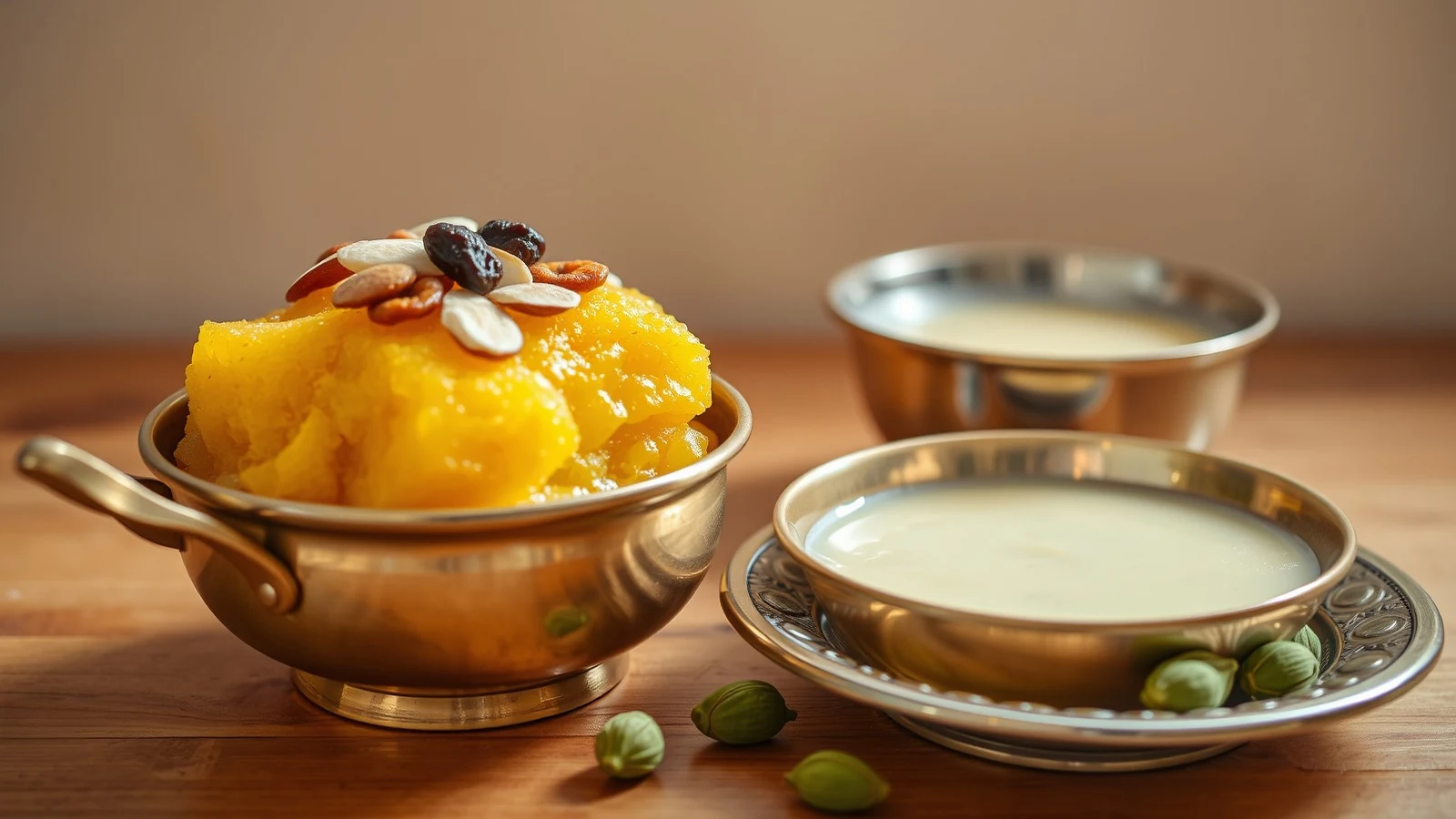
- A simple sooji halwa for pehli rasoi
- Frequently Asked Questions
- Sources and further reading
Pehli rasoi, or first rasoi, is the bride’s first cooking in her new home, usually within a few days of the wedding. She makes a sweet dish, most often sooji halwa, kheer or sevaiyan, the family tastes it and praises it, and the elders give her a gift or shagun. It is a welcome ritual rather than a cooking test, and families today often keep it small and help the bride.
What pehli rasoi means
Pehli means first and rasoi means kitchen. Pehli rasoi is the ritual of the bride’s first cooking in her husband’s family home, after the wedding. It is most common in North Indian Hindu families, in Punjab, Delhi, Haryana, Rajasthan, Uttar Pradesh, Madhya Pradesh and Bihar, and it is known by other names in other places.
The idea is simple. The kitchen is the heart of a traditional Indian home. When the bride cooks there for the first time, she is welcomed into it, and into the family. The dish is almost always something sweet, so that the new relationship begins sweetly. The elders taste it, praise it whatever it tastes like, and give her gifts or money.
It is one of a sequence of welcome rituals after the wedding. Our guides to the griha pravesh, the bride’s first entry into the home, and the muh dikhai, when relatives see the bride’s face and give her gifts, cover the others.
When it happens
Timing varies by family:
- The day after the wedding, or the day after the griha pravesh, in many families.
- Within the first week, once the guests have left and the house has calmed down.
- On an auspicious day chosen by the family priest.
- After the pag phera, the bride’s first visit back to her parents’ home, in some families. Our pag phera guide explains that visit.
If the couple leave for the honeymoon straight after the wedding, pehli rasoi often waits until they return.
What the bride traditionally cooks
A sweet dish, nearly always. The most common choices:
| Dish | Why it is chosen | Difficulty |
|---|---|---|
| Sooji halwa (semolina) | Quick, forgiving, and served at many auspicious occasions | Easy |
| Kheer (rice pudding) | A classic sweet for celebrations, and hard to get badly wrong | Easy, but slow |
| Sevaiyan (vermicelli) | Quick, and well loved in many North Indian homes | Easy |
| Gajar ka halwa | A winter favourite, if the wedding is in the cold months | Medium, takes time |
| Moong dal halwa | Rich and festive, the show-off option | Hard, needs patience |
| Kesari or payasam | The choice in South Indian homes that follow a similar custom | Easy |
Some families also ask for a full meal, or a savoury dish alongside the sweet, such as puri and aloo or a simple dal. If you are worried, ask your mother-in-law or a sister-in-law beforehand what the family expects. Most will tell you.
The ritual, step by step
- A small puja in the kitchen in some families: the bride lights a lamp or offers a little of the first food to the household deity before cooking.
- The bride cooks, often with the mother-in-law or a sister-in-law nearby. In many homes, the ingredients are laid out for her in advance.
- The first portion is offered to the deity, then served to the eldest members of the family.
- The family tastes and praises it. Criticism at the pehli rasoi is considered very poor manners.
- Gifts and shagun. The elders give the bride money in an envelope, jewellery, a saree, or another gift, as a blessing and thanks.
- Photographs, which in many families are now as important as the halwa.
Gifts at pehli rasoi
The custom is that the bride is given something in return for her first meal. Common gifts:
- Cash shagun in an envelope from each elder, in an amount ending in 1. Our wedding etiquette guide explains why amounts end in 1.
- A piece of jewellery from the mother-in-law, often a ring, bangles or earrings.
- A saree or suit.
- Something from the husband, often a small personal gift.
Gifts at pehli rasoi are given freely and are the bride’s own. They are part of her stridhan, which our guide to stridhan and a woman’s rights explains.
Regional versions
- Uttar Pradesh and Bihar: the first touching of the kitchen is often called chauka chhuai, and follows the same idea.
- Bengal: the bou bhaat, a feast held by the groom’s family one or two days after the wedding, is where, in some places, the bride has her first meal in her in-laws’ home, and in many families she serves rice to the family. Our Bengali wedding traditions guide covers it.
- Punjab: pehli rasoi is common, often with sooji halwa or kheer, and often on the day after the bride arrives. See our Punjabi wedding traditions guide.
- Rajasthan and Gujarat: similar first-cooking customs exist, often with a sweet such as lapsi or shiro.
- South India: there is no single widespread equivalent, but some families ask the bride to make payasam or kesari, or to light the kitchen lamp, on her first days.
Handling it as a modern bride
Many brides today cook rarely, or not at all, and many work in other cities. Pehli rasoi can feel like a test. It does not have to be.
- Practise once or twice before the wedding. Sooji halwa takes about 20 minutes and is forgiving.
- Ask what the family expects. A quiet word with your mother-in-law, or with your husband, before the day.
- Accept help. In many families, a sister-in-law or the cook prepares the ingredients and stands nearby. That is normal.
- Keep it small. One sweet dish is enough. Nobody is expecting a feast from a bride who got married two days ago.
- Remember what it is for. It is a welcome, not an exam.
Grooms can help too, by joining in. In many modern families, the couple make the dish together, and the family enjoys the photographs even more.
For the mother-in-law: making it a welcome
The person who most shapes how a bride remembers her pehli rasoi is her mother-in-law. A few things make a real difference:
- Tell her what to expect, a few days before. Which dish, how many people, what time.
- Lay out the ingredients and the right pans. A new kitchen is confusing; nobody knows where the cardamom is.
- Stay nearby, without taking over. Offer to stir, not to correct.
- Praise it in front of everyone, and mean it. The family will follow your lead.
- Give her something personal alongside the shagun: a piece of family jewellery, or a recipe written in your own hand.
When the two families eat differently
Couples from different regions, communities or religions often come from kitchens that work very differently, and pehli rasoi can bring that to the surface.
- Vegetarian and non-vegetarian homes: if the groom’s family is strictly vegetarian, or does not use onion and garlic, the bride should know before she cooks. A sweet dish avoids the question entirely.
- A different regional cuisine: many families are delighted if the bride makes a sweet from her own home, such as payasam in a Punjabi kitchen or halwa in a Tamil one. It is a lovely way to bring her family into the new home.
- Fasting days: check the calendar. If pehli rasoi falls on a fast day for the elders, choose a dish they can eat, or move the day.
Couples marrying across communities will find more in our guide to interfaith weddings.
A simple sooji halwa for pehli rasoi
For a family of eight to ten:
- Warm 1 cup of ghee in a heavy pan.
- Add 1 cup of sooji (semolina) and roast on low heat, stirring, until it smells nutty and turns golden, about 8 to 10 minutes.
- In another pan, heat 3 cups of water with 1 cup of sugar until the sugar dissolves. Add a pinch of cardamom.
- Pour the hot syrup slowly into the sooji, stirring all the time. It will bubble and spit, so stand back.
- Stir until it thickens and leaves the sides of the pan, 3 to 4 minutes.
- Top with chopped almonds, cashews and a few raisins fried in ghee.
Serve it warm, to the eldest first.
Frequently Asked Questions
What is pehli rasoi?
The bride’s first cooking in her in-laws’ home after the wedding, usually a sweet dish, followed by gifts from the elders.
When is pehli rasoi done?
Usually within a few days of the wedding, often the day after the griha pravesh, or on a day the family chooses.
What should a bride cook for pehli rasoi?
A sweet dish: sooji halwa, kheer or sevaiyan are the most common, and all are easy.
What gift is given at pehli rasoi?
Cash shagun, jewellery, a saree or a personal gift, given by the elders and the husband.
Is pehli rasoi compulsory?
No. It is a family custom, and many families keep it small or skip it.
What is pehli rasoi called in Bengal?
The closest Bengali custom is the bou bhaat, a post-wedding feast at the groom’s home.
Sources and further reading
Planning the wedding and the days after it? Tell us about your wedding.
Planning a traditional wedding?
Find the venue and the budget
What venues really cost across India, and a calculator that turns your guest list and style into a budget range.
Begin Your Engagement
Want a real number for your wedding?
Tell us your city, guest count and dates. Team Velvet Knot will come back within 24 hours with an itemised budget.