Planning a Same-Sex Commitment Ceremony in India: Rituals, Officiants and Vows
- Choosing the kind of ceremony
- The officiant is the first booking
- Adapting the rituals
- A running order that works
- Writing the vows
- Where to hold it
- The paperwork that sits alongside the ceremony
- Symbolic rituals that belong to no one tradition
- A structure for your vows
- Planning the week around the ceremony
- Music and the entrance
- Roles for family and friends
- Frequently Asked Questions
- Sources and further reading
A same-sex commitment ceremony in India is a wedding in every sense but the legal one: vows, rituals, family and a celebration, without registration. Couples choose a traditional ceremony adapted for two brides or two grooms, a celebrant-led ceremony, or a blend. Confirm the officiant first, build a running order that gives both partners equal roles, and plan the legal documents alongside.
Because a same-sex marriage cannot be registered in India, the ceremony carries all of the meaning and none of the paperwork. That gives couples unusual freedom. There is no mandatory ritual, no required officiant and no fixed order. It also means every choice has to be made deliberately, because there is no default to fall back on and families will look to the two of you for the script.
This guide covers the choices in the order a planner works through them: the kind of ceremony, the officiant, the rituals and how to adapt them, the running order, and the paperwork that should sit alongside the celebration.
Choosing the kind of ceremony
| Ceremony | Who leads it | What it feels like | Best when |
|---|---|---|---|
| Traditional, adapted | A priest or elder willing to officiate | Familiar to older relatives, with the words and roles changed | Families value ritual and one or both of you do too |
| Celebrant-led | A professional celebrant | Personal, story-led, easy to stage anywhere | You want complete control of the words |
| Blended or interfaith | A celebrant, sometimes with a priest from each tradition | Draws on two backgrounds in one ceremony | You come from different communities |
| Vows only | A friend, relative or celebrant | Short and intimate, followed by a party | The legal ceremony has already happened abroad |
None of these is more valid than another. What matters is that the two of you choose, and that the people you invite understand what they are witnessing. A single line in the invitation, describing the ceremony, saves a great deal of awkward explanation on the day.
The officiant is the first booking
Book the person who will lead the ceremony before the venue, because the rest of the day depends on their availability and their comfort. Practice among Indian priests varies widely. Some will officiate a same-sex ceremony and adapt the mantras; many will not; some agree and then withdraw under pressure. Place of worship is a separate question from the officiant: most temples, gurdwaras, churches and mosques will not host a same-sex ceremony, so plan to hold it at a venue you control.
When you speak to an officiant, ask three things plainly and get the answers in writing: whether they will lead a ceremony for the two of you, whether they are comfortable adapting the words so that neither partner is cast as the bride or the groom unless you choose it, and whether they will be named or photographed. A celebrant removes most of this uncertainty and can still incorporate the rituals your families care about.
Adapting the rituals
Most Indian wedding rituals adapt easily, because their meaning does not depend on which partner is which. The rituals that assign a role by gender need a decision, and the simplest decision is usually to do the ritual together or for both.
| Ritual | Traditional form | Common adaptation |
|---|---|---|
| Haldi | Turmeric applied to each partner at home | A shared haldi for both, often the most joyful event of the week |
| Mehendi | Henna for the bride | Henna for both partners, or for whoever wants it |
| Sangeet | Performances by both families | Unchanged, and often a highlight |
| Baraat | The groom’s procession to the venue | A joint entrance, two processions meeting, or none |
| Varmala | Exchange of garlands | Unchanged |
| Kanyadaan | The bride’s parents give her away | Both families bless the couple together, or it is left out |
| Saptapadi or pheras | Seven steps around the fire, one partner leading | The partners take turns to lead, or walk side by side |
| Sindoor and mangalsutra | Placed on the bride by the groom | Exchanged by both partners, replaced with rings, or left out |
| Vidaai | The bride’s farewell from her family | Usually replaced by a shared send-off |
Our guides to the seven vows of the saptapadi and the varmala explain what each ritual means, which helps when deciding how to adapt it without losing its purpose.
A running order that works
A commitment ceremony can be as long or as short as you like. This order suits a 45 to 60 minute ceremony with family present:
| Moment | Time | Notes |
|---|---|---|
| Entrance | 5 to 10 minutes | Together, separately from two sides, or with families |
| Welcome | 5 minutes | The officiant explains the ceremony to guests in a sentence or two |
| Blessings from family | 5 to 10 minutes | Parents, siblings or elders from both sides |
| Ritual | 10 to 20 minutes | Varmala, the seven steps, a thread or a fire, as chosen |
| Vows | 5 minutes | Written by the two of you |
| Exchange of rings or tokens | 5 minutes | Rings, chains or a symbol that matters to you |
| Declaration and celebration | 5 minutes | A shower of petals or rice, then music |
Give a close friend or sibling the job of cueing each moment and briefing any guest with a role. It keeps the ceremony relaxed and stops older relatives from filling gaps with their own expectations.
Writing the vows
Vows carry more weight in a ceremony without a legal register, because they are the commitment. Keep them to about a minute each, write them separately and share them with the officiant only. Many couples also write a short shared promise that both say together, which works well for guests who are hearing the ceremony in a language they do not know.
Where to hold it
A venue you can take exclusively, such as a heritage property, a resort, a farmhouse or a private villa, gives you control over who is on site and removes the risk of other events sharing the space. Confirm in writing that the venue will host your ceremony with the same service as any other wedding, and agree how its staff will be briefed. Our intimate wedding planning page covers smaller venues, and our guide to LGBTQ+ friendly venues and vendors sets out the questions to ask.
The paperwork that sits alongside the ceremony
The ceremony does not create legal rights, so plan the documents that do some of that work at the same time. Most couples open a joint bank account and name each other as nominee, make wills, and record joint ownership of any property. Our guide to whether same-sex marriage is legal in India explains each document and what to check with a lawyer. If a legal marriage matters to you, see marrying abroad as an Indian same-sex couple.
Planning your commitment ceremony?
Velvet Knot finds the officiant and the venue, each confirmed in writing, and our team builds a ceremony your families will understand.
Symbolic rituals that belong to no one tradition
Couples who want a ritual without a religious framework, or who are blending backgrounds, often choose one of these. Each works in front of a mixed audience because the meaning is visible.
| Ritual | What happens | What it says |
|---|---|---|
| Lighting a diya together | Each partner lights a lamp, then both light a third | Two lives making one home |
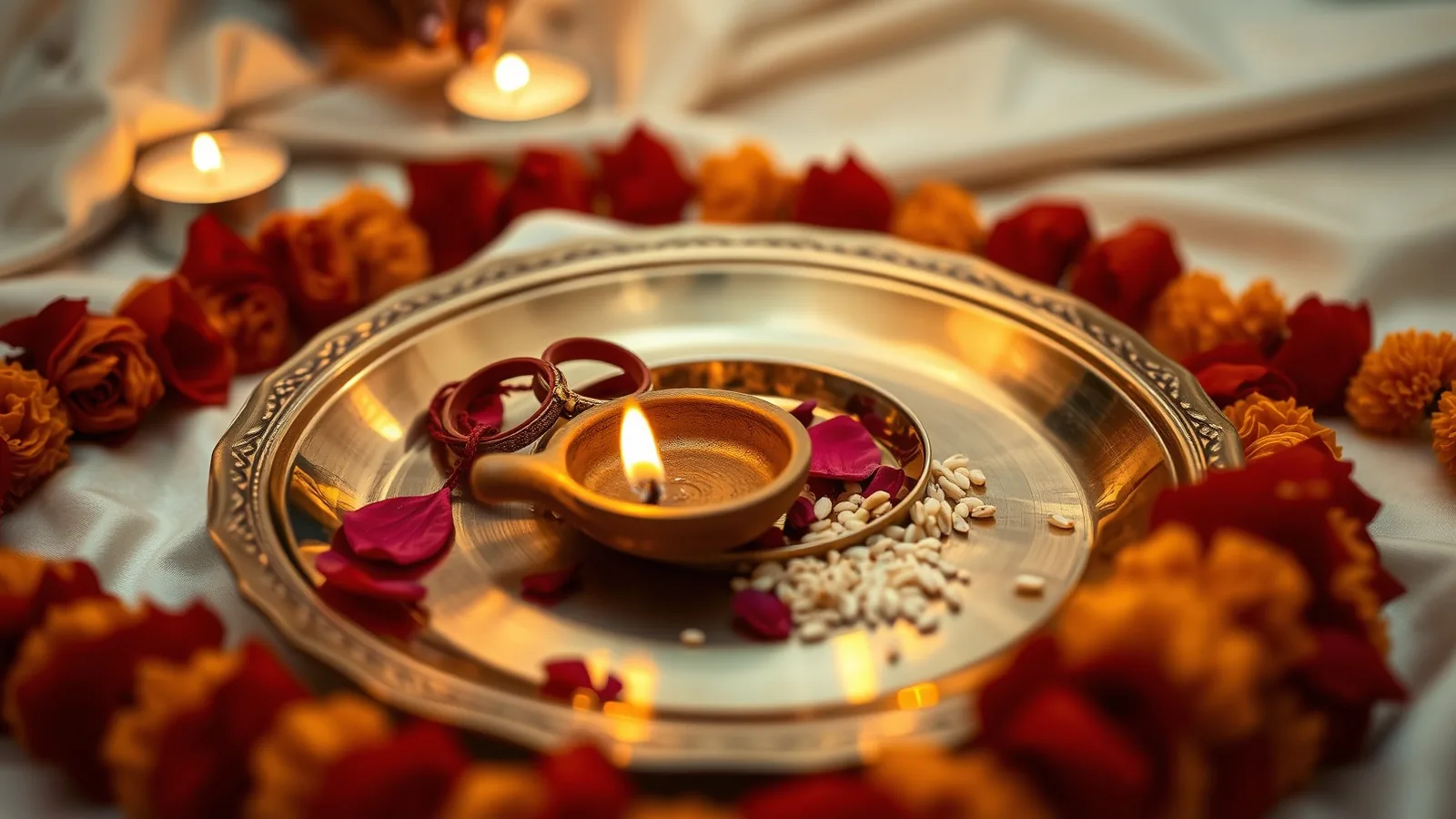
| Tying a sacred thread | A red thread is tied around both partners’ wrists | A bond made in front of witnesses |
| Handfasting | Joined hands are wrapped with a cloth or cord | Choosing to be bound to each other |
| Planting a tree | Soil from both family homes is placed around a sapling | A shared future that grows |
| Blessing circle | Guests pass a garland or a pot of rice, each adding a blessing | A community standing behind the couple |
| Exchange of family heirlooms | Each family gives the other partner a piece of jewellery or cloth | Being welcomed into each other’s family |
A structure for your vows
Vows are easier to write with a shape. This four-part structure keeps each set to about a minute:
- A memory: a moment that tells guests who you are together.
- What you love: one or two specific things about your partner.
- The promises: three or four concrete commitments, said plainly.
- A closing line: something short enough to say while looking up.
Write them separately, read them aloud once before the day, and keep a printed copy with the officiant in case nerves take the words away.
Planning the week around the ceremony
Most couples keep the familiar shape of an Indian wedding week and change the details. A typical three-day plan looks like this:
| Day | Morning or afternoon | Evening |
|---|---|---|
| Day one | A shared haldi for both partners | Mehendi and a relaxed family dinner |
| Day two | Free time for travelling guests | Sangeet with performances from both families and friends |
| Day three | The commitment ceremony | Reception or party |
Our guides to haldi and mehendi costs apply unchanged, since these functions cost the same whoever is celebrating.
Music and the entrance
The entrance sets the tone more than any other moment. Couples often choose one of three shapes: walking in together to one song, each entering from a different side to their own song before meeting in the middle, or a procession with both families. Choose the songs with the officiant’s timings in hand, and give the music team a written cue sheet so that nothing starts early.
Roles for family and friends
Indian weddings give many people a part to play, and a commitment ceremony can do the same. Assigning roles also answers the quiet question some relatives have about whether they are welcome to take part.
| Role | Traditionally | At a commitment ceremony |
|---|---|---|
| Welcoming guests | The hosting family | Both families together at the entrance |
| Leading a ritual | Parents or elders | Parents from both sides, or a grandparent |
| Holding the rings or tokens | A sibling or child | A sibling or a close friend of each partner |
| Reading or blessing | A priest | A friend, an elder or the officiant |
| Master of ceremonies | A hired emcee | A friend who knows the couple, with a written brief |
| The send-off | The bride’s family | Everyone, with petals, sparklers or music |
Give each person their role in writing a week ahead, with the time they are needed and what to say, if anything. People who know their part relax, and a relaxed room is what makes a ceremony feel like a wedding.
Frequently Asked Questions
What is a commitment ceremony?
It is a wedding ceremony without legal registration. In India, same-sex couples use it to make their vows in front of family and friends, with whatever rituals they choose, because same-sex marriage cannot currently be registered.
Will a Hindu priest perform a same-sex wedding in India?
Some will and many will not, and practice varies by city and community. Ask directly, get the answer in writing, and consider a celebrant who can include the rituals your families value if you cannot find a priest you trust.
Can we do the saptapadi or pheras as a same-sex couple?
Yes. Couples often take turns to lead the seven rounds or walk side by side, and adapt the vows so that neither partner is cast in a gendered role unless they choose it.
Can a commitment ceremony be held in a temple or gurdwara?
Most places of worship in India will not host one. Couples usually hold the ceremony at a venue they control, such as a hotel, resort, farmhouse or private home.
How long is a same-sex commitment ceremony?
Anything from 15 minutes for a vows-only ceremony to an hour or more with rituals. A ceremony of 45 to 60 minutes with family blessings, one or two rituals and personal vows suits most couples.
Sources and further reading
Begin Your Engagement
Want a real number for your wedding?
Tell us your city, guest count and dates. Team Velvet Knot will come back within 24 hours with an itemised budget and our planning fee agreed upfront.