Chunni Chadhana: The Moment a Punjabi Family Accepts the Bride
- What chunni chadhana is
- The symmetry with roka
- What happens
- Why red, and what the chunni signifies
- Regional and community variation
- What the bride should expect
- The mothers, and why that matters
- If the groom’s family has no such custom
- What the chunni is made of
- Practical notes
- Frequently Asked Questions
- Sources and further reading
Chunni chadhana is the Punjabi ceremony in which the groom’s mother drapes a red chunni over the bride’s head and gives her jewellery, formally receiving her into the family. It usually takes place at the engagement, and it is the groom’s family’s counterpart to the roka.
What chunni chadhana is
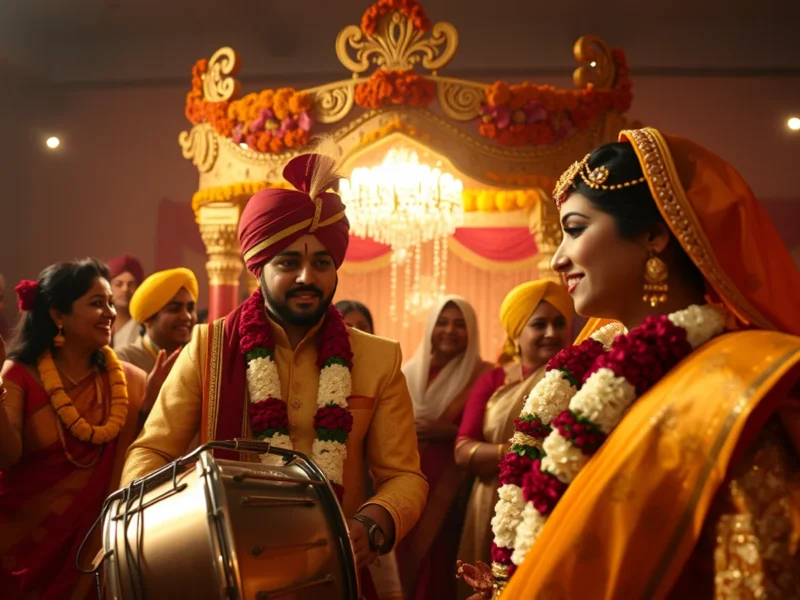
A chunni is a long scarf or dupatta. Chadhana means to place or drape over. The ceremony is exactly what the name describes: the groom’s mother, or another senior woman of his family, places a red chunni over the bride’s head.
The gesture is a formal acceptance. Covering a woman’s head with the family’s cloth marks her as belonging to that household, and in Punjabi practice this is the moment the groom’s side publicly claims her as a daughter-in-law. It is usually accompanied by the giving of jewellery, sweets and shagun.
Most families hold it at the engagement, alongside or immediately before the sagai. Some hold it at the roka, and a few keep it as its own small event at the bride’s home. What is consistent is who performs it and what it means.
The symmetry with roka
The two ceremonies are counterparts and are best understood together.
Roka is the bride’s family acting. They stop the search and commit to the match, traditionally with the bride’s family visiting the groom and applying a tilak.
Chunni chadhana is the groom’s family acting. They come to the bride, cover her head with their cloth, and give her jewellery. It is the reciprocal gesture, and in families that observe both properly, neither side is left having given without receiving.
Where only one of the two happens, it is almost always the roka that survives and the chunni chadhana that gets folded into a general engagement party. That is a small loss, because the chunni ceremony is the one that centres the two mothers rather than the two fathers, and it tends to be the warmer of the two.
What happens
- The groom’s family arrives at the bride’s home or the venue, bringing trays of gifts.
- The bride is seated, usually in a red or pink outfit chosen to sit under the chunni.
- The chunni is draped by the groom’s mother over her head, sometimes with the groom’s sisters and aunts helping to settle it.
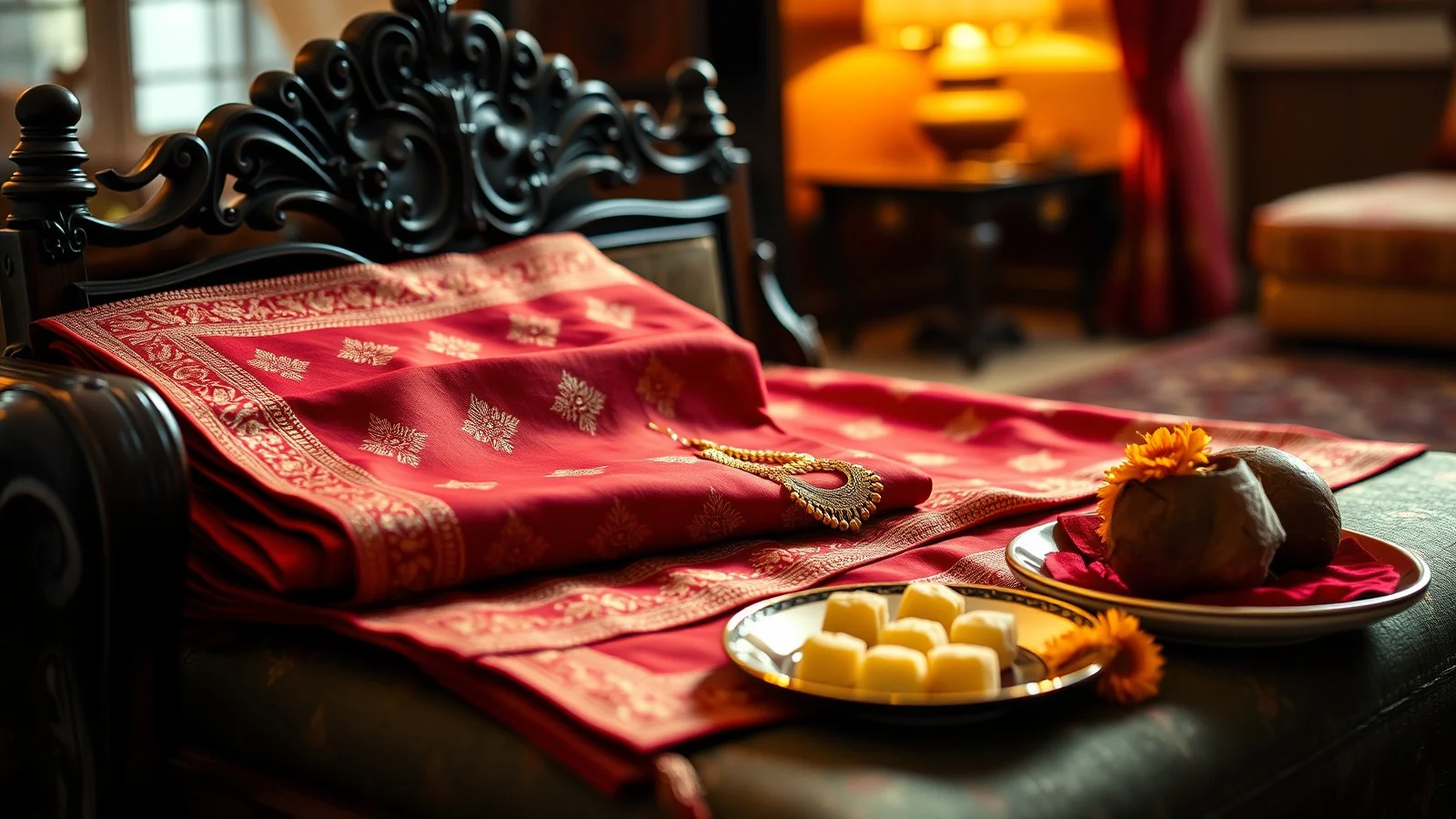
- Jewellery is given. Traditionally a gold set, at minimum earrings or a necklace, placed on her by the groom’s mother.
- Sweets are fed. The groom’s mother feeds the bride something sweet, commonly a laddoo or a piece of mithai.
- Shagun. Cash in an envelope, conventionally an amount ending in one.
- Mehndi and a coconut are given in many families, along with a red chura or bangles in some.
- Blessings from the elders of the groom’s side, in order of seniority.
The bride does not usually give anything back during the ceremony itself. Her family reciprocates separately, with gifts to the groom and his relatives, which is why the two events are best staged close together.
Why red, and what the chunni signifies
Red runs through Punjabi and North Indian wedding practice as the colour of marriage and auspiciousness, and it recurs in the bridal outfit, the chooda bangles, and the sindoor applied at the wedding itself.
The covering of the head carries its own meaning. In traditional practice a married woman covered her head in the presence of her husband’s elders, so placing the chunni is a preview of that status. It is also, quite practically, the moment the bride stops being a guest in the conversation between two families and becomes a member of one of them.
Many families keep the chunni. It is worn again at later functions, and some brides use it as the dupatta for a subsequent ceremony, which is a small and rather lovely piece of continuity.
Regional and community variation
- Punjabi Hindu and Sikh. Chunni chadhana is standard in both, and the Sikh version is identical in form even though the wedding that follows is the Anand Karaj. See Punjabi wedding traditions and the Anand Karaj guide.
- Haryanvi and western Uttar Pradesh. Closely equivalent customs under local names.
- Marwari and Rajasthani. The groom’s family’s acceptance is marked differently, often through a formal tilak and the giving of jewellery without the head covering. See Marwari wedding traditions.
- Gujarati. The equivalent acceptance happens within gol dhana. See Gujarati wedding traditions.
- South Indian. No direct equivalent. Acceptance is formalised through the nischitartham and the written agreement rather than through a garment. See South Indian wedding traditions.
What the bride should expect
Chunni chadhana is short but it puts the bride at the centre of a group of people she may barely know, and a little preparation helps.
- She is seated and stays seated. The ceremony happens around her rather than with her.
- The chunni goes over her head, and she will wear it for the rest of the event, so a comfortable drape matters.
- Jewellery is placed on her, often by several people in succession. Wearing minimal jewellery of her own makes this easier.
- She is fed by hand, conventionally by the groom’s mother.
- She touches the feet of the elders in most families, in order of seniority, and a quiet briefing on who is who spares her guessing.
The same preparation that helps at muh dikhai applies here: a written list of names and relationships, given in advance by the groom, is invariably welcome and almost never offered unprompted.
The mothers, and why that matters
Most Indian wedding rituals are structured around the fathers, the priest and the couple. Chunni chadhana is one of the few built around the mothers, and this shapes how it feels.
The groom’s mother performs the central act. The bride’s mother receives her into the house and watches her daughter be claimed by another family. The two women, who will now be permanently connected through their children, are the principals for these few minutes.
Families that stage it well seat the two mothers together afterwards. Families that treat it as a photo opportunity in the middle of a large engagement party lose most of what the ritual is for. It is a small thing to get right and it sets a tone between the two households that lasts.
If the groom’s family has no such custom
In inter-community matches the groom’s family may have no equivalent ritual, and the bride’s family may be waiting for a gesture that is never planned.
This is worth surfacing early and directly. The usual resolutions are straightforward: the groom’s family adopts the custom for the occasion, which most are happy to do once it is explained; or the two families agree an equivalent gesture from the groom’s tradition; or both are performed, which costs twenty minutes and makes two sets of grandparents happy.
What does not work is silence. A bride’s family that expected chunni chadhana and got nothing generally does not raise it at the time, and it becomes one of the small grievances that surface years later.
What the chunni is made of
The garment itself repays a little thought, since the bride will wear it for the rest of the event and often again afterwards.
Traditionally it is a red or deep pink chunni in silk, chiffon or georgette, with gota, zari or mirror work on the border. Heavier fabrics sit better on the head and do not slip; very light chiffon looks elegant and will not stay put through an evening of touching feet and being embraced.
Many families use a chunni that belonged to the groom’s mother or grandmother, which turns the gesture into something specific rather than generic. Where that is not possible, a well-made new one that the bride can realistically wear again is a better choice than something too heavy to use twice.
Practical notes
- Coordinate the outfit with the chunni. The bride will be photographed wearing both. A clashing red is the most common complaint afterwards, and a photograph of the chunni sent ahead solves it.
- Decide the jewellery in advance. The groom’s mother placing a set on the bride is the emotional centre of the ceremony, and it should not be improvised at the last minute.
- Keep it seated and close. This works at twenty to forty people. As part of a three-hundred-guest engagement party it becomes a stage performance.
- Brief the photographer on the drape. It happens once, takes a few seconds, and involves the two women whose relationship the whole event is really about.
- Agree reciprocity timing. The bride’s family gives separately. If the two events are weeks apart, one side can feel it is giving into a void.
- Ask whether it is expected at all. In inter-community matches the groom’s family may have no such custom, and the bride’s family may be waiting for something that is never coming.
Planning a wedding that honours these traditions?
Team Velvet Knot plans weddings across every major Indian tradition, and we brief vendors on the rituals so nothing gets rushed, mistimed or quietly dropped from the running order. Tell us your dates and your community, and we will come back with an honest plan.
Frequently Asked Questions
What is chunni chadhana?
It is the Punjabi ceremony in which the groom’s mother, or another senior woman of his family, drapes a red chunni over the bride’s head and gives her jewellery, sweets and shagun. It marks the groom’s family formally accepting her as a daughter-in-law.
When is chunni chadhana held?
Most commonly at the engagement, alongside or just before the sagai. Some families hold it at the roka, and a few keep it as its own small event at the bride’s home.
Who performs the ceremony?
The groom’s mother, usually with his sisters and aunts assisting. It is one of the few wedding rituals centred on the two mothers rather than the two fathers, which is part of why families who observe it properly value it.
How does it relate to the roka?
They are counterparts. Roka is the bride’s family committing to the match; chunni chadhana is the groom’s family formally receiving the bride. Families that observe both end up with neither side having given without receiving.
What is given along with the chunni?
Traditionally a gold jewellery set, at minimum earrings or a necklace, placed on the bride by the groom’s mother. Also sweets fed by hand, cash shagun in an amount ending in one, and in many families mehndi, a coconut and red bangles.
Do South Indian weddings have chunni chadhana?
No direct equivalent. Acceptance between the families is formalised at the nischitartham through the lagna patrika, a written agreement read aloud, rather than through a garment placed on the bride.
Sources and further reading
Begin Your Engagement
Want a real number for your wedding?
Tell us your city, guest count and dates. Team Velvet Knot will come back within 24 hours with an itemised budget.