Winter Wedding Ideas for a Warm, Glowing Indian Celebration
- Why winter is India’s peak wedding season
- Decor ideas that make winter feel warm
- Colour palettes for a cold-weather celebration
- Attire and layering for the cold
- Keeping guests warm and comfortable
- Timing your day around short winter daylight
- Best winter venues and destinations
- A festive winter menu
- Photography in soft winter light
- Choosing your season
- Frequently Asked Questions
- Sources and further reading
Winter is India’s peak wedding window, roughly November to February, when cool air, clear skies and short golden days set the mood. Here are the decor, colour, attire, guest-comfort, venue, menu and photography ideas that make a cold-weather celebration feel warm and unforgettable.
Why winter is India’s peak wedding season
Ask any planner in Hyderabad, Delhi or Jaipur and you will hear the same answer: the calendar fills fastest between November and February. The reasons are practical and poetic at once. Daytime temperatures sit in a comfortable range, evenings turn crisp rather than sweltering, and the monsoon has long cleared, so open lawns and palace courtyards stay dry and usable. Guests travelling from across India and abroad find the flights and the weather agreeable, and the season overlaps with year-end holidays, making it easier for extended family to gather.
There is also the astrological layer. A large share of auspicious muhurats fall in these months, which is why venues, decorators and photographers book out a year ahead. If you are still fixing a date, our guide to wedding muhurat dates and our overview of the best wedding season in India will help you lock a slot before the good ones vanish. Winter’s real gift, though, is atmosphere. Cool air lets you build warmth deliberately, through fire, candlelight, rich fabric and hot food, and that contrast is what makes a winter wedding feel intimate even at scale.
Decor ideas that make winter feel warm
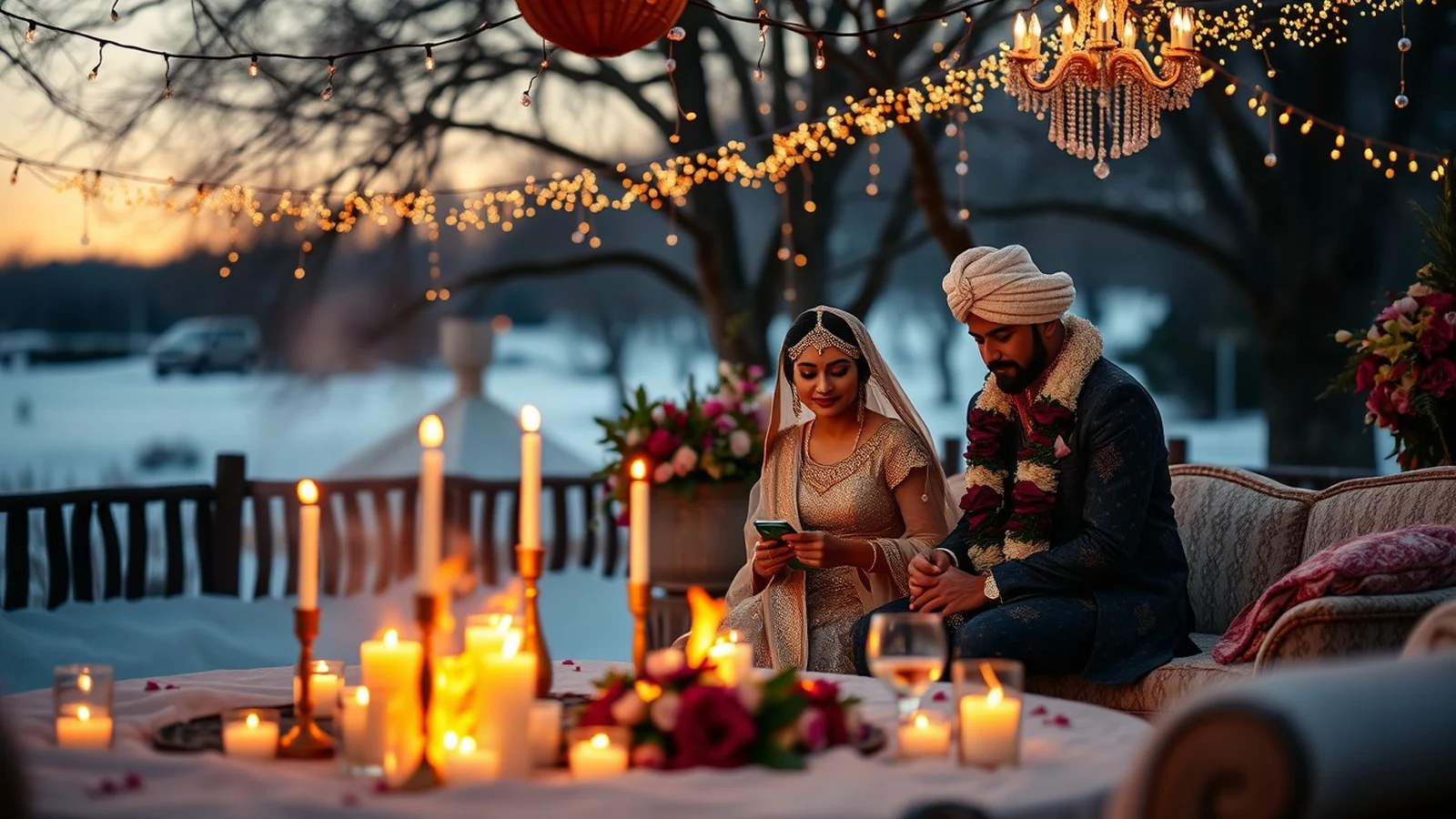
Winter decor is about layering glow against a cool backdrop. Start with fire and light as the anchor. Cluster pillar candles and tea lights along walkways, on mandap steps and down the centre of long dining tables, and let their flicker do the work that harsh uplighting cannot. String canopies of warm fairy lights overhead so guests walk under a low, golden ceiling of stars. For the reason winter light photographs so beautifully at night, our wedding lighting ideas guide breaks down layering ambient, accent and feature light.
Then add the elements only winter allows. A crackling bonfire ringed with low seating becomes the natural gathering point once the sun drops, and traditional sigdi lounges, with warm coals under carpeted floor seating and bolsters, give elders a cosy corner to hold court. Flowers stay rich and textural: deep marigold garlands, burgundy and rust chrysanthemums, mums, dahlias and plenty of foliage read far better in cool weather than delicate summer blooms. Our flower decoration ideas show how to build these dense, jewel-toned arrangements. Velvet drapes, brass lanterns, Persian rugs and copper vessels finish the look, turning any lawn or courtyard into something that feels like a warm room without walls. For fuller mood direction, browse our wedding theme ideas.
Colour palettes for a cold-weather celebration
Winter is the one season that lets you go as rich and saturated as you like without the colour feeling heavy. The classic winter direction is deep jewel tones warmed by metallics. Wine and oxblood, emerald and bottle green, sapphire and midnight blue all sit beautifully against gold, and a base of ivory or cream keeps the scheme from turning too dark. A palette of wine, emerald, gold and ivory photographs richly under candlelight and looks equally striking on stage backdrops and table linen.
If you want something softer, pair dusty rose and mauve with antique gold and sage, or lean into a marigold, rust and terracotta scheme that echoes the season’s own flowers. The trick is to let one warm metallic run through everything, gold or copper, so the whole event reads as one considered world rather than a set of pretty but disconnected corners. Our wedding colour palette ideas pair these combinations with fabric, floral and stationery suggestions so you can carry a single palette from invite to mandap to reception.
Attire and layering for the cold
Winter dressing is a chance to bring out fabrics that would be unbearable in summer. Velvet is the season’s hero, on lehengas, sherwanis, blouses and jackets, holding embroidery beautifully and adding weight that feels appropriately grand. Raw silk, brocade and heavy Banarasi all come into their own too. For the couple, the real planning question is warmth without bulk, since ceremonies often run into the cold night air.
Layering is the answer, styled rather than hidden. A bride can carry an embroidered shawl, a fur-trimmed or velvet cape, or a structured jacket over her lehenga that she removes for photographs and slips back on between functions. Grooms can add a Nehru jacket, a shawl draped over the sherwani, or thermal layers underneath that never show. For guests, gently signal the dress code so they arrive prepared: elegant shawls, stoles, capes and closed footwear keep everyone comfortable through a long evening. Keep a basket of pashminas near the entrance for anyone caught off guard, a small touch that guests remember.
Keeping guests warm and comfortable
The single biggest difference between a good winter wedding and a memorable one is guest comfort. Cold guests leave early, and no amount of beautiful decor makes up for a shivering crowd. Plan the warmth as carefully as the flowers. Position patio heaters and mushroom heaters through seating and dining zones, and keep a stack of soft blankets or shawls on hand near lounges and the mandap for elders and children.
Welcome guests with warmth in their hands from the moment they arrive: hot masala chai, kahwa, filter coffee, spiced hot chocolate or a warm badam milk at the entrance sets the tone instantly. Build the menu around comfort too, with live soup counters, hot rasam and shorba shots passed around, and a tandoor or grill station where guests gather for warmth as much as for food. A gentle way to think about zones is fire and food together: put a bonfire or sigdi lounge beside the tandoor counter so the crowd naturally clusters where it is warmest. When guests feel looked after, they stay late, and a full dance floor at midnight is the truest sign a winter wedding worked. If you would like us to map this comfort plan for your own guest count, get a quote and we will build it in.
Timing your day around short winter daylight
Winter’s short days are its one logistical catch, and the couples who plan around it get far better results. The sun sets early, often by six in the north and a little later in the south, which compresses the window for daylight ceremonies and outdoor photographs. Rather than fight it, design with it. Schedule the haldi, mehendi and any daytime function for late morning through early afternoon, when the light is soft, low and flattering, and you also dodge the worst of the midday chill.
For the wedding itself, decide early whether your key rituals fall in daylight or under lights, because the two look completely different on camera and call for different decor. If the muhurat lands after dark, invest properly in warm lighting so the mandap glows. Build in buffer time as well, since winter mornings can start foggy in many cities and delay setup. A realistic run sheet that respects sunset, rather than assuming summer hours, keeps the whole day calm and on schedule.
Best winter venues and destinations
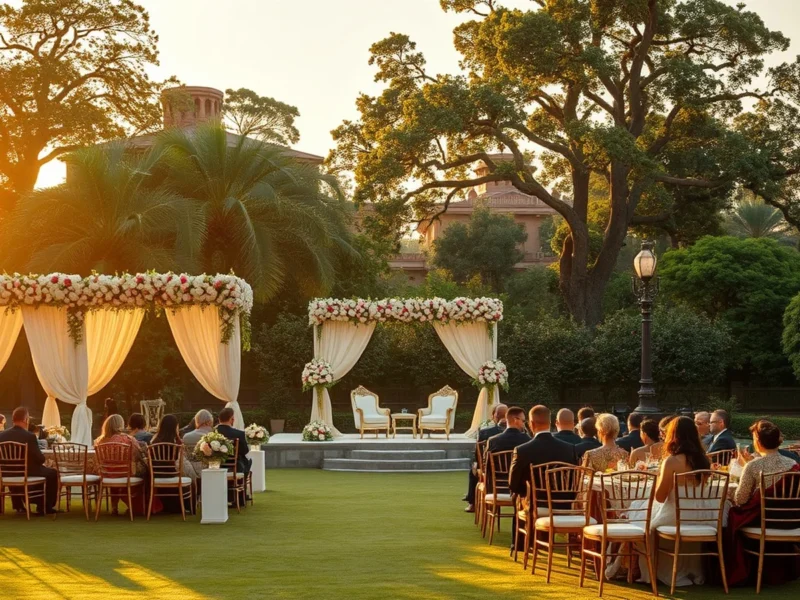
Winter opens up venues that are simply unusable at other times of year. Open palace courtyards, garden lawns, fort ramparts and poolside terraces all come alive once the heat is gone, and the season is exactly when India’s heritage properties look their best. In and around Hyderabad, palace and heritage venues with open courtyards make the most of the crisp evenings, and our own base in the city means we plan these settings constantly.
For destination weddings, winter is prime time across Rajasthan’s palaces in Udaipur, Jaipur and Jodhpur, the beaches and Portuguese villas of Goa, the backwater resorts of Kerala, and the lakes and gardens of Karnataka. Further north, hill stations and even snow-adjacent settings appeal to couples who want a genuine cold-weather aesthetic, though they demand serious warmth planning. Whichever direction you choose, book early, because the best winter dates and the best venues disappear together. Pair the setting with a coherent look using our wedding theme ideas so the venue and decor feel like one intention.
A festive winter menu
Winter food should do two jobs at once: taste of the season and physically warm your guests. This is the time for slow-cooked, robust cooking that feels indulgent. Think Hyderabadi and Awadhi biryanis and haleem, Mughlai gravies, dum-cooked meats, nihari and paya for a grand feast, alongside plenty of hot vegetarian richness like paneer lababdar, dal makhani and seasonal sarson ka saag with makki di roti in northern spreads.
Lean into live counters that give off heat and theatre: a tandoor turning out fresh naan and kebabs, a chaat and tikki station, hot jalebi with rabri, and shorba or soup shots circulating through the crowd. Seasonal produce makes desserts special too, with gajar ka halwa, gond ke laddu, gajak and hot gulab jamun all belonging to winter. Finish with warm drinks rather than only cold ones: kahwa, spiced chai, saffron milk and warm mulled non-alcoholic punches keep the mood glowing to the end. For a fuller framework on structuring courses and counters, see our wedding menu ideas.
Photography in soft winter light
There is a reason photographers love winter. The low sun sits close to the horizon for hours, bathing everything in a soft golden wash that flatters skin and fabric alike, and the clear, haze-free skies of the season give crisp backdrops that summer humidity blurs. To use it, plan your couple portraits and family photographs for the golden hours, the first hours after sunrise and the last before sunset, and let your photographer scout the light in advance.
Winter mornings also bring fog and mist in many cities, which, far from being a problem, can produce some of the most dramatic and dreamlike frames of the whole album if your team is ready for it. After dark, the same candlelight and fairy lights that warm your guests give portraits a rich, intimate glow, so coordinate the lighting design with the photography plan rather than treating them separately. A little scheduling discipline around the short winter day rewards you with images that carry the season’s particular warmth in every frame.
Planning a luxury wedding?
Tell us your dates and vision. Team Velvet Knot will put together a tailored plan and an honest budget.
Choosing your season
- planning a summer wedding in India
- what an off-season wedding really saves
- how to choose your wedding date
Also on Velvet Knot: December 2026 marriage dates, January 2027 marriage dates.
Also on Velvet Knot: December 2027 marriage dates.
Frequently Asked Questions
When is winter wedding season in India?
Winter wedding season runs roughly from November through February, with December and January the busiest months. Cool, dry weather and a high number of auspicious muhurats make it India’s most sought-after window, so venues and vendors book out close to a year in advance.
How do I keep guests warm at a winter wedding?
Place patio and mushroom heaters through seating and dining zones, keep blankets and shawls near lounges and the mandap, and serve warm welcome drinks like masala chai, kahwa or hot chocolate. Bonfires, sigdi lounges and tandoor counters add both warmth and gathering points.
What colours work best for a winter wedding in India?
Rich jewel tones warmed by metallics work beautifully: wine, emerald, sapphire and midnight blue against gold or copper, grounded with ivory or cream. Softer options include dusty rose with antique gold, or a marigold, rust and terracotta scheme that echoes the season’s own flowers.
What should the bride wear to stay warm?
Velvet lehengas and blouses are ideal, layered with an embroidered shawl, a velvet or fur-trimmed cape, or a structured jacket that can be removed for photographs and slipped back on between functions. Thermal layers worn underneath keep you warm without adding visible bulk.
How does short winter daylight affect wedding timing?
The sun sets early in winter, so schedule daytime functions like haldi and mehendi for late morning to early afternoon for soft light, and decide whether key rituals fall in daylight or under lights. Build in buffer time for foggy mornings that can delay setup.
Which are the best winter wedding destinations in India?
Rajasthan’s palace cities of Udaipur, Jaipur and Jodhpur, the beaches of Goa, Kerala’s backwaters and Karnataka’s gardens all shine in winter, along with Hyderabad’s heritage courtyards. Hill stations suit couples wanting a genuine cold-weather look, though they need careful warmth planning.
Sources and further reading
Begin Your Engagement
Want a real number for your wedding?
Tell us your city, guest count and dates. Team Velvet Knot will come back within 24 hours with an itemised budget.