Best Time of Year for an Indian Wedding: A Season-by-Season Guide
- When is the best time for an Indian wedding?
- The peak season: November to February
- Summer weddings: March to June
- Monsoon weddings: July to September
- Regional differences you should account for
- Season-by-season comparison
- How to choose your date
- Seasonal wedding ideas
- Plan around the season
- Month by month: how the Indian wedding year actually runs
- The breaks inside peak season
- Season by region: a quick reference
- Frequently Asked Questions
- Sources and further reading
November to February is India’s peak wedding season, with cool, dry weather across most regions. Summer suits hill stations and indoor venues, while the monsoon offers lush settings at lower cost if you plan for rain. Auspicious dates and venue availability should shape your final choice.
When is the best time for an Indian wedding?
For most Indian families the honest answer is November to February. The weather across the plains and the south is cool and dry, outdoor functions stay comfortable, and the festive mood after Diwali carries straight into the wedding calendar. But “best” depends on three things working together: weather, auspicious dates from the Hindu Panchang, and whether your favourite venues and vendors are free. The peak window is also the most expensive and the most crowded, so the right season for you is a trade-off, not a default.
The peak season: November to February
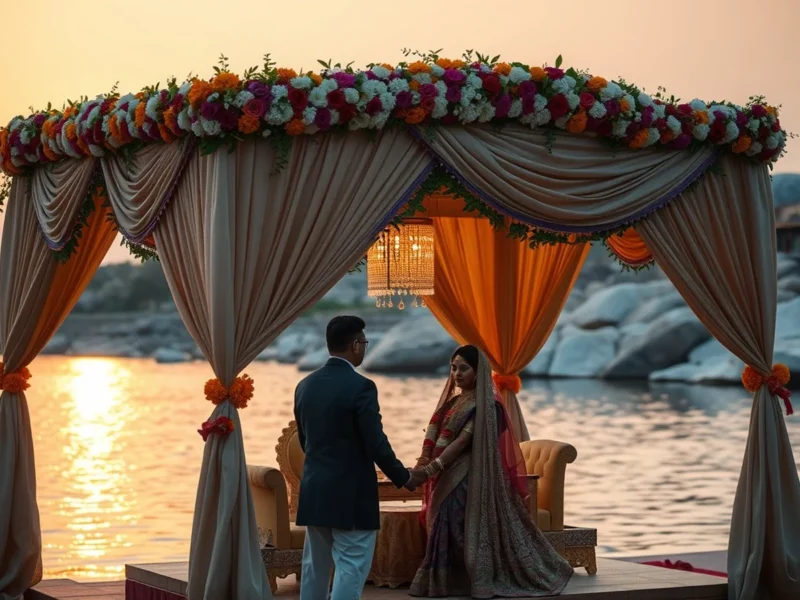
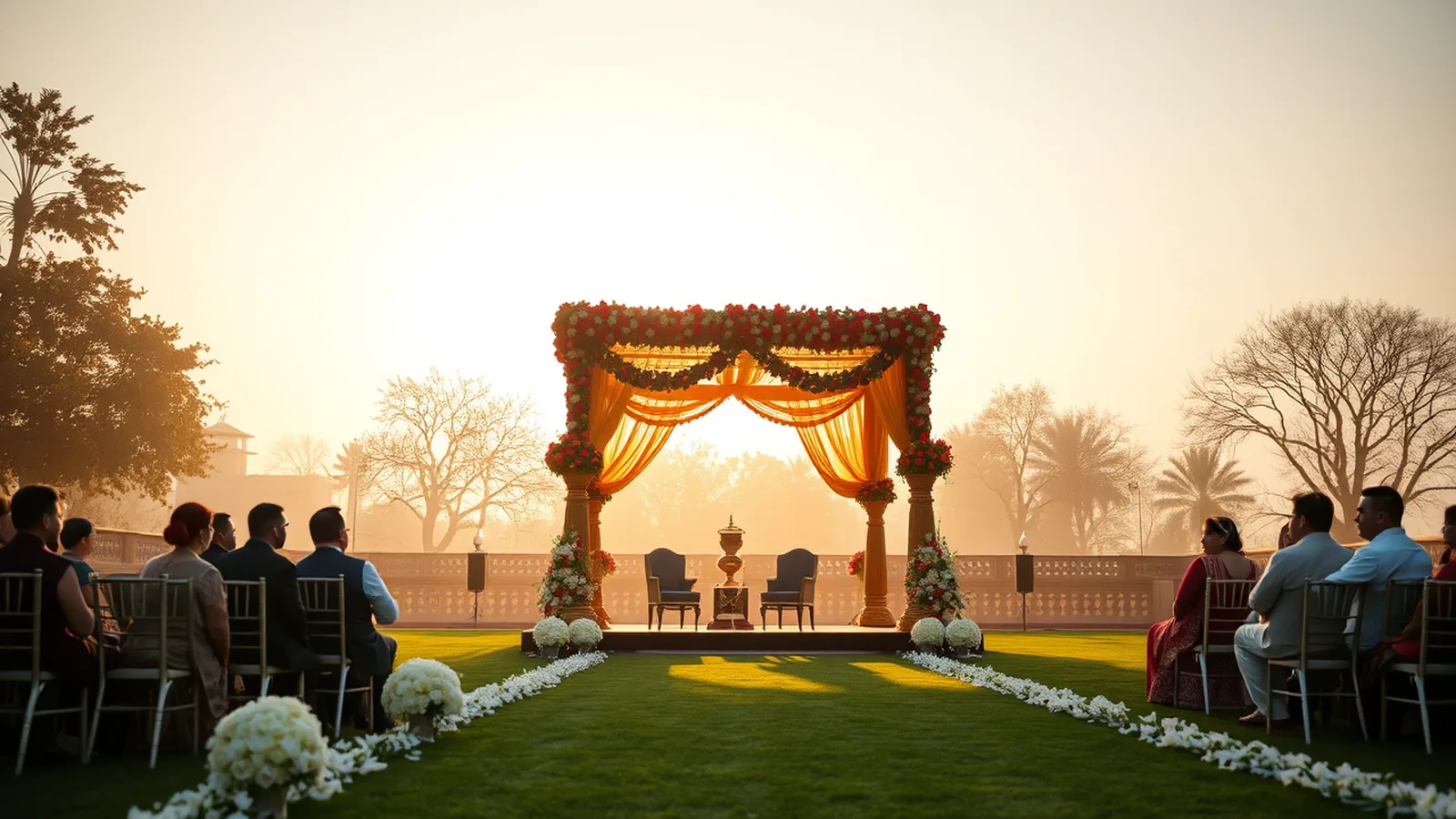
This is the stretch when the vast majority of Indian weddings happen, and for good reason. Daytime temperatures sit in a pleasant range, evenings are crisp enough for warm decor and bonfires, and rain is rare almost everywhere. Open-air mandaps, lawn receptions, and golden-hour photography all work beautifully.
The catch is demand. Premium venues in Delhi, Jaipur, Udaipur, Hyderabad, and Goa book out 10 to 14 months ahead for November and December dates. Photographers, decorators, and the better caterers raise rates by 20 to 40 percent in peak weeks. If your heart is set on a winter wedding, lock the venue first and build everything else around it. Our wedding planning timeline and checklist shows exactly how far ahead each booking needs to happen.
Want this planned for you?
Velvet Knot plans the full timeline, budget and vendor team for luxury Indian weddings. Tell us your dates and city and we will send a tailored plan.
Summer weddings: March to June
Summer is hot across most of India, with the plains often crossing 40 degrees by April. It is not impossible, it just needs the right setting. Two formats work well:
- Hill station weddings. Shimla, Mussoorie, Coorg, Ooty, and Munnar stay cool and green through the summer months. Venues are cheaper than peak-season city rates and far easier to book.
- Indoor and climate-controlled venues. Banquet halls, five-star ballrooms, and convention centres make summer city weddings comfortable. Schedule functions for the evening and keep guest movement between air-conditioned spaces.
Summer also brings a real advantage: more auspicious dates. April, May, and June carry a high number of marriage muhurats, and vendor availability is much better than in winter.
Monsoon weddings: July to September
The monsoon turns India lush and the light goes soft and cinematic. Venue and vendor rates drop sharply, and the best dates are genuinely available. The trade-off is rain, humidity, and logistics that need a contingency plan rather than hope. A covered venue or a tested marquee, a backup indoor space, dehumidified storage for outfits, and weather-proof transport for guests are non-negotiable.
If you are seriously considering a monsoon date, read our dedicated guide on monsoon wedding planning in India. It covers rain contingencies, venue selection, and the vendor clauses that protect you, so we will not repeat that detail here.
Regional differences you should account for
India is too large for one calendar. What works in Punjab does not always work in Kerala.
- North India. Sharp winters mean November to February is firmly peak, but December and January nights can drop close to freezing in Delhi and Rajasthan. Plan heating for outdoor functions.
- South India. Winters are mild rather than cold, so the November to February window is comfortable without heating. Weddings also happen year-round more readily, since the climate is less extreme. The southwest coast sees its heaviest rain June to September.
- West India. Goa and coastal Maharashtra are at their best November to February. The monsoon here is intense.
- East India. Kolkata and the northeast have hot, humid summers and a strong monsoon, making the winter window the safest choice.
Season-by-season comparison
| Season | Months | Weather | Cost | Best for |
|---|---|---|---|---|
| Peak winter | Nov-Feb | Cool, dry | Highest | Outdoor functions, large guest lists |
| Summer | Mar-Jun | Hot in plains, mild in hills | Moderate | Hill stations, indoor venues |
| Monsoon | Jul-Sep | Rain, humid, green | Lowest | Budget-conscious, intimate weddings |
| Early autumn | Oct | Mild, occasional rain | Rising | Shoulder-season value before peak |
How to choose your date
Start with the auspicious dates that matter to your family, then filter by season and weather, then check venue and vendor availability against that shortlist. Couples who fall in love with one specific venue first, then hunt for a date, almost always pay more and compromise somewhere. Booking eight to ten dates of flexibility into your search is the single biggest cost lever you have.
See how we work on our services page, or request a quote to talk through your timeline.
Seasonal wedding ideas
Plan around the season
- planning a summer wedding in India
- what an off-season wedding really saves
- the best time for a destination wedding
- how to choose your wedding date
Work out your own numbers: read our free wedding planning tools.
Month by month: how the Indian wedding year actually runs
The broad seasons hide more variation than most families expect. Weather, the Hindu calendar and demand move on different schedules, and the best dates are where all three line up. The calendar markers below are approximate and shift every year with the Panchang, so confirm exact dates with your family priest.
| Month | Weather across the plains | Hindu calendar | Demand and pricing |
|---|---|---|---|
| January | Cold nights, fog in the north | Kharmas usually ends around Makar Sankranti in mid-January, and dates resume | Peak, with rates still high |
| February | Pleasant and dry | Usually a strong month for muhurats | Peak |
| March | Warming | Kharmas usually returns around mid-March for about a month | Easing |
| April | Hot in the plains | Dates resume around mid-April | Shoulder, with better availability |
| May | Very hot in the north and centre | Often plenty of muhurats | Busy for families who choose by date rather than weather |
| June | Heat, then the monsoon reaches the south and west | Dates taper towards Chaturmas | Lower |
| July | Monsoon across most of the country | Chaturmas usually begins at Devshayani Ekadashi | Lowest |
| August | Monsoon | Chaturmas, with few or no dates for many families | Lowest |
| September | Monsoon retreating from the north | Chaturmas continues | Low |
| October | Warm and drying out | Chaturmas continues, and the festival season usually begins | Rising as bookings open |
| November | Pleasant, though the Tamil Nadu coast takes its northeast monsoon rain | Dates resume after Dev Uthani Ekadashi | Peak begins, often among the busiest weeks of the year |
| December | Cold in the north | Kharmas usually begins around mid-December | Peak until the break |
The breaks inside peak season
Peak season is not one continuous run of dates. Many North Indian families avoid weddings during Kharmas, the period when the sun is in Sagittarius, which usually runs from about mid-December to Makar Sankranti in mid-January, and again when the sun is in Pisces, from about mid-March to mid-April. The practical result is that December has fewer usable dates than its weather suggests, and the auspicious days left in late November and early December fill first.
That compression drives peak pricing. When hundreds of families in one city want the same handful of dates, venues, decorators and photographers price to the demand. Moving a wedding by a week, or onto a weekday, often costs nothing in weather and saves real money, and our wedding date cost checker shows where a specific date sits. Other communities keep their own calendars: Tamil families traditionally avoid Aadi and Margazhi, and many Bengali families avoid months such as Poush, so the list your family priest gives you is the one that counts.
Season by region: a quick reference
| Region | Most comfortable months | Months to plan around | Why |
|---|---|---|---|
| Delhi NCR, Punjab and Uttar Pradesh | November to February | May and June; fog from late December into January | Summer heat above 40 degrees, and winter fog that disrupts flights and late-night travel |
| Rajasthan | November to February | April to June | Desert heat, and winter nights cold enough to need heating outdoors |
| Goa and the Konkan coast | November to February | June to September | A heavy southwest monsoon |
| Kerala | December to February | June to September, and the October to November showers | The southwest monsoon, then the northeast monsoon |
| Chennai and the Tamil Nadu coast | January to March | October to December | The northeast monsoon brings most of the coast’s rain |
| Himalayan hill stations | April to June, and October to November | July and August, and snow at higher altitude in winter | Monsoon landslides on hill roads, and winter access |
| Kolkata and the North East | November to February | April to September | A humid summer and a strong monsoon |
Frequently Asked Questions
Which month is cheapest for an Indian wedding?
The monsoon months of July to September are the cheapest, with venue and vendor rates often 30 to 40 percent below peak-season prices. The trade-off is planning around rain.
Is it a bad idea to have a summer wedding in India?
Not at all, if you choose the format wisely. Hill station venues stay cool and green, and indoor air-conditioned venues make city summer weddings comfortable. Summer also offers more auspicious dates and easier vendor availability.
How far in advance should I book a winter wedding venue?
Premium venues for November and December dates book out 10 to 14 months ahead. If a winter wedding is your goal, secure the venue first and plan the rest of the timeline around it.
Why are some months not suitable for Hindu weddings?
The Hindu calendar has periods with no marriage muhurats, such as Chaturmas (roughly mid-July to mid-November) and times when Venus or Jupiter are combust. Your family priest can confirm which dates are workable.
Does the best wedding season differ between North and South India?
Yes. North India has sharp winters, making November to February firmly peak, sometimes needing heating. South India’s milder climate allows comfortable weddings across more of the year, with November to February still the most popular.
Should I pick the date or the venue first?
Pick the date range first. Start from auspicious dates and season, then check venue availability across a shortlist of dates. Locking a venue before a date almost always costs more.
Sources and further reading
Velvet Knot believes in showing our work. The references below are the authoritative sources we consult when planning weddings in this category.
- India Meteorological Department (IMD), Ministry of Earth Sciences: Government of India
- Monsoon onset and seasonal forecasts (IMD): Government of India
Begin Your Engagement
Want a real number for your wedding?
Tell us your city, guest count and dates. Team Velvet Knot will come back within 24 hours with an itemised budget.