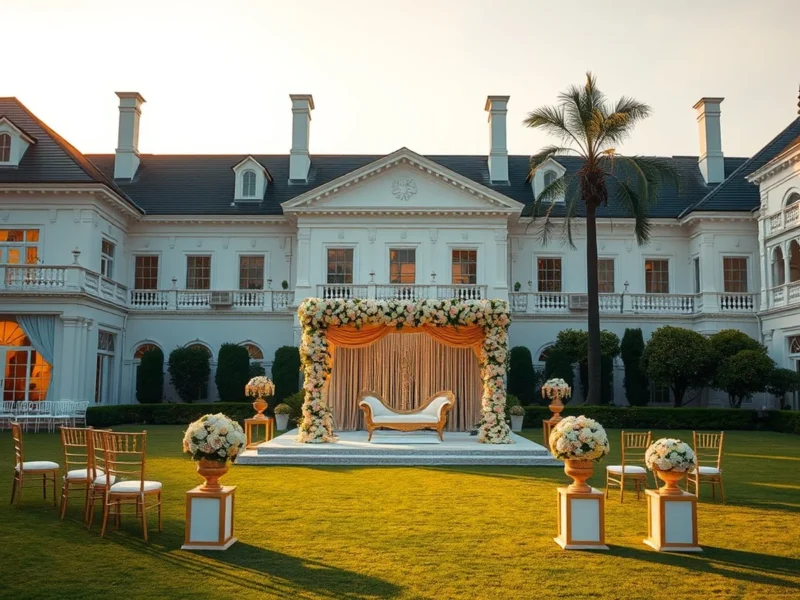
How to Choose a Wedding Venue in India: 2026 Decision Guide

- Step 1: Lock your guest count first
- Step 2: Match the venue type to your wedding
- Step 3: Factor location and season
- Step 4: Confirm the all-in cost, not the rental
- How to run the site visit
- Step 5: The questions to ask before booking
- What is actually in the contract
- How a planner changes the venue decision
- Choosing a venue from overseas
- Common venue mistakes
- Frequently Asked Questions
- Sources and further reading
Choosing a wedding venue in India comes down to five decisions made in order: guest count, venue type, location and season, all-in cost, and the contract. Lock the guest count first, because it eliminates more options than anything else. Then match venue type to that number, check the date against season pricing, confirm the total cost rather than the rental, and pressure-test the contract for room-block minimums, hidden charges and cancellation terms before you sign. Most expensive mistakes happen at step five, not step one.
Step 1: Lock your guest count first
Guest count is the single decision that drives every other venue choice, and it is the one most couples defer because it is socially difficult. Deferring it is expensive.
A 150-guest wedding opens up floating palaces, boutique heritage properties and island venues. A 700-guest wedding rules all of those out immediately and points you at farmhouses, large hotel ballrooms or open grounds. Touring venues before you have a number means touring venues you cannot use.
Settle on a realistic figure with a 10 to 15 percent buffer. Realistic means the number your parents will actually invite, not the number everyone agrees to in the first conversation. Then hold it, because the guest list is also your budget: at Rs 15,000 per guest all in, an extra hundred people is another Rs 15 lakh, and it usually arrives quietly, forty at a time.
Two counts matter, not one. Total attending decides the venue size. Guests needing rooms decides the room block, which at a destination or hotel wedding is frequently the largest single line in the contract. Work both out before you enquire anywhere.
Step 2: Match the venue type to your wedding
Each venue type has a natural guest range and a natural failure mode. Choosing against type is possible but you pay for it, usually in production budget.
- Heritage palaces. 100 to 400 guests. Unmatched atmosphere and photographs. Constrained room inventory, strict rules on decor and load-in, and the highest cost per guest.
- Five-star hotels. 200 to 800 guests. The most reliable option: everything under one contract, weather-proof, and staff who have done this hundreds of times. Less distinctive, and in-house catering is rarely negotiable.
- Farmhouses and open grounds. 300 to 1,000 guests. Maximum creative control and the best value at scale. You are building infrastructure from nothing, which means generators, kitchens, washrooms and a much larger production budget.
- Resorts. 100 to 300 guests. Good for multi-day weddings where guests stay on site. Beach and hill properties carry real weather risk that needs a genuine backup plan, not a hopeful one.
- Banquet halls. 100 to 600 guests. The most economical route and entirely respectable. Limited atmosphere, so decor does more of the work.
Our venue cost guide covers what each type costs, and the five-star, farmhouse and palace guides go deeper on each.
Step 3: Factor location and season
The same venue can differ by 30 to 50 percent between peak and shoulder season, which is a larger swing than you will achieve by negotiating, changing venue type, or cutting the decor budget.
Peak in most of India is October to March. If your date is fixed by family or astrological considerations, accept peak pricing and plan around it. If it is genuinely flexible, moving the wedding by six weeks is the highest-value decision available to you, and it should be made before you shortlist, not after.
Location works the same way. A venue an hour outside a metro is routinely 30 to 40 percent cheaper than its equivalent inside the city, and the cost you pay is guest convenience and transport. That trade is worth making for a wedding where most guests are staying overnight anyway, and worth avoiding for a single-evening reception. Our wedding season guide and date selection guide cover the calendar in full.
Step 4: Confirm the all-in cost, not the rental
Venue rental is typically 30 to 40 percent of what the venue will finally cost you. The quoted rental figure is close to meaningless on its own, and comparing two venues on it is how couples end up choosing the more expensive one.
Ask every venue for a total against your actual guest count and your actual dates, itemised. The lines that get left out of an initial quote, consistently:
- Food and beverage minimum. Often a floor you must spend regardless of what you order.
- Room block minimum. Rooms you contract and pay for whether or not they fill.
- Outside vendor fees. A charge for every vendor not on the venue’s approved list.
- Corkage and alcohol permits. Sometimes more than the alcohol.
- Extra hours. Weddings overrun. Find out what the hour after midnight costs before you need it.
- Taxes and service charge. Frequently quoted exclusive, and adds 20 to 25 percent.
- Setup and teardown days. Some venues charge these as event days.
Get the total, in writing, per venue, and compare those. Our per-plate guide and budget guide show how these lines fit together.
How to run the site visit
Most couples tour a venue, admire it, and leave without the information they came for. A site visit is a survey, not a viewing, and it is worth treating it that way.
Go at the time of day your main function will run. A lawn that is beautiful at eleven in the morning tells you nothing about how it looks and feels at eight in the evening, and lighting, noise and temperature all change completely. If your ceremony is at sunset, visit at sunset.
Walk the guest route, not the tour route. Where do cars stop, how far is the walk to the mandap, where are the washrooms, and can an elderly guest do that walk twice in an evening without difficulty. Venues show you the view; guests experience the corridor.
Look for the things that only appear on a working day: where catering plates up, where the generator sits and how loud it is, where the bins go, and what your guests will see behind the stage. Ask to see a room from the block you would be contracting rather than the suite they show visitors.
Finally, meet the person who will run your wedding, not only the sales manager who is selling it. Those are different people at almost every property, and the second one is the one who matters on the day.
Want a real number for your wedding? Send us your dates and guest count and we will come back with an itemised estimate for your wedding, not a range copied off a price list.
Step 5: The questions to ask before booking
Ask these at the site visit, and write the answers down. A venue that hesitates on any of them is telling you something useful.
- What is the total for our guest count and dates, itemised and inclusive of taxes?
- What is the food and beverage minimum, and what counts towards it?
- How many rooms must we block, and what happens to unsold rooms?
- Can we bring outside caterers or decorators, and what is the fee if we do?
- What time must music stop, and what does an extension cost?
- How many other events will be running on our dates, and where?
- What is the wet-weather plan, and does it cost extra?
- When is each payment due, and what is the cancellation and postponement policy?
- Who is our point of contact on the day, and will they still be here in a year?
- What are the load-in times and restrictions for production?
- Is there a generator, and is it included?
- Can we see the venue set up for a wedding rather than empty?
That last one matters more than couples expect. An empty ballroom tells you very little, and venues will usually arrange for you to look in on a live setup if you ask.
What is actually in the contract
This is the step where money is genuinely lost, and it is the one almost no guide covers. Four clauses are worth real attention.
The postponement clause. Not the cancellation clause. Weddings get moved far more often than cancelled, and many contracts treat a postponement as a cancellation, forfeiting the deposit. Ask for a one-time date change within twelve months at no penalty. Many venues will agree if you ask before signing and none will after.
The attrition clause. This governs your room block. A reasonable contract lets you release 10 to 20 percent of contracted rooms without penalty by an agreed date. A poor one holds you to the full number. On a 100-room block this clause is worth several lakh.
The price-escalation clause. If you book eighteen months ahead, check whether per-plate rates are locked or subject to revision. An unlocked rate can move 10 to 15 percent between signing and the wedding.
The substitution clause. What happens if the venue reassigns your lawn to a larger booking and offers you a different space. Good venues will name your specific spaces in the contract. Ask for that.
Our contract guide covers the equivalent terms on the planner side.
How a planner changes the venue decision
Worth being straight about what does and does not change here. A planner does not usually get you a lower headline rental; venues protect their rate card. What a planner does is know which venues actually deliver at your guest count, what the real all-in has been at that property recently, and which clauses that venue will concede if asked properly.
The saving, where there is one, comes from not making an expensive mistake: contracting a room block that was never going to fill, choosing a venue whose load-in restrictions quietly double the production budget, or signing a postponement clause that costs you the deposit when a date moves. Our guides on hiring a planner, questions to ask and planner fees cover how that arrangement works.
Choosing a venue from overseas
If you are booking from abroad and cannot visit, three things protect you. Insist on a live video walkthrough rather than photographs, at the time of day your event will run. Ask for the contact details of two couples who married there in the last year. And have someone you trust attend the site visit and the tasting in person, whether that is family or a planner. Our NRI planning guide covers booking remotely in more detail.
Common venue mistakes
- Booking on the rental figure. The rental is 30 to 40 percent of the venue’s true cost. Compare totals or you will pick wrong.
- Contracting an optimistic room block. Rooms you contract are rooms you pay for. Contract the number you are confident of and negotiate the right to add.
- Choosing a venue that fits exactly. A venue at exactly your guest capacity has no room for the buffet queue, the dance floor or the forty people who arrive uninvited. Leave 15 percent of headroom.
- Ignoring the weather plan. An outdoor venue without a costed, specific backup is a gamble on one evening you cannot repeat. Ask what the backup is and what it costs, and look at it.
- Signing before reading the postponement clause. Dates move. Contracts that treat a move as a cancellation are common and are usually negotiable before signature only.
Frequently Asked Questions
What is the first thing to decide when choosing a wedding venue?
Your realistic guest count, with a 10 to 15 percent buffer. It eliminates more venues than any other factor and determines your budget, because total cost scales almost directly with the number of people. Touring venues before settling this wastes time on properties you cannot use.
How far in advance should I book a wedding venue in India?
Nine to twelve months for peak season, October to March, and longer for sought-after heritage properties, which are often taken twelve to eighteen months ahead. Outside peak season five to six months is workable.
What hidden costs should I check before booking a venue?
Food and beverage minimums, room-block minimums, outside vendor fees, corkage, overtime charges, setup and teardown day charges, and whether taxes and service charge are included. Together these commonly add 40 to 60 percent to a quoted rental.
Is it cheaper to book a venue directly or through a planner?
The headline rate is usually similar, since venues protect their rate card. A planner’s value is in knowing the real all-in cost at that property, which contract terms are negotiable, and which venues genuinely work at your guest count. The saving is in mistakes avoided rather than discount extracted.
What percentage of the wedding budget should the venue be?
Venue and catering together typically run 40 to 50 percent of the total. If the venue alone is taking more than about 35 percent, the rest of the wedding will feel underfunded against it.
Should I book the venue or the planner first?
The planner, if you are engaging one. Venue selection is where a planner adds the most value, and engaging one after the venue is signed forfeits most of it. If you are not using a planner, the venue is your first booking.
What should I do if the venue wants a large non-refundable deposit?
Ask for it to be convertible rather than refundable: a one-time date change within twelve months at no penalty. Venues resist refunds and are far more willing on postponement, and postponement is what actually happens.
Sources and further reading
Begin Your Engagement
Want a real number for your wedding?
Tell us your city, guest count and dates. Team Velvet Knot will come back within 24 hours with an itemised budget.