Maharashtrian Wedding Cost: 2026 Pricing Guide
- What a luxury Maharashtrian wedding costs in 2026
- The Maharashtrian rituals that shape the budget
- Cost breakdown by component
- Cost by guest count
- Sample budgets at three tiers
- City variation: Mumbai, Pune, Nagpur, Kolhapur, Nashik
- Sub-community and format notes
- Dhol-tasha, warkari and cultural touches
- How to plan a luxury Maharashtrian wedding smartly
- Planning your Maharashtrian wedding with Velvet Knot
- Frequently Asked Questions
- Sources and further reading
A luxury Maharashtrian wedding for 300 to 600 guests in 2026 costs Rs 25 lakh to Rs 1.5 crore all in. The tradition is elegant and understated, daytime and compact, but a fast-growing luxury tier now adds sangeet, reception and resort venues that lift the ceiling sharply.
What a luxury Maharashtrian wedding costs in 2026
A Maharashtrian wedding is, by temperament, one of the most restrained luxury formats in India. The ethos is elegance without ostentation: a daytime muhurat, a tight ritual sequence, refined Paithani silk rather than heavy embellishment, and a preference for taste over spectacle. Historically the whole affair fit into a single morning at a neighbourhood mangal karyalay (marriage hall), followed by a lunch. That heritage still anchors the community, and it keeps the entry point lower than a Punjabi or Marwari equivalent of the same size.
The modern luxury version is a different animal. Urban Mumbai and Pune families now frame the ceremony inside a two or three day arc: a sakharpuda or engagement, a haldi and mehndi morning, the muhurat itself, and an evening reception, with a sangeet increasingly slotted in. For a well appointed 2026 wedding of 300 to 600 guests, the realistic all-in range is Rs 25 lakh to Rs 1.5 crore. The premium band sits around Rs 25 lakh to Rs 45 lakh; a true luxury production at a five-star or vineyard property lands Rs 50 lakh to Rs 90 lakh; and an ultra-luxury, multi-day, big-guest-count wedding crosses Rs 1 crore comfortably. For the wider national picture see our Indian wedding cost breakdown.
The Maharashtrian rituals that shape the budget
The Maharashtrian ceremony is dense with rites, but most are intimate and priest-led rather than production-heavy, which is why the ritual load rarely drives cost the way a North Indian sangeet-baraat-reception stack does. Understanding the sequence helps you spend where it matters. For the full ceremonial detail see our Maharashtrian wedding rituals guide.
Sakharpuda is the engagement, where sugar and gifts are exchanged. Often an intimate at-home or small-hall event, it is inexpensive unless a family chooses to scale it into a formal party. Halad (haldi) and mehndi form the pre-wedding morning, turmeric applied with marigold and simple decor: modest cost, high photographic value. Seemant puja welcomes the groom’s side and is a quiet ritual meal.
The muhurat is the heart of the day and where the community’s signature rites live: the antarpat (a decorative cloth held between bride and groom), the mangalashtak shlokas sung by priests and guests as the cloth drops, kanyadaan, and the saptapadi around the sacred fire. Gaurihar puja sees the bride worship Goddess Parvati before the vows. Because the muhurat is auspicious by time, it is usually held by day, which caps venue and lighting spend. The reception is the one event that behaves like a luxury cost centre, since it is optional, evening, and open to scale in catering, decor and entertainment. In practice, catering and the reception drive the biggest line items; the rituals themselves are modest.
Cost breakdown by component
Venue: mangal karyalay vs five-star
The single biggest swing in a Maharashtrian budget. A traditional mangal karyalay or community hall runs Rs 75,000 to Rs 3 lakh per day and remains genuinely respectable for a daytime muhurat, since the hall provides tables, a kitchen and priest-friendly ritual space at a fraction of hotel rates. A premium banquet or four-star ballroom is Rs 3 lakh to Rs 8 lakh per day. A five-star property (ITC Grand Central, Taj, JW Marriott) or a Nashik vineyard resort books Rs 8 lakh to Rs 25 lakh per day once you add rooms and F and B minimums. The economics matter: a hall wedding pays only for the space, whereas a five-star imposes a food-and-beverage floor and a room-night commitment that can quietly double the venue line. Many luxury families now run a hybrid, booking a hall for the daytime muhurat and a hotel only for the evening reception, which caps the expensive F and B minimum to a single event. For the full national context see our Indian wedding cost breakdown.
Catering and per-plate
Food is where a Maharashtrian wedding earns its reputation for warmth. A traditional veg pangat thali (puran poli, masale bhaat, aamti, bharli vangi, batata bhaji, shrikhand, ukadiche modak) needs a genuine Marathi kitchen. Expect Rs 1,200 to Rs 2,500 per plate for authentic veg, Rs 2,500 to Rs 4,500 for a multi-cuisine luxury spread, and Rs 3,000 to Rs 6,000 where Malvani or Kolhapuri non-veg counters (sukka mutton, tambda-pandhra rassa) are added. Catering typically absorbs 30 to 45 percent of the total.
Decor and production
The aesthetic favours fresh marigold, tuberose, banana stems and brass over imported blooms and heavy fabrication, which keeps decor sane: Rs 3 lakh to Rs 12 lakh for a luxury build, including the mandap and a bespoke antarpat (Rs 15,000 to Rs 1.5 lakh depending on embroidery). See our mandap decoration ideas for direction.
Entertainment: lezim, dhol-tasha, sangeet
A live dhol-tasha pathak (troupe) and lezim dancers are the community’s signature, Rs 40,000 to Rs 2.5 lakh per performance. A shehnai ensemble adds Rs 25,000 to Rs 1 lakh. A full sangeet with choreography, sound and a headline artist can add Rs 3 lakh to Rs 20 lakh if the family opts in.
Photography and film
A luxury multi-day team with candid, cinematic film and a same-day edit runs Rs 3 lakh to Rs 12 lakh.
Hospitality
Guest rooms, welcome hampers, local transfers and hair-and-makeup for the family typically add Rs 3 lakh to Rs 15 lakh at the luxury tier.
Cost by guest count
Guest count is the clearest predictor of spend. These 2026 ranges assume a luxury vendor stack, a two to three day format, and a mix of veg pangat plus a multi-cuisine reception.
| Guests | Format | All-in cost (2026) |
|---|---|---|
| 200 | Muhurat + reception, premium hall | Rs 22 lakh: Rs 40 lakh |
| 400 | 3 events, four or five-star | Rs 38 lakh: Rs 70 lakh |
| 600 | 3-4 events, five-star / resort | Rs 60 lakh: Rs 1.1 crore |
| 800 | Full format, flagship venue | Rs 90 lakh: Rs 1.6 crore |
To model your own numbers line by line, use our wedding budget planning guide.
Sample budgets at three tiers
Three fully-costed 2026 scenarios for a 400-guest Maharashtrian wedding, showing where the money actually goes as you move up the ladder.
| Component | Premium | Luxury | Ultra-luxury |
|---|---|---|---|
| Venue | Rs 4 lakh | Rs 12 lakh | Rs 28 lakh |
| Catering | Rs 12 lakh | Rs 22 lakh | Rs 42 lakh |
| Decor + mandap | Rs 4 lakh | Rs 9 lakh | Rs 20 lakh |
| Entertainment | Rs 2 lakh | Rs 6 lakh | Rs 15 lakh |
| Photo + film | Rs 3 lakh | Rs 6 lakh | Rs 12 lakh |
| Attire + jewellery | Rs 6 lakh | Rs 14 lakh | Rs 35 lakh |
| Planning + hospitality | Rs 5 lakh | Rs 11 lakh | Rs 24 lakh |
| Total | Rs 36 lakh | Rs 80 lakh | Rs 1.76 crore |
Attire and jewellery carry wide swings because the bridal Paithani and gold (nath, thushi, kolhapuri saaj) are often heirlooms. For that line see our bridal jewellery cost guide.
City variation: Mumbai, Pune, Nagpur, Kolhapur, Nashik
Where you marry moves the number materially. Mumbai is the priciest, the tier-2 markets the most efficient, and Nashik has become the destination-luxury outlier.
Mumbai is the largest Maharashtrian market by absolute spend, with five-star per-plate at Rs 3,000 to Rs 6,000 and banquet venues from Rs 5 lakh to Rs 20 lakh per day. See our Mumbai luxury wedding cost page. Pune is the ritual heartland with the deepest vendor knowledge and gentler pricing, per-plate Rs 1,800 to Rs 3,800 and venues Rs 2 lakh to Rs 8 lakh; details on our Pune wedding cost page. Nagpur, the Vidarbha hub with its own saoji culinary tradition, runs per-plate Rs 1,500 to Rs 3,000, covered on our Nagpur wedding cost page. Kolhapur brings robust non-veg counters and value pricing, per-plate Rs 1,400 to Rs 2,800, with halls from Rs 60,000 to Rs 2.5 lakh. Nashik is the vineyard-destination story, resorts and wineries from Rs 5 lakh to Rs 18 lakh per day; see our Nashik wedding cost page.
Want a real number for your wedding? Send us your dates and guest count and we will come back with an itemised estimate for your wedding, not a range copied off a price list.
Sub-community and format notes
Maharashtrian is an umbrella, and sub-community conventions shift both ritual and budget. Deshastha and Kokanastha (Chitpavan) Brahmin weddings are the most orthodox in ritual sequence, favouring the daytime muhurat, the pangat lunch and a restrained aesthetic, which keeps them cost-efficient at scale. CKP (Chandraseniya Kayastha Prabhu) families lean toward polished, cosmopolitan celebrations and are among the earliest adopters of the added sangeet and evening reception. Maratha weddings, especially in western Maharashtra and Kolhapur, are warmer and larger, with strong dhol-tasha energy and substantial non-veg feasting that lifts catering. Saraswat weddings bring a distinct Konkani coastal menu (fish, coconut) that needs a specialist kitchen.
The bigger format decision is venue philosophy: the traditional mangal karyalay hall, cost-efficient and community-rooted, versus the new-luxury hotel, resort or Nashik vineyard wedding. Many affluent families now split the difference, keeping the muhurat traditional and daytime while staging the reception at a five-star. Format ambition tracks sub-community too: a Deshastha family may spend Rs 30 lakh on a dignified hall wedding of 400, while a CKP or Maratha family of the same size chasing a vineyard reception and full sangeet lands Rs 70 lakh or more, purely on added events rather than richer rituals. For colour and styling that suits Paithani-led palettes across these formats, see our wedding colour palette ideas.
Dhol-tasha, warkari and cultural touches
The cultural signatures are where a Maharashtrian wedding stops looking generic and becomes unmistakably itself, and they are worth budgeting for deliberately. A live dhol-tasha pathak, the thundering percussion troupe born of Pune’s Ganeshotsav processions, transforms a baraat or reception entry; a full pathak with dozens of players and a dhwaj (flag) bearer runs Rs 40,000 to Rs 2.5 lakh. Lezim dancers, moving in synchronised rows with small cymbal-fitted sticks, add heritage colour for Rs 25,000 to Rs 1 lakh.
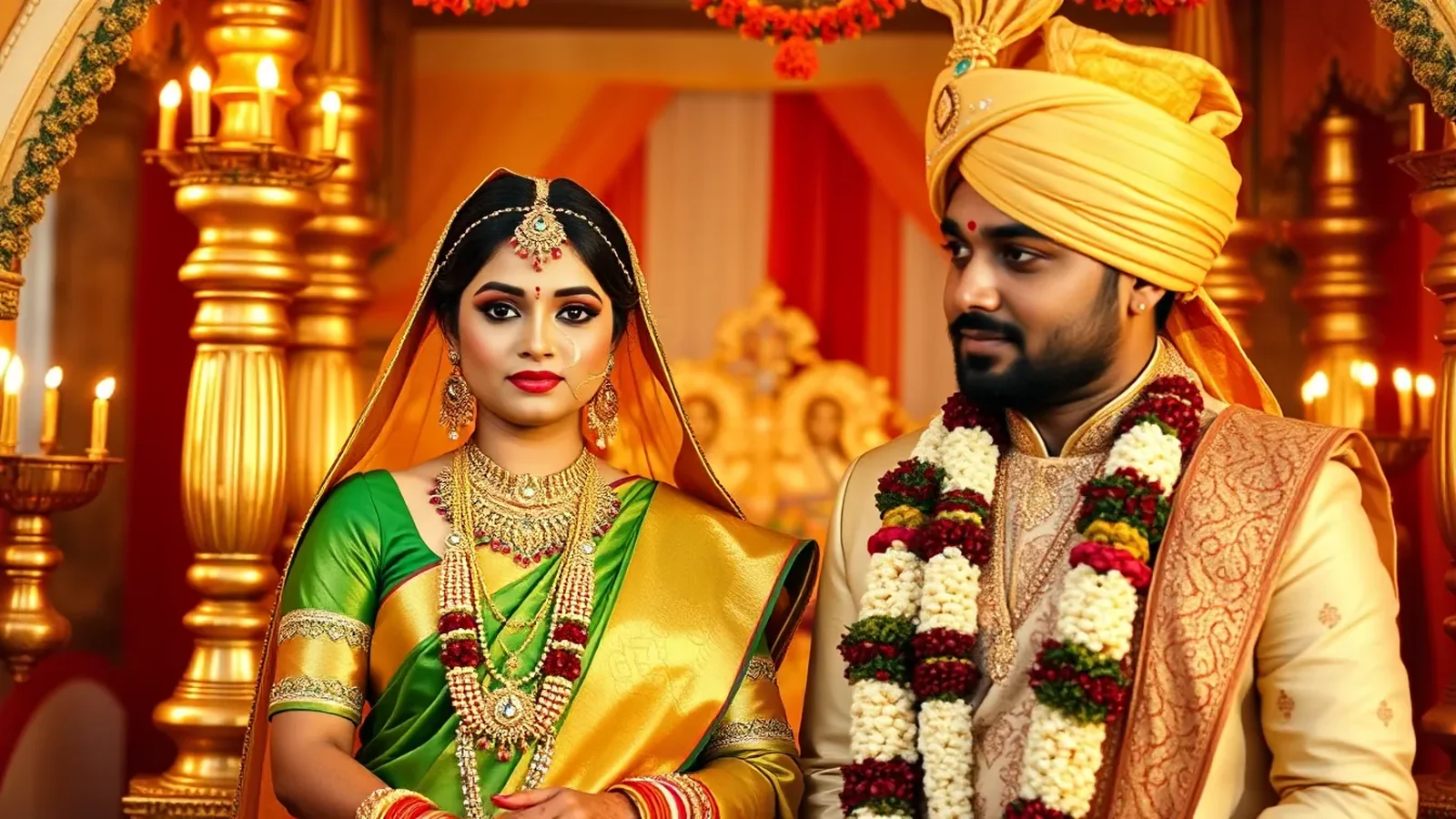
Warkari and abhang devotional touches, bhajan-style singing tied to the Pandharpur pilgrimage tradition, lend a soulful register some families weave into the haldi or seemant. On attire, the nauvari (the nine-yard saree draped in the distinctive dhoti style) and the Paithani in peacock and zari motifs are the bridal anchors, while the groom’s pheta (turban) and dhoti-kurta complete the look. These are cultural investments, not overheads, and they are the details guests remember. For a coordinated palette around Paithani tones see our wedding colour palette ideas.
How to plan a luxury Maharashtrian wedding smartly
The community’s own instincts are a value engine, so lean into them rather than fighting them. First, weigh mangal karyalay versus hotel honestly: keeping the muhurat at a premium hall and reserving five-star spend for the reception can save Rs 8 lakh to Rs 20 lakh without cheapening a single guest experience. Second, use the daytime muhurat to your advantage, since an auspicious morning slot means minimal lighting and staging, a lunch pangat rather than an elaborate evening spread, and often better venue rates.
Third, marry off-peak where your muhurat allows; the summer and monsoon shoulder months carry materially softer venue and vendor pricing than the November to February peak. Fourth, treat Nashik as a destination option: a vineyard wedding for a tighter, higher-value guest list can deliver a genuinely luxurious two-day experience at a total below a sprawling Mumbai banquet affair. The maths is compelling, a Nashik winery for 250 curated guests over two days often lands Rs 45 lakh to Rs 65 lakh all in, versus Rs 70 lakh-plus for 500 guests at a Mumbai five-star, because you trade headcount for intimacy and travel-plus-stay for a shorter, richer arc; our Nashik wedding cost page breaks down the winery packages. Fifth, spend deliberately on the cultural signatures rather than generic upgrades: one thundering dhol-tasha pathak entry photographs better and costs less than an over-built stage, so anchor the dhol-tasha and lezim budget early. Finally, register the marriage properly under Maharashtra rules; our Maharashtra marriage registration guide covers the paperwork, and for benchmarking planner charges see our wedding planner cost guide.
Planning your Maharashtrian wedding with Velvet Knot
Velvet Knot plans luxury Maharashtrian weddings. That matters in a community that prizes value: every rupee you spend on the mangal karyalay, the Marathi kitchen, the dhol-tasha pathak or the Nashik vineyard goes to the vendor, not to a hidden markup. Our direct ties with authentic Maharashtrian caterers, Paithani specialists, priests fluent in the mangalashtak, and heritage venues across Mumbai, Pune, Nagpur, Kolhapur and Nashik mean you get orthodox ritual precision alongside genuine luxury polish. To model your numbers and start planning, request a quote.
Planning a luxury wedding in this city?
Speak to our team for a tailored venue shortlist and cost plan.
Frequently Asked Questions
How much does a Maharashtrian wedding cost in 2026?
A luxury Maharashtrian wedding for 300 to 600 guests costs Rs 25 lakh to Rs 1.5 crore all in. The premium tier sits around Rs 25 lakh to Rs 45 lakh, a five-star or vineyard luxury production Rs 50 lakh to Rs 90 lakh, and an ultra-luxury multi-day wedding crosses Rs 1 crore. The community’s elegant, daytime, compact format keeps the entry point lower than a Punjabi or Marwari equivalent.
Why are Maharashtrian weddings cheaper than Punjabi or Gujarati ones?
At the same guest count they typically run 20 to 40 percent less because the format is shorter and understated: an auspicious daytime muhurat, a tight ritual sequence, restrained decor built on marigold and brass rather than imported blooms, and a lunch pangat instead of a lavish evening spread. Costs rise only when families add an optional evening reception and sangeet, which the modern luxury tier increasingly does.
What is the per-plate catering cost for a Maharashtrian wedding?
An authentic veg pangat thali (puran poli, masale bhaat, aamti, shrikhand, modak) runs Rs 1,200 to Rs 2,500 per plate, a multi-cuisine luxury spread Rs 2,500 to Rs 4,500, and menus with Kolhapuri or Malvani non-veg counters Rs 3,000 to Rs 6,000. Mumbai sits at the top of each band and Nagpur, Kolhapur and Nashik toward the bottom.
Do I need a sangeet and reception for a Maharashtrian wedding?
No. The traditional format is sakharpuda, haldi and mehndi, the muhurat, and a lunch, with no separate sangeet, and many orthodox Deshastha and Kokanastha families still skip both. A sangeet and evening reception are optional luxury additions, common among CKP and urban Mumbai and Pune families, and they are the single biggest lever on the final budget.
What are the signature Maharashtrian ritual costs to budget for?
The community-specific line items are the antarpat cloth held during the mangalashtak (Rs 15,000 to Rs 1.5 lakh), a live dhol-tasha pathak and lezim troupe (Rs 40,000 to Rs 2.5 lakh), a shehnai ensemble (Rs 25,000 to Rs 1 lakh), and the bridal Paithani and nauvari. Brass and copper ritual vessels the priest specifies add Rs 15,000 to Rs 75,000.
Which Maharashtra city is best value for a luxury wedding?
Pune offers the strongest balance of authentic ritual expertise and sensible pricing, with per-plate at Rs 1,800 to Rs 3,800. Nagpur and Kolhapur are the most economical. Mumbai is the most expensive but has the deepest five-star inventory, and Nashik is the destination-luxury choice, delivering a vineyard experience that can undercut a large Mumbai banquet wedding on total spend.
Sources and further reading
Begin Your Engagement
Want a real number for your wedding?
Tell us your city, guest count and dates. Team Velvet Knot will come back within 24 hours with an itemised budget.