Wedding Welcome Hampers in India: What to Put In Them and What Guests Actually Use
- A welcome hamper is not a return gift, and confusing the two costs you money
- The real job of the hamper: making an unfamiliar city navigable
- The itinerary card: the single most important item, and the one most families omit
- What guests actually use, ranked honestly
- Building the hamper in tiers, with indicative ranges
- Regional and seasonal customisation, done properly
- Local and artisanal sourcing beats generic luxury
- Packaging, counts and assembly: where families come unstuck
- Dietary, cultural and alcohol segmentation
- The failure modes worth planning around
- Frequently Asked Questions
- Sources and further reading
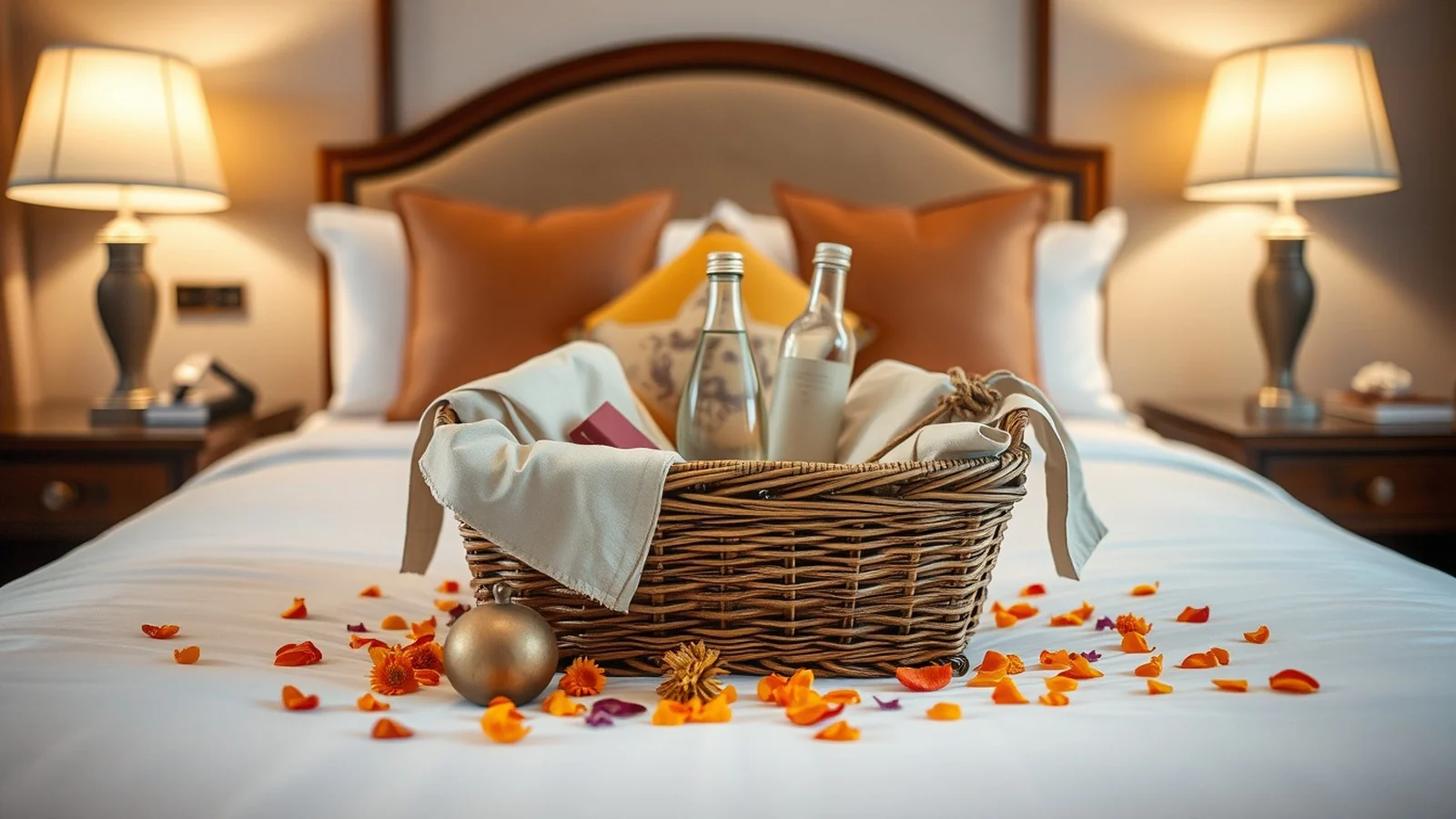
A wedding welcome hamper is placed in an outstation guest’s hotel room on arrival. Its real job is to make an unfamiliar city usable: printed itinerary, water, local SIM or wifi details, snacks, basic medicine. Indicative cost runs Rs 400 to Rs 5,000 per hamper. Return gifts are a separate thing, handed out at departure.
A welcome hamper is not a return gift, and confusing the two costs you money
Two different gifts, two different moments, two different budgets. The welcome hamper is placed in a guest’s hotel room before they check in, or handed over at the airport pickup. The return gift is given at the end, usually after the reception or at the departure breakfast. Families routinely merge them into one line item, order one large quantity of one thing, and end up with an arrival gift that is too ceremonial to be useful and a farewell gift that feels like an afterthought.
Keep them separate on the budget sheet from the first planning meeting. Return gift strategy, price bands and the etiquette of who gets what are covered in full at our guide to Indian wedding return gifts. This page is only about the arrival hamper. What it should contain, what it costs, how many to make, and who physically carries it up to room 412 at eleven at night.
The distinction matters practically. A return gift is chosen to be carried home, so weight and fragility are the constraints. A welcome hamper is chosen to be consumed and used during the three or four days a guest is with you, so shelf life, portability inside the venue and immediate usefulness are the constraints. An item that is right for one is usually wrong for the other.
For what hospitality as a whole costs, including room blocks, welcome desks and hamper budgets set against a total wedding spend, hand off to the wedding hospitality cost breakdown. We deliberately do not rebuild the cost model here.
The real job of the hamper: making an unfamiliar city navigable
Think about what an outstation guest has just been through. A flight or an overnight train, a driver they have never met, a hotel in a city they may not know, and a wedding schedule that exists only in a WhatsApp group with 240 members and no pinned message. They walk into a room at 10 pm. The hamper is the first physical object from your wedding that they touch.
That single fact should drive every decision about contents. The hamper is not a gift in the ceremonial sense. It is a briefing pack with nice things attached. If a guest can open it and immediately answer four questions, it has done its job: where do I need to be tomorrow morning, what do I wear, how do I get there, and who do I call if something goes wrong.
Families get this backwards. They spend Rs 2,500 a hamper on a beautiful brass keepsake and then leave the schedule to a forwarded PDF that nobody can read on a phone. The result is thirty phone calls to the bride’s cousin on haldi morning, buses that leave with eleven people missing, and elderly relatives who show up in the wrong outfit for a poolside mehendi.
Test every proposed item against one question: does this reduce the number of times a guest has to ask someone for help? Water reduces it. A printed schedule reduces it. A local SIM card reduces it. A decorative lantern with the couple’s monogram does not.
If a meaningful share of your guest list is flying in from abroad or from another state, read the outstation guest planning guide alongside this. The hamper is one deliverable inside a much wider arrival operation.
The itinerary card: the single most important item, and the one most families omit
If your budget only allows one thing in the hamper, make it a printed itinerary card. Not a folded invitation insert. A card, on stiff stock, that survives being carried in a handbag for four days.
Here is what it must carry, and every one of these is on the list because its absence has caused a real problem at a real wedding:
- Function name and date, in plain language. Not just Sangeet, but Sangeet, Friday 14 November.
- Start time, and separately the time guests should be seated. Indian weddings run late, but the muhurtham does not. If the pheras start at 4.42 am, say so and say that guests should be seated by 4.20 am.
- Venue name plus a landmark. Large resorts have four lawns with similar names. Write Lawn 2, near the east gate, not just Lawn 2.
- Dress code per function, in words a guest can act on. Formal Indian, pastels, comfortable footwear for grass. Guests who are unsure about what is expected can be pointed to our Indian wedding guest dress guide, but the card should be self sufficient.
- Transport pickup time and pickup point. The single most useful line on the card. Bus departs hotel lobby 6.15 pm sharp.
- One contact number, staffed. Not the bride. Not the groom. A hospitality volunteer or planner’s number that will be answered at 5 am.
Print it double sided, one function per block, in a font size a sixty five year old can read without glasses. Add a QR code to a live schedule page if you like, but the printed version is the fallback that works when the resort wifi does not.
Build the card off the same master run sheet you are using for the day itself. How that run sheet gets built, hour by hour, is covered in the Indian wedding day timeline guide. If the two documents disagree, guests will trust the printed card, which is exactly why it must be the last thing you print, after the timeline is locked.
For destination weddings the card needs a second panel: nearest hospital, nearest pharmacy, approximate taxi fare to the airport, and check out time. Guests planning their own arrivals and departures will find more of this in the destination wedding guest guide.
What guests actually use, ranked honestly
After enough weddings you can walk the rooms during checkout and see what got used. The ranking below is not a preference survey, it is what is empty or missing at departure versus what is sitting untouched on the desk.
- Water. Two bottles minimum per person, more in summer. Always the first thing gone. If you put nothing else in the hamper, put water.
- The printed itinerary. Photographed, forwarded to family, carried around. Guests will ask for a second copy.
- Local SIM or wifi details. A card with the resort wifi name and password saves your front desk two hundred queries. For NRI guests, a prepaid local SIM or a note on where to buy one is genuinely valuable, since Indian SIM activation needs identity documents and time.
- Snacks that travel. Namkeen, dry fruit, biscuits, a chocolate bar. Guests eat these at 11 pm after a function ran late and dinner was at 10.30 pm and they were too busy talking to eat.
- Something for the head or the feet. At an outdoor venue this is a hand fan, a sun hat or a folding umbrella in summer, and flat foldable slippers or comfortable footwear for lawn and sand venues. Used constantly, remembered fondly.
- Basic medicine. Paracetamol, an antacid, oral rehydration salts, a few adhesive bandages. Keep it to standard over the counter items, sealed and within date. Do not include prescription medication.
- Lip balm, sunscreen, hand sanitiser, tissues. Small, cheap, high use.
And what gets left behind in the room, every single time:
- Bulky decor items. Brass diyas, candle stands, potted plants, framed photographs. Beautiful, and abandoned on the desk with the do not disturb card.
- Heavy sweets in large boxes. A one kilogram box of mithai that a guest cannot finish and cannot carry home in hand baggage is a waste of Rs 800. Small, single serve, well sealed sweets work. Large boxes belong to the return gift conversation, not this one.
- Branded merchandise. Monogrammed mugs, tote bags with the couple’s hashtag, custom t shirts in one size. Guests are polite about them and leave them behind.
- Anything that leaks. Loose oils, unsealed pickles, homemade preparations in glass. Housekeeping has opinions about this.
The pattern is simple. Consumables and information get used. Objects get left.
Building the hamper in tiers, with indicative ranges
Treat these as indicative 2026 ranges per hamper, inclusive of packaging but excluding assembly labour and delivery. Actual numbers move a lot with city, quantity and how much you are sourcing directly versus through the hotel. For proper budgeting against your overall spend, use the hospitality cost guide, which sets hampers against room blocks, transport and welcome desk staffing.
| Tier | Typical contents | Indicative range per hamper | Best suited to |
|---|---|---|---|
| Simple | Printed itinerary card, 2 bottles of water, one packet of namkeen or biscuits, a chocolate, wifi and contact card, jute or paper bag | Rs 400 to Rs 800 | Large guest counts, single city weddings, guests staying one or two nights |
| Mid | Everything above, plus dry fruit or a regional sweet in a small tin, a small medicine pouch, lip balm and sunscreen, a hand fan or folding umbrella, a local snack specialty, printed box | Rs 1,200 to Rs 2,500 | Destination weddings, three to four night stays, most 50 lakh to 1 crore weddings |
| Luxury | Everything above, plus a locally made textile item such as a stole or scarf, artisanal tea or filter coffee, a small brass or wooden craft piece, curated regional sweets, handwritten note, rigid presentation box, optional miniature spirit for segmented rooms | Rs 3,000 to Rs 8,000 | Palace and heritage venues, close family and VIP rooms, small high value guest lists |
Two practical notes. First, most families should run two tiers, not one: a mid tier for the general guest block and a luxury tier for perhaps fifteen to thirty rooms holding immediate family, the wedding party and guests of honour. That is far better value than averaging everything into one expensive hamper.
Second, packaging can quietly become a third of the cost. A rigid custom printed box with foam inserts runs Rs 350 to Rs 900 on its own. A good quality jute bag or kraft box with a printed tag does most of the same work for Rs 60 to Rs 200. Spend the difference on contents.
If the wedding is a destination event where guests are already absorbing flights and multiple nights, the hamper reads as a courtesy rather than a gift, and the mid tier is nearly always the right call. See the destination wedding cost guide for how that sits inside the total.
Regional and seasonal customisation, done properly
Season and geography should change the contents, not just the ribbon colour. A hamper that ignores a 44 degree Rajasthan afternoon is decorative, not useful.
Summer and dry heat, including Rajasthan and inland Deccan
Hydration first. Three or four bottles of water per person, oral rehydration salt sachets, and a glucose or electrolyte powder. Then sun protection: a broad spectrum sunscreen, lip balm with SPF, a light cotton scarf or stole that works as a head cover, and a hand fan. A folding umbrella doubles as a sun shade for outdoor mandap seating. Avoid chocolate entirely, it will be a puddle by the time the guest opens the box. India Meteorological Department heat wave advisories are worth checking against your dates. Broader hot weather planning is in the summer wedding guide.
Hill stations and winter north India
Reverse everything. Warmth and dryness are the problem. Include a pair of thick socks, hand cream and heavy lip balm, a sachet or two of good tea or instant coffee with a note on the room kettle, and something warming like ginger candy or nut brittle. A small pouch of tissues and a saline nasal spray helps guests coming from humid coastal cities. Mention on the itinerary card that evening temperatures drop sharply after sunset, because guests pack for the daytime forecast and freeze at a 9 pm sangeet.
Goa and coastal venues
Sand and sun. Foldable flat slippers, sunscreen, a beach appropriate cotton stole, insect repellent wipes, and a small waterproof pouch for phones. Cashew based snacks and local coastal specialities work well here and are genuinely regional rather than generic. Skip anything that melts or dissolves in humidity.
Monsoon and high humidity
A compact folding umbrella or a poncho is the hero item, and it is the difference between a guest attending the mehendi and a guest staying in their room. Add insect repellent, a quick dry towel, a sealable plastic pouch for phones and footwear, and antiseptic wipes. Every food item must be moisture sealed, not in open cellophane. Ceremony contingency planning for these dates is covered in the monsoon wedding planning guide.
NRI and long haul guests
Add a local prepaid SIM or clear instructions on getting one, a plug adaptor if guests are coming from regions with different sockets, and a short note on currency and typical cab fares. Jet lag is real, so a small pack of chamomile tea or an eye mask is more thoughtful than another sweet. Date and season selection for overseas families is covered in the NRI wedding timing guide.
Local and artisanal sourcing beats generic luxury
A guest who flew from New Jersey to Hyderabad does not want an imported chocolate assortment they can buy at their local supermarket. They want something they cannot get at home and would not have known to look for. This is the highest return decision in the whole hamper, and it usually costs less than the generic alternative.
Categories that work, sourced properly:
- Regional sweets and savouries. Buy from a well known local maker with proper packaging and a printed date of manufacture. Single serve or small tin formats, not kilogram boxes. Ask specifically about shelf life, because a lot of traditional sweets are three to five day items and your hampers may be assembled two days before arrival.
- Local textiles. A handloom cotton stole, a small block printed pouch, a khadi handkerchief set. Light, packable, and instantly regional. Several Indian textile traditions carry Geographical Indication registration, which is a useful shorthand for authenticity when you are comparing suppliers.
- Regional tea and coffee. Nilgiri or Assam tea, or a South Indian filter coffee blend with a note on how to brew it. Compact, consumed, and remembered. It costs very little and travels perfectly.
- Artisan crafts at small scale. A single small item, not a set. Wooden toys, a small brass piece, hand painted work, terracotta. Keep it under 200 grams and unbreakable, or it will be left behind for exactly the reasons discussed earlier.
- Spice or masala samples. A small sealed pouch of a regional masala blend with a one line note. Cheap, distinctive, and used months later.
Two cautions. Buy from established local makers and check food labelling compliance, because you are handing sealed food to several hundred people and packaged food carries labelling and date requirements under Indian food safety regulation. And never let a decorative craft item displace the itinerary card or the water. The regional item is the memorable part of the hamper. The functional items are the part that makes guests glad you sent one.
Packaging, counts and assembly: where families come unstuck
This is the section that gets skipped and then causes a crisis at 6 pm the day before arrivals.
Count rooms, not guests
You make hampers for guest rooms, not for individuals. A couple sharing a room gets one hamper, sized for two. A family of four in a suite gets one hamper with four waters and two medicine pouches. Pull the number from the room block sheet, not the guest list. Getting that room list right is a whole exercise in itself, covered in the wedding hotel room block guide.
Then add contingency. A practical rule: total occupied rooms, plus ten percent for late additions and room changes, plus a fixed ten to fifteen spares held at the welcome desk for guests who arrive unannounced or whose hamper went to the wrong room. Also budget a handful for the venue team and the planner’s file copy.
When they get assembled
Assembly is a two to three day job for a few hundred hampers with a team of four or five people, and it always takes longer than the family estimates. Perishables and anything with a short shelf life go in last, ideally the morning of delivery. Non perishables can be pre packed a week out. Do not assemble in a hotel room the night before while also finalising the seating chart. Book a dedicated space, a back of house room at the hotel or a relative’s home, and staff it properly.
Who puts them in the rooms
Hotels vary enormously here, and this must be agreed in writing when you sign the room block contract, not requested on arrival day. Most hotels will place a sealed, pre assembled hamper in a room during standard turndown or before check in, for a per room placement fee or as a negotiated inclusion when you have taken a meaningful block. Many hotels will not assemble hampers, will not store large volumes of loose food items, will not accept perishables into their housekeeping stores, and will charge a corkage style fee if the hamper contains outside alcohol.
The practical arrangement that works: your team assembles and delivers sealed, labelled hampers to the hotel in batches, hotel housekeeping places them in rooms against a printed rooming list, and one of your hospitality volunteers spot checks twenty rooms before the first flight lands. Someone from your side must own that check. Hotel staff placing four hundred hampers will make mistakes, and the mistakes surface as an angry uncle on the phone.
Labelling for named delivery
Every hamper carries a tag with the guest name and room number, and the tag is written after room assignment, not before. Use a removable sleeve or a slot in the box so a hamper can be relabelled if a room changes at the last minute. For guests arriving on different days, batch the delivery by arrival date rather than placing everything on day one, otherwise the water is warm and the snacks are opened by housekeeping trainees.
Dietary, cultural and alcohol segmentation
One hamper specification for everyone is the lazy option and it will offend somebody. Segment the list before you order.
Vegetarian by default. Every hamper should be safe for a vegetarian guest unless you have specifically flagged the room otherwise. That means checking for gelatin in confectionery, rennet in cheese based snacks, and egg in baked goods. Many Indian families are strict about this in a way that a generic gift supplier will not anticipate. Ask suppliers for the vegetarian or non vegetarian food mark on the packaging and check it yourself.
Jain and satvik rooms. If you have Jain guests or elders observing satvik restrictions, mark those rooms and run a separate specification with no onion, no garlic, and no root vegetables. It is usually eight to twenty rooms, not two hundred, so it is a small job that guests notice enormously.
Non vegetarian items. Generally avoid them entirely in welcome hampers. Shelf life and room temperature storage make them a food safety risk, and the offence risk is asymmetric. There is no upside that justifies it.
Alcohol. This needs a deliberate decision, not a default. Legal drinking ages and permit rules differ by state, and a few states restrict or prohibit sale outright, so a miniature bottle that is unremarkable in Goa may be a problem elsewhere. Beyond legality, a bottle in a hamper going to an elderly relative’s room, a devout family’s room, or a room with children is a genuine misstep. If you want to include alcohol, put it only in specifically flagged rooms, keep it to a small format, confirm the hotel’s policy on outside liquor and any corkage they will charge, and confirm the state’s rules for the venue location. When in doubt, leave it out of the hamper and handle drinks at the welcome dinner instead.
Children. Rooms with children should get a small separate pouch: a juice box, a colouring set or small puzzle, and a snack. It costs Rs 150 and buys parents a quiet twenty minutes on arrival.
Allergies. Nuts are the common one. Collect allergy information on the RSVP form, flag those rooms, and build a nut free variant. This is another reason the RSVP process needs to capture more than yes or no.
The failure modes worth planning around
A short list of what actually goes wrong, in rough order of how often we see it.
- The itinerary card is printed before the timeline is final. Then the muhurtham time shifts, and four hundred cards say the wrong thing. Print the cards last. Keep a small run of blank correction slips.
- Hampers placed on day one for guests arriving on day three. Warm water, stale snacks, a room that has been serviced twice. Deliver by arrival date.
- Nobody owns the rooming list. Hotel has one version, the family has another, the planner has a third. Name one person who owns it and update it in one place.
- Chocolate in a May wedding in a dry inland city. It melts in transit, in storage, and in the room. Seasonal contents are not decoration, they are function.
- The hamper budget is set per guest instead of per room, so the family over orders by thirty to forty percent and then cannot return anything.
- Assembly starts too late. A team of five packing three hundred mid tier hampers is a full two days of work, and it collides with mehendi day if you start late.
- No spares. Someone always gets missed. Fifteen spares at the welcome desk turn a complaint into a thirty second fix.
None of these are exotic. They are all scheduling and ownership problems, which is precisely why the hamper is a good early test of whether your hospitality operation is being run properly or improvised.
Planning for a lot of guests?
Tell us your guest count, how many are travelling in, and your venue. Team Velvet Knot will map the hospitality, transport and run sheet, and tell you honestly what it will cost.
Frequently Asked Questions
What is the difference between a wedding welcome hamper and a return gift?
A welcome hamper is placed in an outstation guest’s hotel room on arrival, or handed over at airport pickup. It is meant to be used during the wedding: water, the printed itinerary, snacks, seasonal essentials. A return gift is given at departure and is meant to be carried home. Different moments, different contents, different budget lines. Return gift guidance is at our return gifts guide.
How much should a wedding welcome hamper cost per guest in India?
Indicative 2026 ranges are roughly Rs 400 to Rs 800 for a simple hamper, Rs 1,200 to Rs 2,500 for a mid tier hamper, and Rs 3,000 to Rs 8,000 for a luxury tier. These are per hamper, not per guest, since one hamper serves a room. Costs vary widely by city and quantity. See the hospitality cost guide for how this sits inside your total budget.
How many welcome hampers should we make?
Count occupied guest rooms, not guests. Add about ten percent for late additions and room changes, plus ten to fifteen spares held at the welcome desk, plus a few for the venue team. Pull the base number from your room block sheet, which is covered in the room block guide.
Will the hotel place the hampers in guest rooms for us?
Most hotels will place sealed, pre assembled hampers against a printed rooming list, either for a per room placement fee or as a negotiated inclusion on a decent sized block. Agree it in writing in the room block contract. Most hotels will not assemble hampers for you, will not store perishables, and may charge a fee if the hamper contains outside alcohol. Always spot check a sample of rooms yourself before guests arrive.
Should we put alcohol in a welcome hamper?
Only in specifically flagged rooms, and only after checking two things: the state’s liquor rules for the venue location, since drinking age and permit requirements differ across India and a few states restrict sale, and the hotel’s policy on outside liquor. A bottle in an elder’s room or a room with children is a misstep. If in doubt, leave it out and handle drinks at the welcome dinner.
When should welcome hampers be assembled?
Non perishable items can be pre packed a week or more ahead. Perishables and anything with short shelf life go in on the morning of delivery. For a few hundred mid tier hampers, budget two full days for a team of four or five people in a dedicated space, and deliver to the hotel batched by guest arrival date rather than all at once.
Sources and further reading
Begin Your Engagement
Want a real number for your wedding?
Tell us your city, guest count and dates. Team Velvet Knot will come back within 24 hours with an itemised budget.