Spain Wedding Cost 2026 (Indian & NRI Budget Guide)
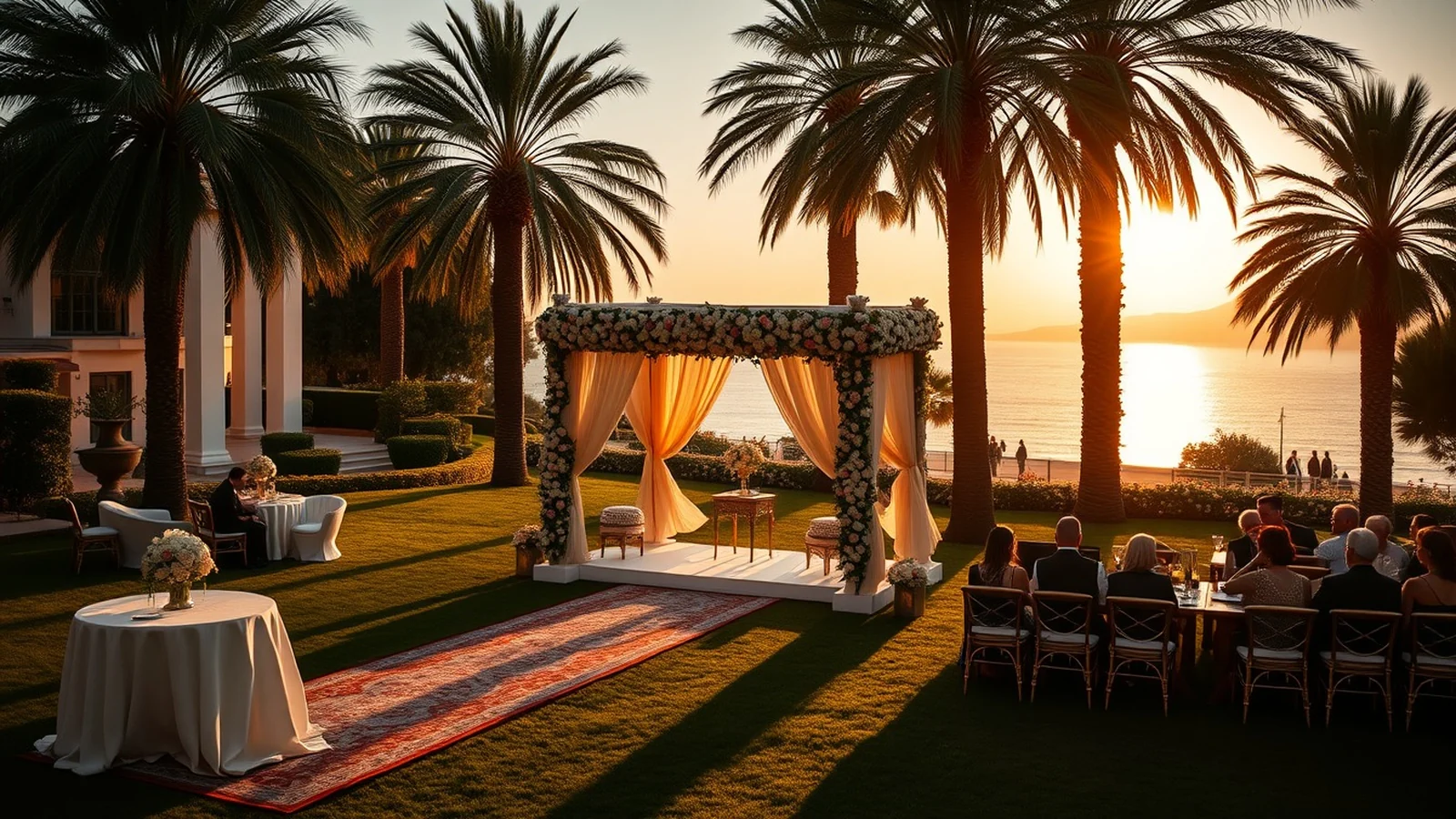
- What an Indian wedding in Spain costs in 2026
- Spain wedding cost by guest count (2026)
- Where in Spain Indians marry
- Full cost breakdown for a Spain wedding
- Sample budget: a luxury Spain wedding (2026)
- Best season and timing for a Spain wedding
- Legal, visa and marriage validity for Indians
- Guest logistics and hospitality
- How to control the budget
- Why use a planner and how Velvet Knot helps
- Frequently Asked Questions
- Sources and further reading
A luxury Indian wedding in Spain typically costs Rs 50 lakh to Rs 4.5 crore in 2026, spanning Marbella estates, Ibiza villas, Barcelona venues and Andalusian fincas. Spain delivers Mediterranean luxury at better value than France or Switzerland.
What an Indian wedding in Spain costs in 2026
Spain has quietly become one of the most sensible choices for a big-fat-Indian wedding abroad, and 2026 is the year it moves from insider tip to mainstream pick. A full multi-day celebration here generally runs Rs 50 lakh to Rs 4.5 crore, depending on guest count, the calibre of venue and how many events you stage. That range sounds wide because it is: an intimate 60-guest villa weekend in Marbella sits at the bottom, while a 350-guest, four-function extravaganza with an imported design house and celebrity performers sits at the top.
What makes Spain compelling is the value equation. You get the same Mediterranean light, the same sea-facing terraces and the same five-star service that draw couples to the French Riviera or the Amalfi Coast, but venue hire, catering and hospitality typically land 15 to 30 percent lower than comparable properties in France or Switzerland. The infrastructure for Indian weddings is genuinely mature, especially around Marbella, where an ecosystem of Indian caterers, mandap builders, dhol players and DJs has grown over two decades of Sikh, Gujarati and Punjabi celebrations on the Costa del Sol.
For NRI families flying in from London, Dubai, Toronto or the US East Coast, Spain is also one of the most reachable European destinations, with direct flights into Malaga, Barcelona and Madrid. If you are weighing this against a home celebration, our India vs abroad destination wedding comparison lays out the trade-offs, and the broader destination wedding cost guide puts Spain’s numbers in portfolio context. Couples cross-shopping the Mediterranean almost always look at Italy and Greece alongside Spain before deciding.
Spain wedding cost by guest count (2026)
Guest count is the single biggest lever on your final bill. Catering, room blocks, transfers and welcome gifts all scale per head, so a clear guest list is the first thing to lock before you shortlist venues. The table below shows realistic all-in bands for 2026, covering venue, catering, decor, hospitality and planning together.
| Wedding scale | Guests | Typical all-in cost |
|---|---|---|
| Intimate / premium | 50 to 100 | Rs 50 lakh to 1 crore |
| Mid-size luxury | 150 to 250 | Rs 1 to 2.5 crore |
| Grand / multi-day | 300+ | Rs 2.5 to 4.5 crore+ |
The intimate tier suits couples who want a villa takeover: 60 to 90 people living together across a weekend, with a mehndi lunch, a sangeet dinner and a main ceremony, all on one estate. The mid-size band is where most NRI weddings land, big enough for a proper baraat and a full stage production, small enough to keep hospitality personal. The grand tier is reserved for families staging four or five functions across multiple venues, often with a fireworks finale and headline entertainment flown in from India.
Where in Spain Indians marry
Spain is not one destination but half a dozen distinct wedding regions, each with its own character, venue stock and price point. Knowing where you want to be narrows the venue hunt dramatically.
Costa del Sol and Marbella
This is the epicentre of Indian weddings in Spain, and for good reason. Marbella and the wider Costa del Sol have hosted lavish Sikh and Gujarati celebrations for over twenty years, so the vendor ecosystem here is the deepest in the country. You will find sprawling private villas that sleep 20 to 40 guests, five-star beach resorts, and hilltop estates with sea views over the Mediterranean. Because Indian caterers, decorators and entertainers are already based here, you avoid much of the import cost that inflates budgets in newer destinations. If value and a proven playbook matter to you, start on the Costa del Sol.
Ibiza and Mallorca
The Balearic Islands deliver the glamour factor. Ibiza is synonymous with luxury private villas, sunset terraces and world-class DJs, making it a natural fit for a party-forward sangeet and reception. Mallorca offers a more refined register: countryside fincas, restored manor houses and cliffside resorts. Both islands sit at the premium end because everything, including guests, arrives by ferry or a short flight, but the visual payoff is spectacular.
Barcelona and the Costa Brava
Barcelona pairs a cosmopolitan city with easy access to the rugged Costa Brava coastline just north. Couples who want a mix of urban sophistication and seaside ceremony gravitate here. Venue types range from modernist estates and vineyard masias to coastal hotels, and the city’s international airport makes guest logistics simple.
Seville and Andalusia
For heritage and drama, nothing in Spain beats Andalusia. Think centuries-old fincas surrounded by olive groves, Moorish palaces, and even private castles available for exclusive hire near Seville, Granada and Cordoba. The architecture reads beautifully on camera and lends an unmistakably regal frame to an Indian ceremony. Summers here are fierce, so timing matters, but for a palace-wedding fantasy at a fraction of a French chateau, Andalusia is unmatched.
Valencia
Valencia is the value-conscious alternative: a coastal city with fincas, beach clubs and modern event spaces, less saturated than Marbella and often keener on price. It rewards couples willing to bring in vendors from the Costa del Sol while enjoying a quieter, more exclusive backdrop.
Full cost breakdown for a Spain wedding
Understanding where the money goes helps you decide what to protect and what to trim. Here is how a typical luxury Spain wedding budget splits, with Indian-rupee sub-ranges for 2026.
Venue and finca hire
Venue is your anchor cost, usually Rs 25 lakh to Rs 1.1 crore depending on scale and prestige. A private villa or finca for a weekend takeover, a beach resort buyout, or an exclusive castle in Andalusia will each price differently. Many estates bundle a multi-night room block into the hire fee, which is why accommodation and venue often blur together on Spanish quotes. Always confirm whether the fee is a bare-venue rental or an inclusive package covering staff, tables and basic furniture.
Indian catering
Catering typically runs Rs 25 lakh to Rs 90 lakh across all events. Spain’s genuine advantage here is its established Indian catering scene, concentrated in and around Marbella, where specialist kitchens produce full Punjabi, Gujarati and South Indian menus to a standard that rivals home. This matters because in newer destinations you often have to fly chefs in, adding lakhs in airfare, accommodation and equipment hire. In Spain you can frequently book a local Indian caterer directly, keeping per-plate costs sane while still guaranteeing authentic food for a demanding guest list.
Decor and production
Decor, mandap, staging, lighting and sound land around Rs 20 lakh to Rs 65 lakh. Spain has capable local production houses, but many families still bring a signature Indian designer for the mandap and stage while using local crews for build and rigging. This hybrid approach controls cost without compromising the look.
Photography and entertainment
Expect Rs 14 lakh to Rs 50 lakh for a full photo and video team plus entertainment. Many couples fly in their trusted Indian photographers and cinematographers, then hire local DJs, dhol players and dancers from the Marbella circuit. Headline performers from India sit at the top of this range.
Travel, planner and hospitality
Guest hospitality, airport transfers, welcome hampers, planning fees and contingency together run Rs 22 lakh to Rs 80 lakh. This is the category families most often underestimate, and it is where a good planner earns back their fee by negotiating room blocks and coach transfers at scale.
Sample budget: a luxury Spain wedding (2026)
To make the numbers concrete, here is a representative line-item budget for a mid-to-large luxury Spain wedding. Treat it as a planning skeleton, not a fixed quote: your final figure moves with guest count, region and the number of functions.
| Line item | Range (INR) |
|---|---|
| Venue + room block | Rs 25 lakh to 1.1 crore |
| Catering (Indian, imported or local) | Rs 25 to 90 lakh |
| Decor + production | Rs 20 to 65 lakh |
| Photography + entertainment | Rs 14 to 50 lakh |
| Travel, planner + hospitality | Rs 22 to 80 lakh |
| Total | Rs 1.06 to 3.95 crore |
Notice how the totals converge on the guest-count table above. A weekend for 150 guests in Marbella with an established Indian caterer will typically sit in the lower-middle of this grid, while a 300-plus celebration split across an Ibiza villa and a Barcelona reception will push toward the ceiling.
Best season and timing for a Spain wedding
Spain’s climate divides the year cleanly into ideal, workable and avoid windows. The sweet spots are May to June and September to October, when daytime temperatures are warm but not punishing, evenings are balmy for outdoor dinners, and the light is at its golden best for photography. These months are also peak season, so venues book out 12 to 18 months ahead, particularly on the Costa del Sol and in Ibiza.
July and August bring intense heat, especially inland in Andalusia where afternoons regularly exceed 38 degrees Celsius. A midday ceremony in Seville in August is genuinely uncomfortable for guests in heavy Indian outfits. If you must marry in high summer, favour the coast, where sea breezes moderate the heat, and schedule functions for the evening. Winter, from November to March, is mild but unpredictable, better suited to indoor palace ceremonies than sea-facing setups.
The classic tension for Indian couples is the muhurat, the auspicious date. Because Spain is a secular civil jurisdiction, the smart move is to complete your legal registration in India on an auspicious date and treat the Spain event as your symbolic celebration, which frees you to pick any calendar date that suits venue availability and weather. That single decision removes the biggest scheduling headache. Our guide to the best wedding season in India helps you align an Indian muhurat with a European weather window, and the NRI wedding planning timeline maps how far ahead to lock each piece.
Legal, visa and marriage validity for Indians
The legal side of a Spain wedding is far simpler than most families fear, provided you separate the ceremony from the paperwork. A Catholic or civil marriage performed in Spain by non-residents involves residency requirements, document legalisation and translation that are slow and cumbersome. Almost no Indian couple bothers, and you should not either.
The standard, recommended approach is to register your marriage legally in India under the Hindu Marriage Act or the Special Marriage Act, then hold a symbolic or religious ceremony in Spain purely for celebration. Your Indian marriage certificate is your legally recognised proof of marriage worldwide; getting it apostilled by the Ministry of External Affairs makes it valid for any future use abroad. The Spain event carries no legal weight, and that is exactly what you want: all the beauty, none of the bureaucracy.
On travel, both the couple and every guest carrying an Indian passport will need a Schengen visa to enter Spain. Apply well in advance, because peak-season appointment slots fill up, and build a buffer of several weeks into your timeline. A wedding invitation, confirmed hotel bookings and return flights strengthen each application. For families spread across the diaspora, the broader NRI wedding planner guide walks through the full documentation checklist for guests flying in from every corner of the world.
Guest logistics and hospitality
Spain scores highly on guest-friendliness, which is a big part of why it works for large Indian weddings. Guests fly into Malaga for the Costa del Sol, Barcelona for Catalonia and the Costa Brava, or Madrid and Ibiza depending on region, and every one of these airports has strong direct connectivity from London, the Gulf and, via one stop, from India and North America. That reachability keeps guest airfares reasonable and reduces the fatigue that hurts attendance at more remote destinations.
On the ground, the villa-and-finca model is a hospitality gift. When 30 or 40 close family members stay together on a single estate, the sense of a shared celebration deepens and you save on scattered hotel logistics. For larger lists, resort room blocks near the venue let you negotiate group rates and lay on coach transfers between hotel, ceremony and reception so nobody drives on unfamiliar roads. A dedicated hospitality desk, welcome hampers with local treats and a printed itinerary go a long way with an Indian guest list that expects to be looked after.
Plan transfers as carefully as the events themselves. Airport pickups, inter-venue coaches and a late-night shuttle after the reception are the details that guests remember. The destination wedding planning guide covers how to build a guest-experience layer that feels effortless, which is precisely the standard a luxury Spain wedding should meet.
How to control the budget
A Spain wedding gives you several genuine levers to manage cost without cheapening the experience. The first and most powerful is choosing an established vendor ecosystem. Marbella and the Costa del Sol have hosted Indian weddings for two decades, so caterers, mandap builders, dhol players and DJs are already local. Booking them directly avoids the flights, hotels and per-diems you would pay to import a full team into a newer destination, and that alone can save many lakhs versus, say, a first-of-its-kind wedding on a remote coast.
The second lever is guest count. Because catering, room blocks, transfers and gifting all scale per head, trimming a list of 300 to a curated 180 does not just cut the catering bill, it compounds across every per-person line and can move you a whole tier down the cost table. A tighter list also lets you upgrade the venue and food you do buy.
Third, favour shoulder-season dates. Late May, early June and October deliver the same Mediterranean magic as peak summer but with softer venue pricing and better availability. Fourth, weigh villa versus hotel carefully: a private-estate takeover can be more economical than a full resort buyout for an intimate wedding, while a resort room block is more efficient for a large guest list. Finally, consider a slightly less saturated region like Valencia while still drawing on the mature Marbella vendor pool. Each of these levers protects the parts of the wedding that matter most to you while quietly reclaiming budget elsewhere.
Why use a planner and how Velvet Knot helps
A destination wedding in Spain has more moving parts than a home celebration: a foreign vendor market, a language you may not speak, Schengen paperwork for a whole guest list, and coordination across time zones. A specialist planner is not a luxury here, it is the difference between a relaxed celebration and a stressful one. Every rupee of value we negotiate stays in your budget.
Our role spans venue shortlisting matched to your guest count and aesthetic, direct negotiation with Spanish estates and Indian caterers on the Costa del Sol, guest hospitality and transfer logistics, and on-ground coordination during the event so the two families can actually enjoy the wedding. We also handle the timeline discipline that keeps a destination build on track, from the 12-to-18-month venue lock through the final Schengen visa buffer. When you are ready to compare Spain against the wider Mediterranean, our France cost guide sits right alongside this one for an easy side-by-side.
Planning a destination wedding?
Speak to our team for a tailored shortlist and cost plan.
Frequently Asked Questions
How much does an Indian wedding in Spain cost in 2026?
A luxury Indian wedding in Spain typically costs Rs 50 lakh to Rs 4.5 crore in 2026. An intimate 60 to 100 guest villa weekend sits near the lower end, while a 300-plus multi-day celebration with imported design and entertainment reaches the top. Spain generally offers better value than France or Switzerland.
Where in Spain do most Indian couples get married?
Marbella and the wider Costa del Sol lead, thanks to two decades of Indian weddings and a deep local vendor ecosystem. Ibiza and Mallorca offer glamour and villas, Barcelona pairs city with coast, and Seville and Andalusia deliver heritage fincas and castles. Valencia is the value-conscious alternative.
Is Spain cheaper than Italy or France for a wedding?
Yes, generally. Venue hire, catering and hospitality in Spain typically land 15 to 30 percent below comparable France or Switzerland properties, and often below prime Italy too. The established Indian catering scene around Marbella also cuts the import costs that inflate budgets in newer destinations.
Do we need to register the marriage legally in Spain?
No, and you should not try. Spanish civil marriage for non-residents is slow and document-heavy. Register legally in India under the Hindu Marriage Act or Special Marriage Act on an auspicious date, get the certificate apostilled by the MEA, and hold a symbolic or religious ceremony in Spain purely for celebration.
What visa do Indian guests need for a wedding in Spain?
Every guest travelling on an Indian passport needs a Schengen visa to enter Spain. Apply well in advance, since peak-season appointment slots fill quickly. A wedding invitation, confirmed hotel bookings and return flights strengthen each application. Build a buffer of several weeks into your planning timeline.
When is the best time to have a wedding in Spain?
May to June and September to October are ideal: warm days, balmy evenings and golden light. July and August are very hot, especially inland in Andalusia, so favour the coast and evening functions if you marry then. Registering legally in India first frees you to pick any date that suits weather and venue availability.
Sources and further reading
Begin Your Engagement
Want a real number for your wedding?
Tell us your city, guest count and dates. Team Velvet Knot will come back within 24 hours with an itemised budget.