Shubho Drishti: The First Look in a Bengali Wedding, Saat Paak and Mala Badal
- What shubho drishti is
- The sequence, step by step
- The pidi and the brothers who carry it
- The saat paak: seven circles
- The reveal, and why it matters
- Mala badal: the exchange of garlands
- What follows: the rest of the Bengali ceremony
- The bride’s and groom’s look
- Timing and the lagna
- Running shubho drishti at a venue
- Why the eyes, and why the leaves
- If the bride does not want to be carried
- A sample evening around the lagna
- In a mixed or modern wedding
- Frequently Asked Questions
- Sources and further reading
Shubho drishti, the auspicious first look, is the moment in a Bengali wedding when the bride first looks at the groom. Her brothers carry her on a low wooden seat, the pidi, with her face hidden behind betel leaves. They circle the groom seven times, the saat paak, before she lowers the leaves. Then the couple exchange garlands, the mala badal, and the rest of the ceremony follows.
Planning a Bengali wedding? Free download: the ritual-by-ritual planning timeline
Every ritual of a Bengali wedding in order, with when it happens, what the family arranges and when to book it, on one printable page. Share a few details about your wedding in the form at the end of this page and the download link appears as soon as you send it.
What shubho drishti is
Shubho drishti means “the auspicious look”. It is the moment, early in a Hindu Bengali wedding ceremony, when the bride and groom look at each other for the first time as bride and groom. Everything before it builds up to the reveal, and everything after it is the formal wedding. It is the most anticipated moment of a Bengali wedding, and it is the one guests crowd around to see.
The ritual draws on the older idea that the couple should not see each other on the wedding day until the ceremony, and on the Bengali emphasis on the eyes. The first look is meant to be the beginning of the bond, before any words or vows.
The sequence, step by step
| Step | Ritual | What happens |
|---|---|---|
| 1 | Bor boron | The groom arrives and is welcomed by the bride’s mother with a decorated tray, the boron dala, and led to the wedding area. |
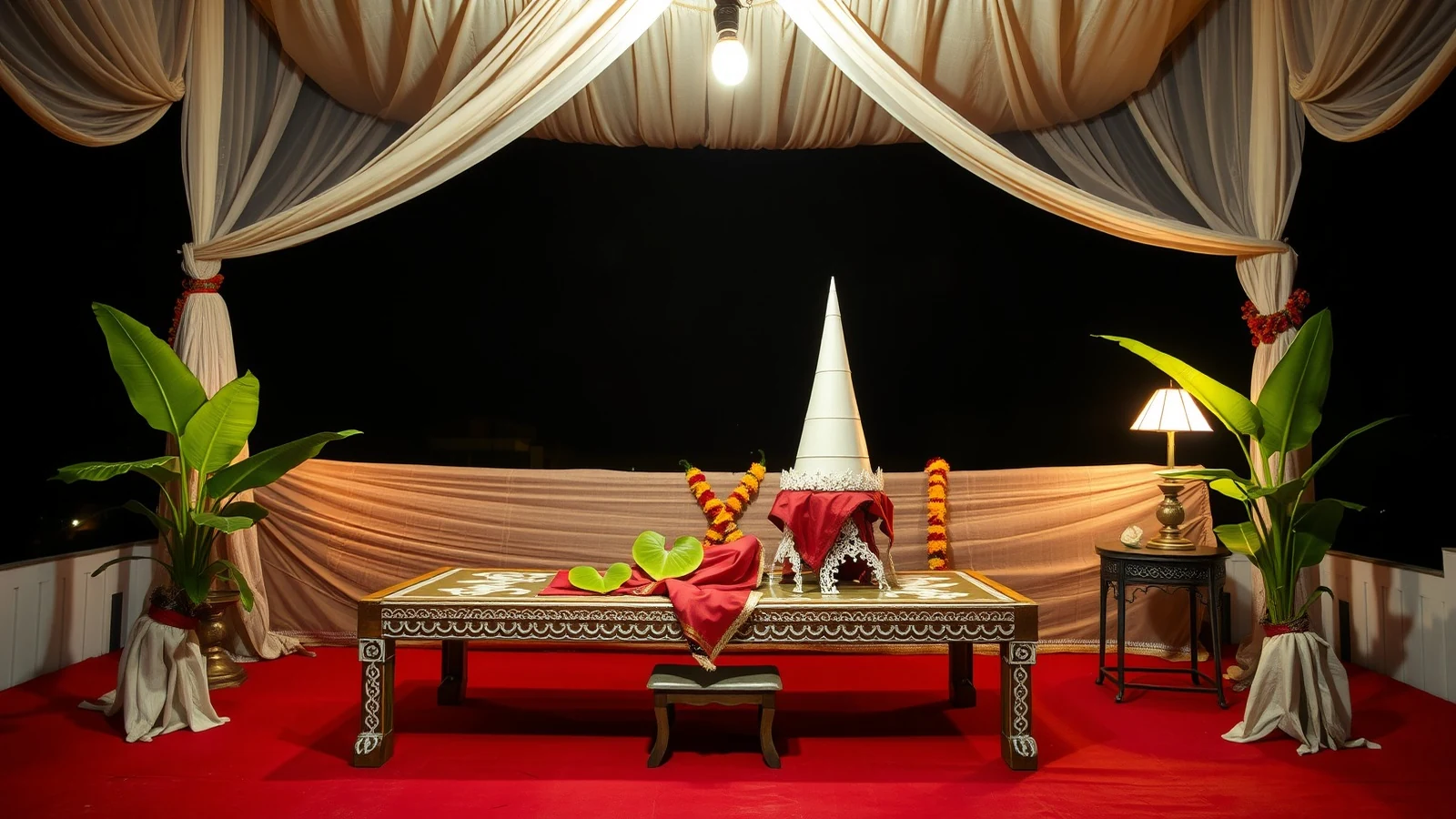
| 2 | The groom waits | He stands or sits in the wedding area, the chhadnatola, often marked by banana plants, wearing his topor, the tall white headdress of shola pith. |
| 3 | The bride arrives on the pidi | She is seated on a low wooden seat and carried in by her brothers or other young men of the family, holding betel leaves over her face. |
| 4 | Saat paak | They carry her around the groom seven times, while conches blow and the women ululate. |
| 5 | Shubho drishti | Facing the groom, she lowers the betel leaves and they look at each other. |
| 6 | Mala badal | The couple exchange garlands, in many families three times, often with the bride still raised on the pidi. |
| 7 | The ceremony continues | Sampradan, the yagna, anjali, saptapadi and sindoor daan follow. |
As with every Bengali ritual, families vary in the detail: who carries the pidi, how many times the garlands are exchanged, and whether the groom also circles the fire before or after. The priest and the family elders decide, and their order is the one to follow.
The pidi and the brothers who carry it
The pidi, or piri, is a low wooden seat, often painted with alpana designs in white rice paste. The bride sits cross-legged on it, holding two betel leaves in front of her face. Her brothers, cousins or brothers-in-law lift the seat and carry her in. It is a show of the family’s strength and pride, and also a practical way of raising the bride to the groom’s eye level.
Carrying a bride in a heavy Benarasi saree and gold on a small seat, around a groom seven times, in a crowded space, is physically demanding. Choose four strong young men who will not have been drinking, rehearse the lift the day before, and agree the route around the groom. A slip here is both dangerous and unforgettable for the wrong reasons.
The saat paak: seven circles
The seven circles around the groom are a symbolic encircling: the bride binds the groom into her life, seven being an auspicious number that echoes the seven steps of the saptapadi later in the ceremony. The groom stands still in the centre. The circles should be slow enough for the photographers and the guests to see, and not so slow that the men carrying the pidi tire before the seventh.
The circles need a clear space of about four metres across around the groom. In a crowded wedding area, the planner’s job is to clear that ring and keep it clear, which usually means one or two people asking guests to step back.
The reveal, and why it matters
After the seventh circle, the pidi is brought to rest facing the groom. The bride slowly lowers the betel leaves and looks at him. The conches blow, the women ululate, and the guests cheer. The moment is short, often only a few seconds, and it is the one image every Bengali family wants from the wedding.
For the photographer, this means one position and no second chances. They need to be behind the groom’s shoulder, facing the bride, with a clear view past the brothers holding the pidi. Agree the position before the ceremony and keep guests and phones out of that line. A second shooter behind the bride can catch the groom’s face at the same moment.
Mala badal: the exchange of garlands
Immediately after shubho drishti, the couple exchange garlands, the mala badal. In many families the garlands are exchanged three times, back and forth. The bride is often still raised on the pidi, and the brothers sometimes lift her higher so that the groom has to reach, which is the playful part. Garlands for the mala badal are usually of rajnigandha, tuberose, or of mixed flowers.
The mala badal is the Bengali form of the jaimala found in other Hindu weddings, but it sits inside the ceremony rather than at the start of the evening.
What follows: the rest of the Bengali ceremony
- Sampradan. The bride’s father or an elder uncle gives her hand to the groom, the Bengali form of kanyadaan. Their hands are tied together with a sacred thread.
- Yagna. The couple sit before the sacred fire while the priest recites the mantras.
- Anjali. The bride offers puffed rice, khoi, into the fire, with the groom standing behind her and holding her hands.
- Saptapadi. The seven steps, in some families stepped on a line of betel leaves or small stones. Our saptapadi guide explains the vows.
- Sindoor daan. The groom applies sindoor to the parting of the bride’s hair, and covers her head with a new saree, the ghomta. Our sindoor daan guide covers this in detail.
The bride’s and groom’s look
The Bengali bride wears a red Benarasi silk saree, gold jewellery, the shankha and pola bangles, and a white and gold crown, the mukut, made of shola pith. Her forehead is decorated with dots and patterns of sandalwood paste, which is one of the signature images of a Bengali bride. The groom wears a dhoti and a silk kurta or panjabi, and the tall conical topor.
Both crowns are fragile, and the topor in particular is easily damaged in a crowd. Keep a spare, and give one person the job of looking after it until the ceremony.
Timing and the lagna
A Bengali wedding is held at the lagna, the auspicious time set by the priest from the almanac, the panjika. The lagna is often late in the evening, and sometimes well after midnight. Shubho drishti starts the ceremony at that time, so every step of the evening, including dinner and the photographs, has to be planned around it.
Ask the priest for the lagna as soon as the date is fixed, and plan the evening backwards from it. If the lagna is very late, serve dinner to guests before the ceremony, because the bride, the groom and many family members will be fasting until after the sindoor daan.
Running shubho drishti at a venue
At a home or a traditional Bengali wedding house, the space for shubho drishti is set up by the decorator with the banana plants, the alpana and the mandap. At a hotel or a banquet hall, the planner has to create it. The wedding area needs a clear space for the saat paak, a raised or open area for the photographers, seating for the elders, and an entrance for the bride that is not visible from the groom’s position, so the reveal is a reveal.
Brief the venue on the conches and the ululation, which are loud and sudden. Some venues also restrict the yagna fire indoors, so check whether the havan can be lit and where. Our Bengali wedding traditions guide covers the full day.
Why the eyes, and why the leaves
Bengali wedding ritual gives the eyes unusual weight. The bride’s face is decorated around the eyes with sandalwood, the reveal is of the eyes rather than the whole face, and the moment is named for the look itself. The betel leaf, paan, is used throughout Bengali ritual as an auspicious offering, so holding it before the face protects the bride until the right moment, and lowering it is a kind of offering of herself to the groom’s gaze.
Families explain the meaning in different ways. Some speak of the first look as the binding of two souls, some of the bride choosing the groom with her eyes, and some simply of good luck. All of them agree that the look should be held for a moment, and that guests should be quiet enough to let it happen.
If the bride does not want to be carried
Not every bride wants to be lifted on a wooden seat, and not every family has four young men who can do it safely. A bride with a back problem, a bride in a very heavy outfit, or a venue with a low ceiling or uneven floor are all good reasons to adapt. The common alternatives keep the meaning and drop the risk.
- The bride walks the seven circles, holding the betel leaves, escorted by her brothers, and then sits on the pidi for the reveal.
- The pidi is placed on a raised platform and the brothers turn it rather than carrying it around the groom.
- The groom circles the bride, which some families already do in a second round.
Discuss any change with the priest, who will usually be practical about it. What matters is the reveal, the look and the garlands.
A sample evening around the lagna
| Time (example lagna 9.30 pm) | What happens |
|---|---|
| 6.30 pm | Guests arrive; welcome drinks and snacks |
| 7.15 pm | The groom’s party arrives; bor boron at the gate |
| 7.30 pm | Dinner opens for guests |
| 9.15 pm | Groom seated in the wedding area; photographers in position |
| 9.30 pm | The bride arrives on the pidi; saat paak and shubho drishti |
| 9.45 pm | Mala badal, then sampradan and the yagna |
| 11.00 pm onwards | Saptapadi and sindoor daan; the family eats after the ceremony |
A late lagna shifts the whole table later, but the logic holds: feed the guests first, clear the ring for the saat paak before the lagna, and leave time after the ceremony for the family to eat.
In a mixed or modern wedding
Shubho drishti translates well to a wedding between a Bengali family and another community, because it is so visual and so easy to understand. In a non-Bengali wedding, couples sometimes borrow it as a first-look moment before a Hindu ceremony. It works, but keep the betel leaves and the pidi: without them, it is just a walk down the aisle.
Frequently Asked Questions
What is shubho drishti?
Shubho drishti is the auspicious first look between the bride and groom in a Bengali wedding. The bride, carried on a wooden seat with her face hidden behind betel leaves, lowers the leaves and looks at the groom.
What is saat paak in a Bengali wedding?
Saat paak is the seven circles the bride is carried around the groom on the pidi, just before shubho drishti.
Who carries the bride at shubho drishti?
Usually her brothers, cousins or brothers-in-law. Four people usually carry the pidi.
What is mala badal?
Mala badal is the exchange of garlands between the bride and groom immediately after shubho drishti. In many families the garlands are exchanged three times.
Why does the bride cover her face with betel leaves?
The leaves hide her face until the moment of shubho drishti, so that the first look is a reveal. Betel leaves are auspicious in Bengali ritual.
When does shubho drishti happen?
At the start of the wedding ceremony, at the lagna set by the priest, which is often late at night.
Sources and further reading
- Britannica: West Bengal
- Britannica: Hinduism
- The Grihya Sutras, Part 1 (Sacred Books of the East, vol. 29)
Planning a Bengali wedding at a venue in Kolkata or a destination? Tell us your dates and guest count and we will send a tailored plan and quote.
Begin Your Engagement
Want a real number for your wedding?
Tell us your city, guest count and dates. Team Velvet Knot will come back within 24 hours with an itemised budget.