Jaggo Ceremony in a Punjabi Wedding: Meaning, the Gaagar, Boliyan and Planning
- What the jaggo ceremony is
- The gaagar with the lamps
- Boliyan and giddha
- Who leads the jaggo
- When the jaggo happens
- Music, noise limits and the finishing time
- Fire safety with lit lamps
- Running a jaggo at a hotel or destination venue
- What the nanke bring
- Food and drink for the evening
- Photography and video at the jaggo
- A jaggo in a mixed or modern wedding
- Checklist for a jaggo night
- Frequently Asked Questions
- Sources and further reading
Jaggo is a Punjabi pre-wedding night, held the night before the wedding. It is led by the maternal side of the family, the nanke. A woman of the family, usually the mami, carries a decorated brass or copper pot lit with oil lamps on her head through the neighbourhood. Relatives follow, singing boliyan and dancing giddha. The name means wake up: it announces the wedding to everyone around.
Planning a Punjabi wedding? Free download: the ritual-by-ritual planning timeline
Every ritual of a Punjabi wedding in order, with when it happens, what the family arranges and when to book it, on one printable page. Share a few details about your wedding in the form at the end of this page and the download link appears as soon as you send it.
What the jaggo ceremony is
Jaggo is the loudest night of a Punjabi wedding week, and for many families the most fun. The word means “wake up”, and the original purpose was exactly that: in a Punjabi village, the relatives of the bride or groom would walk through the lanes late at night with lamps, singing and banging sticks, waking the neighbours to tell them a wedding was coming. Neighbours would come out, join the singing, and the procession would grow as it went.
The jaggo is held at both houses, the bride’s and the groom’s, usually on the night before the wedding, after the mehndi or on the same evening. It is led by the nanke, the mother’s side of the family, who arrive for the wedding with gifts and take over the evening.
In a city or at a destination venue, there are no village lanes to walk through, so the jaggo becomes a procession around the house, the colony or the venue lawn, followed by an hour or two of dancing. The heart of it is unchanged: the lit pot, the songs, the teasing and the noise.
The gaagar with the lamps
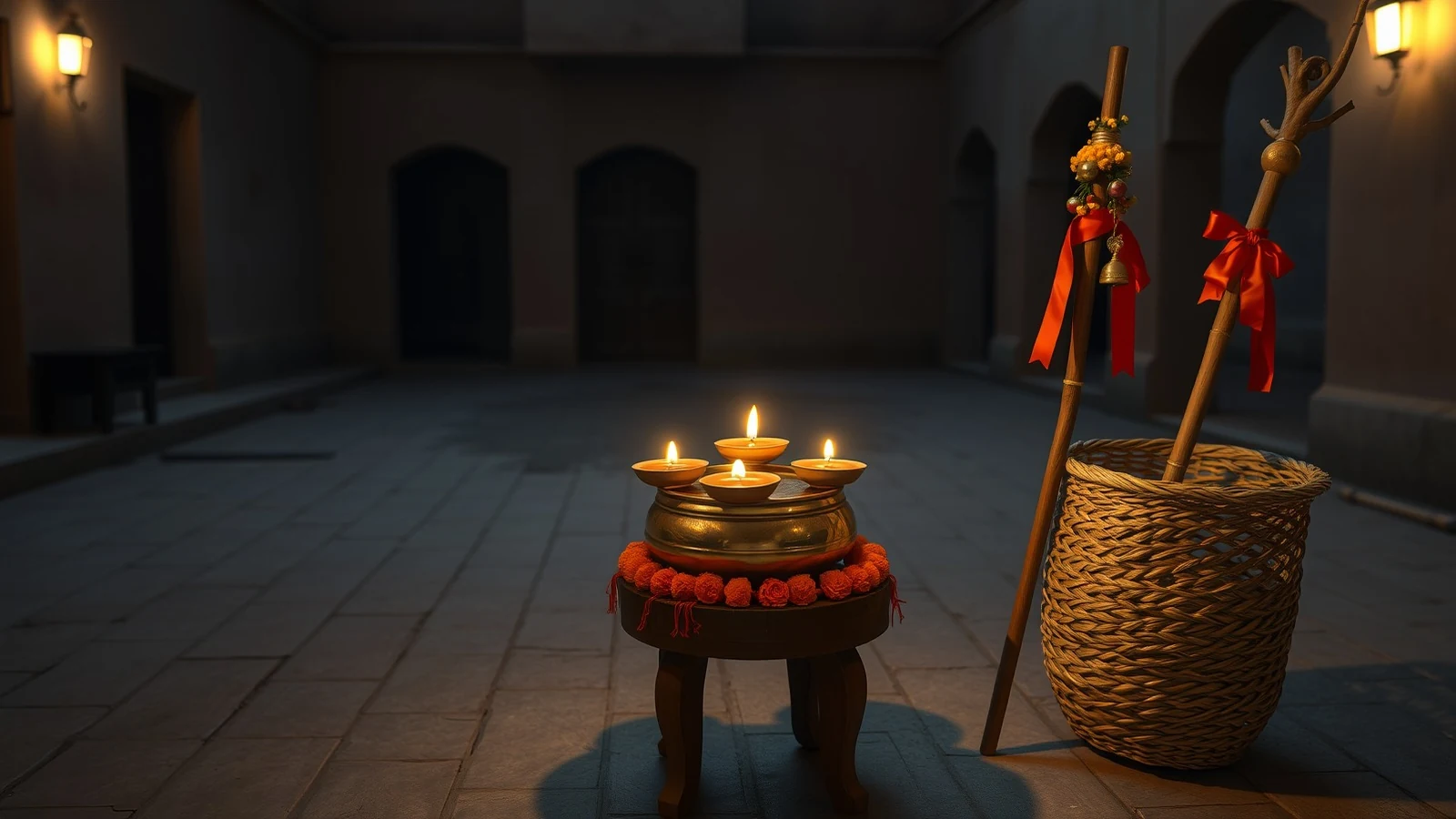
The centrepiece of the jaggo is a gaagar or gadva, a brass or copper pot decorated with flowers and topped with small earthen or metal diyas. It is lit and carried on the head, usually by the mami, the wife of the mother’s brother, who leads the procession. Other women take turns carrying it as the night goes on.
Carrying a lit pot on your head while dancing takes some skill and some nerve, and that is part of the show. The women carrying it are cheered, teased and photographed, and the photograph of the mami with the gaagar is one of the standard images of a Punjabi wedding.
Alongside the gaagar, the women carry sticks, often decorated with bells or ribbons, which they bang on the ground or on a winnowing basket, the chhajj, as they sing. Some families beat the chhajj until it breaks, which is taken as a good omen and as a sign that the party has properly started.
Boliyan and giddha
The songs of the jaggo are boliyan, short rhyming couplets sung by one woman and answered by the group, each ending in a chorus line that everyone shouts. Boliyan are teasing and often cheeky. They poke fun at the in-laws, at the groom’s family, at the uncles, at the cook, at anyone in reach. The older women know dozens by heart and invent new ones on the spot.
Giddha is the women’s dance that goes with them: a circle of women clapping in rhythm while one or two dance in the middle, acting out the words of the boli. The men usually stand back, cheer, and join in with bhangra later in the evening. The jaggo is one of the few parts of a Punjabi wedding that belongs mainly to the women.
Who leads the jaggo
The nanke lead it. In Punjabi tradition the maternal family has a large ritual role in a wedding: the mama’s family brings the chooda for the bride, the mama leads her to the mandap, and the nanke arrive for the jaggo with gifts, sweets and an army of relatives. They are guests of honour for the evening, and they are also expected to make the most noise.
The paternal side, the dadke, are the hosts, and their job is to keep the food and drink coming. Some families stage a playful contest between the two sides, with the nanke and the dadke trying to outsing each other with boliyan. It is a large part of the fun.
When the jaggo happens
Traditionally the jaggo is on the night before the wedding. In practice the wedding week is often compressed, and the jaggo is held on the same night as the mehndi, starting once the mehndi has dried, or as a separate evening two nights before the wedding.
| Night | Common plan | What to watch |
|---|---|---|
| Two nights before | Mehndi in the afternoon, then a separate sangeet | The bride’s mehndi must be dry before any dancing |
| Night before | Jaggo after mayian and the chooda in the morning | Keep it from running late: the baraat is the next day |
| Combined | Mehndi, then jaggo the same night | A long day for the bride; seat her for most of it |
Whatever night you choose, the jaggo should not run so late that the couple, the parents and the elders are exhausted for the wedding. In a Sikh wedding with a morning Anand Karaj, that matters even more, because the families need to be at the gurdwara early.
Music, noise limits and the finishing time
A jaggo is meant to be loud, and that is exactly where it runs into the rules. Outdoor amplified music in most Indian cities is restricted after 10 pm under the noise rules, and most hotels and lawns enforce that limit strictly. The dhol is acoustic but still very loud, and residential neighbours do complain.
The practical answer is to start the jaggo early, by 8 pm, so that the procession and the best of the singing happen before the cut-off, and to move the late part of the evening indoors, into a ballroom or a hall, if the venue allows it. Agree the finishing time with the venue in writing when you book, and brief the DJ and the dhol players on it. The sangeet planning guide covers the same issue for the other big music night of the week.
Fire safety with lit lamps
Most hotels and many banquet halls do not allow open flames carried through their corridors and lobbies, and some do not allow them indoors at all. A gaagar of lit diyas on the head of a woman who is dancing, in a crowd, near curtains, flowers and synthetic fabric, is a real risk.
Ask the venue directly whether lit diyas are allowed, where, and for how long. If they are not, use a gaagar with battery-powered diyas for the indoor part, and keep a real lit gaagar for the procession outside. If real diyas are used, use small ones, keep the oil level low so it does not spill, and have someone walk beside the woman carrying the pot. A fire extinguisher at the start point of the procession is a sensible precaution that most venues will provide if asked.
Running a jaggo at a hotel or destination venue
In a village, the procession route was the lanes. At a venue, choose a route in advance with the banquet manager. A good route goes from the rooms or the lobby, out across a lawn or terrace, past the pool or the garden, and ends at the space where the dancing will happen, with a dhol player leading it.
- Keep the route outdoors where possible, which solves both the fire and the noise problems.
- Avoid narrow corridors, lifts and stairs. A procession of fifty dancing relatives cannot get through a hotel corridor.
- Plan the end point: a lawn with a small stage or a dance floor, lights, seating for the elders and a drinks counter.
- Tell the venue’s other guests. If the hotel is not fully booked for the wedding, the hotel will want to warn them.
A destination jaggo can be wonderful. A procession through a palace courtyard or along a beach at night with lamps and dhol is unforgettable. It works best when the whole hotel is booked for the wedding, so that nobody else is trying to sleep.
What the nanke bring
The nanke traditionally arrive for the jaggo with gifts for the bride or groom and the family: clothes, sweets, and in many families the bride’s chooda and kalire, which are given at the chooda ceremony earlier that day. The arrival of the nanke is itself a small event, with the dadke receiving them at the door, offering sweets, and often a short milni-like greeting.
For planning purposes, the nanke are also a large group who need rooms, transport and a place to change. If they are travelling from another city, put them in the room block close to the jaggo venue and plan their arrival for the afternoon, so they have time to settle before the evening.
Food and drink for the evening
A jaggo is a long, energetic night, so the food is usually heavy and Punjabi: tikkas, pakoras, chole bhature, makki di roti with sarson da saag in winter, and plenty of sweets. Many families serve a light dinner late in the evening after the procession and the dancing, with snacks passed around during the jaggo itself.
If there is a bar, it is worth deciding whether it opens before the procession or after. A procession of relatives who have been at the bar for two hours, carrying lit lamps, is not a good idea. Open it after the gaagar has been put down.
Photography and video at the jaggo
The jaggo is a low-light event, which is hard for photographers. The lit gaagar is the main light source for the most important shots, and it is not enough on its own. Brief your photographer to bring video lights and to stay close to the woman carrying the gaagar during the procession. Ask for video of the boliyan, because the words and the laughter are what the family will want to remember, and stills cannot capture them.
A jaggo in a mixed or modern wedding
Couples marrying across communities often keep the jaggo because it is so easy to join in. The other family does not need to know the songs to enjoy the procession and the dancing, and many quickly pick up the chorus lines. A short explanation in the welcome note or from the stage helps.
Some couples hold a joint jaggo, with both families together, instead of separate ones at each house. That is a modern change, and it works well at a destination wedding where everyone is staying at the same venue. Our Punjabi wedding traditions guide covers how the jaggo fits into the full week.
Checklist for a jaggo night
- A decorated gaagar, with real and battery diyas.
- Sticks with bells, and a chhajj if the family wants one.
- Dhol players, booked for the procession and the dancing.
- A DJ for the later part of the evening.
- A route agreed with the venue, and a finishing time in writing.
- Seating and shade or heaters for the elders.
- Food served through the evening, and the bar opened after the procession.
- A photographer with video lights.
- A fire extinguisher at the start of the procession.
Frequently Asked Questions
What is the jaggo ceremony?
Jaggo is a Punjabi pre-wedding night, held at both the bride’s and the groom’s houses, usually the night before the wedding. The maternal family leads a procession with a lit pot of lamps, singing boliyan and dancing giddha.
What does jaggo mean?
Jaggo means “wake up”. Originally the procession went through the village at night to wake the neighbours and announce the wedding.
Who carries the gaagar at the jaggo?
Usually the mami, the wife of the mother’s brother, carries it first. Other women of the family take turns as the procession goes on.
Is jaggo held at the bride’s or the groom’s house?
Both. Each family holds its own jaggo. Some couples now hold a joint jaggo at a destination wedding.
Can you hold a jaggo at a hotel?
Yes, but agree the route, the finishing time and the use of lit lamps with the hotel in advance. Many hotels restrict open flames indoors and amplified music after 10 pm.
What is the difference between jaggo and sangeet?
The sangeet is a staged evening of performances and dancing. The jaggo is a procession led by the maternal family with a lit pot, boliyan and giddha, followed by dancing.
Sources and further reading
Planning a Punjabi wedding week with a jaggo, a sangeet and a big baraat? Tell us your dates and guest count and we will send a tailored plan and quote.
Begin Your Engagement
Want a real number for your wedding?
Tell us your city, guest count and dates. Team Velvet Knot will come back within 24 hours with an itemised budget.