Bou Bhaat: The Bengali Post-Wedding Ceremony and Reception, Explained
- What bou bhaat is
- Where bou bhaat sits in the wedding week
- Bhaat-kapor: the promise of rice and clothing
- The bride serves the family
- Kalratri and phool shojja
- The bou bhaat reception
- The bou bhaat menu
- Venues for the bou bhaat
- Bou bhaat when the wedding is a destination wedding
- When the bride and groom are from different communities
- Decor, photography and the stage
- The receiving line and gifts
- Guests who stay on between the wedding and the bou bhaat
- What to settle beforehand
- Frequently Asked Questions
- Sources and further reading
Bou bhaat, the bride’s rice, is the Bengali ceremony held at the groom’s home, usually two days after the wedding, after the night of kalratri. The groom gives the bride a plate of rice and a saree, the bhaat-kapor, promising to provide for her. She serves rice to his family for the first time. The same evening his family hosts the bou bhaat reception, which is often the biggest party of the wedding.
Planning a Bengali wedding? Free download: the ritual-by-ritual planning timeline
Every ritual of a Bengali wedding in order, with when it happens, what the family arranges and when to book it, on one printable page. Share a few details about your wedding in the form at the end of this page and the download link appears as soon as you send it.
What bou bhaat is
Bou means bride and bhaat means rice. Bou bhaat is the day the new bride is formally welcomed into her husband’s family through food. In the morning, the groom gives her a plate of rice and a new saree, promising to provide food and clothing for the rest of her life. She then serves rice, cooked or blessed by her, to the members of the family, and they eat food from her hands for the first time. It marks her becoming a full member of the household.
In the evening, the groom’s family hosts a reception for its own relatives, friends and community, so that they can meet the new bride. In modern usage, “bou bhaat” is often used to mean the reception alone, and for many Bengali families it is the largest party of the whole wedding, larger than the wedding night itself.
Where bou bhaat sits in the wedding week
Bengali weddings continue for several days after the ceremony itself. The usual sequence after the wedding night runs like this.
| Day | Ritual | What happens |
|---|---|---|
| Wedding night | Biye | The ceremony: shubho drishti, sampradan, yagna, saptapadi, sindoor daan. |
| Next morning | Basi biye | Small rituals at the bride’s home the morning after, including the second sindoor. |
| Next day | Bidaai and kanakanjali | The bride leaves her parents’ home. She throws rice over her shoulder to her mother without looking back, symbolising that she has repaid her debt to her parents. |
| Arrival | Bodhu boron | The groom’s mother welcomes the bride at the door. She steps into a plate of alta and milk and walks in, leaving red footprints. |
| That night | Kalratri | The couple are kept apart for the night and are not supposed to see each other. |
| The day after | Bou bhaat | Bhaat-kapor in the morning, the bride serves the family, and the reception in the evening. |
| That night | Phool shojja | The couple’s bed is decorated with flowers for their first night together. |
Families compress this sequence all the time, especially when guests have travelled. It is common for bou bhaat to be held a few days later at a convenient weekend, or for the reception to be separated from the morning ritual. Our Bengali wedding traditions guide covers the days before the wedding.
Bhaat-kapor: the promise of rice and clothing
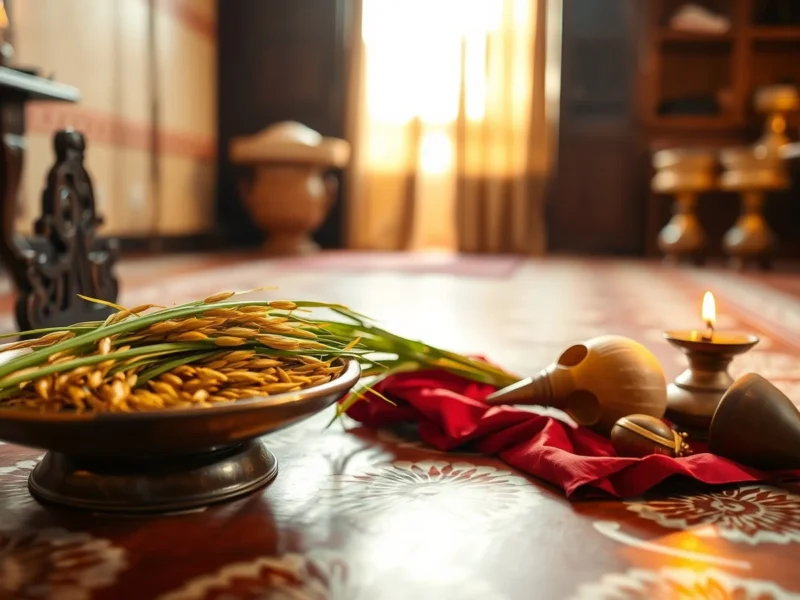
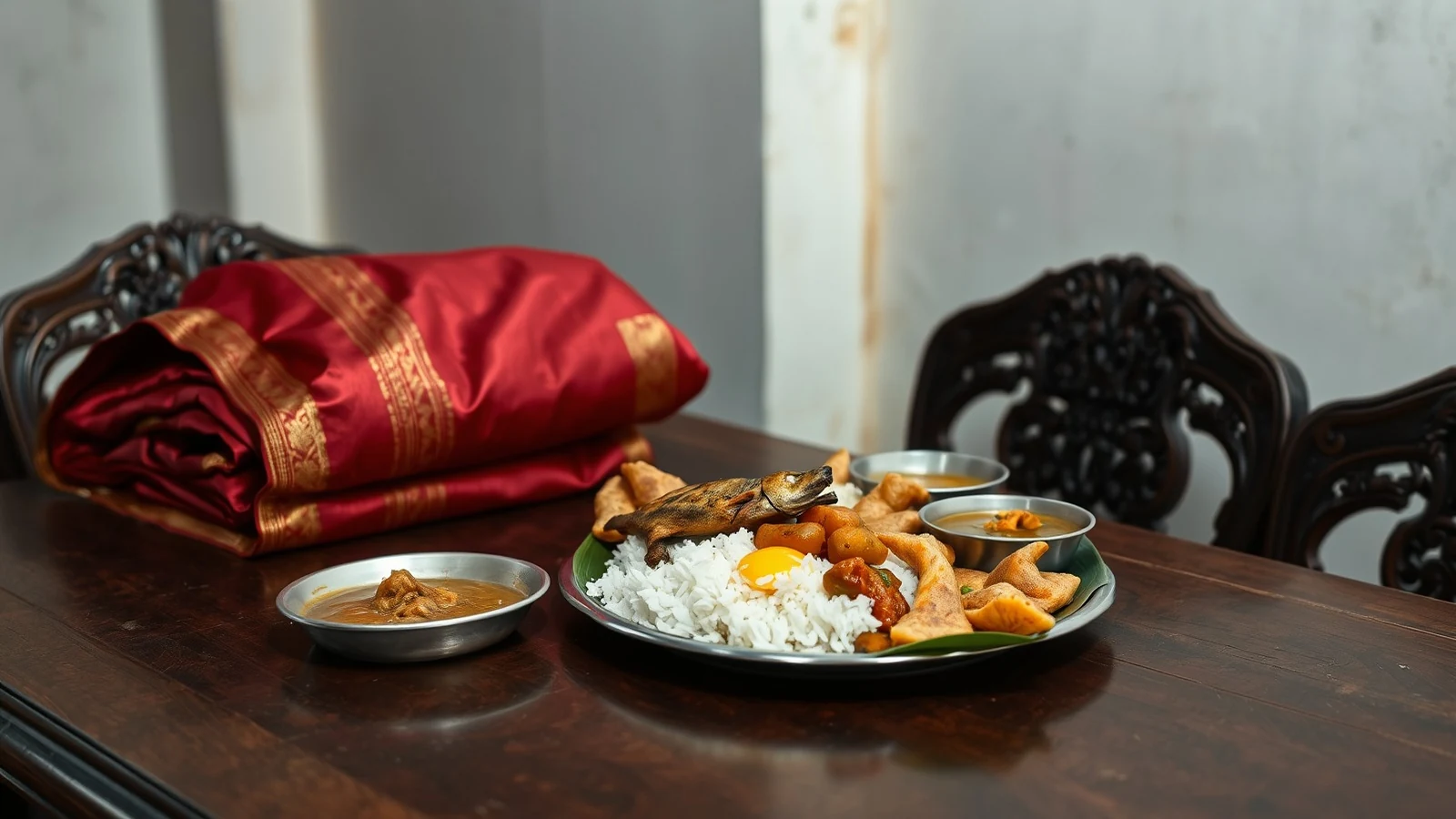
The heart of the morning is the bhaat-kapor. The groom offers the bride a plate of rice, often with a new saree and sometimes jewellery placed on or beside it, and says that from now on he will take responsibility for her food and clothing. In some families he speaks a set formula, in others he simply hands it over while the elders watch. The bride accepts it.
The ritual is old and its language is of its time. Many modern couples reinterpret it as a mutual promise, and some have the bride give the groom something in return. That is a family decision; the ritual itself is short, and the elders usually care more that it is done than about the words.
The bride serves the family
After the bhaat-kapor, the bride serves rice and a few dishes to the members of her husband’s family. In many families she touches or serves the food that has been cooked, and the elders eat it, a sign that they accept her as one of the household. Fish is usually part of the meal, as in most Bengali auspicious food, and the bride often serves ghee and rice to the eldest first.
This is a family moment rather than a guest one, usually with the immediate family and close relatives only. It is a good moment for the photographer, because it is quiet, well lit and full of emotion, and it is easily forgotten if the photographer is only booked for the evening.
Kalratri and phool shojja
Kalratri, the “dark night”, is the night the bride arrives at her new home, when the couple are kept apart. The custom is old and explained in different ways, from astrological caution to giving the bride a night to settle in. Most families still observe it, and the bride usually sleeps with female relatives of the groom’s family.
Phool shojja, the “bed of flowers”, is the night of bou bhaat, when the couple’s bed is decorated with flowers, usually rajnigandha and roses, and they spend their first night together. Relatives decorate the room and the bed, and the teasing that goes with it is part of the tradition. If the couple are staying at a hotel, the hotel can decorate the room; ask when booking.
The bou bhaat reception
The bou bhaat reception is hosted by the groom’s family, and it is often bigger than the wedding night, because the wedding is usually hosted by the bride’s family in the bride’s city, and the groom’s family invites its own community to the reception in its own city. For a large Kolkata family, a bou bhaat reception of 500 to 1,000 guests is not unusual.
The reception is a dinner, with the couple seated on a stage to receive guests, blessings and gifts. The bride wears a new saree, often a Benarasi or Kanjeevaram silk in a different colour from the wedding night, with full jewellery. The groom wears a sherwani or a dhoti and panjabi.
The bou bhaat menu
A Bengali reception menu is a matter of family pride, and the bou bhaat menu is usually the most elaborate of the wedding. A typical sequence includes luchi or fried rice to start, a dal, a fried vegetable, a fish course, often two, with bhetki fry and a fish curry or a chingri malai curry, then mutton or chicken, chutney, papad, and sweets: mishti doi, rosogolla, sandesh and a pantua or similar. Paan follows.
Caterers in Kolkata who specialise in Bengali wedding food are booked months ahead for the winter season. If the bou bhaat is in another city, ask the caterer early whether they can produce Bengali fish dishes properly: a bhetki fry needs good fish and a cook who knows it. Our wedding catering cost guide covers how caterers price per plate.
Venues for the bou bhaat
Most Kolkata bou bhaats are held in a banquet hall, a community hall, a club or a hotel ballroom. The large clubs and the heritage hotels of central Kolkata are popular for the bigger receptions, and community halls for family-scale ones. In other cities, a hotel ballroom is the common choice.
Because the bou bhaat is usually in the groom’s city and often a few days after the wedding, it can be booked separately from the wedding venue. The Kolkata wedding venues guide and the Kolkata wedding cost guide cover the options and what they typically cost.
Bou bhaat when the wedding is a destination wedding
When the wedding itself is held at a destination, the bou bhaat often becomes the reception for everyone who could not travel. It is held in the groom’s home city a week or two after the couple return. The morning ritual of bhaat-kapor is then sometimes done at the destination, on the day after the wedding, and the evening reception is held separately at home.
This works well and is increasingly common. The planning point is to treat the bou bhaat as its own event with its own guest list, venue, caterer and decor, not as an afterthought to the wedding.
When the bride and groom are from different communities
When a Bengali groom marries a bride from another community, the bou bhaat is usually kept, because it is the groom’s family’s event. The bride may not know the ritual, so someone from the groom’s family should explain it before the day: the bhaat-kapor, what she will be asked to serve, and what the reception involves.
When a Bengali bride marries into another community, her family may want to see some form of bou bhaat at the groom’s home, but whether it happens is the groom’s family’s decision. Most families find a way to include it, often by combining the bhaat-kapor with the groom’s family’s own welcome rituals and the reception.
Decor, photography and the stage
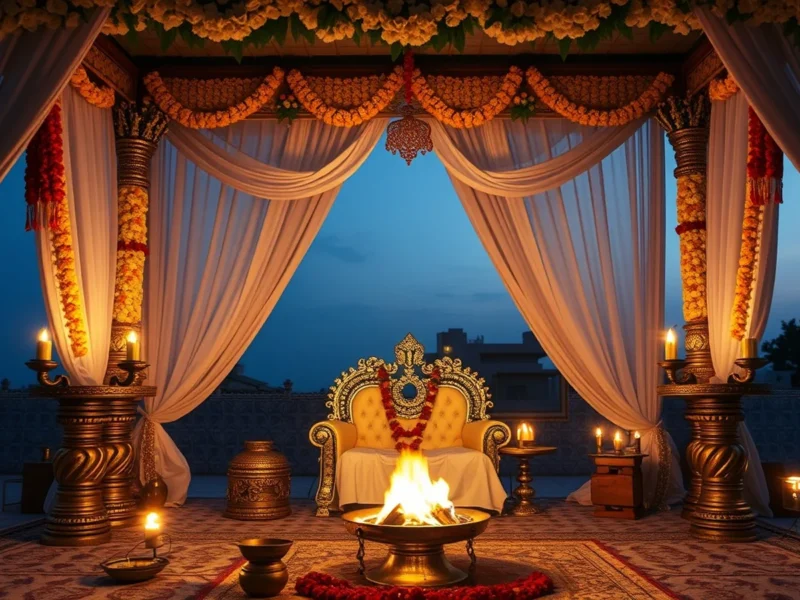
Bou bhaat decor is a reception setting: a stage with a backdrop, seating for the couple, flowers, and lighting for the hall. Bengali families often favour rajnigandha and roses, and white and red with gold. The stage is where the couple spend most of the evening, receiving a line of guests, so the photographer and videographer need a good angle and enough light on the stage.
Book the photographer for the morning bhaat-kapor as well as the evening. The morning gives the intimate images, and the evening gives the faces of the whole community.
The receiving line and gifts
At a large bou bhaat, the couple may receive several hundred guests one family at a time, each wanting a photograph and a few words. That can take three hours, and the couple often eat nothing until the end. Two things help. First, open dinner as soon as guests arrive, so that nobody is waiting to greet the couple before they can eat. Second, put a family member from the groom’s side on the stage with the couple, to introduce each guest to the bride, who will not know most of them.
Guests usually bring envelopes or wrapped gifts. A trusted relative should sit near the stage to receive and record them, with a box that is kept locked and taken home by one named person at the end of the night. It sounds obvious, and it is the thing most often left to chance.
Guests who stay on between the wedding and the bou bhaat
When the wedding is in the bride’s city and the bou bhaat two days later in the groom’s, the groom’s out-of-town relatives often stay on for both. That means two nights or more of hotel rooms, meals between the events, and transport from one city to the other. Plan it as part of the wedding rather than leaving each family to arrange its own: a small room block near the bou bhaat venue and a simple meal plan for the day of kalratri keep the elders comfortable. Our outstation guest planning guide covers how to organise it.
What to settle beforehand
- The date: the traditional day after kalratri, or a later weekend.
- Whether the morning ritual and the evening reception are on the same day.
- The guest list for the reception, which is the groom’s family’s list.
- The venue and the caterer, booked separately from the wedding if in another city.
- Who decorates the room for phool shojja.
- The bride’s outfit and jewellery for the evening.
Frequently Asked Questions
What is bou bhaat?
Bou bhaat is the Bengali post-wedding ceremony at the groom’s home. The groom gives the bride rice and a saree, promising to provide for her, she serves food to his family for the first time, and the groom’s family hosts a reception in the evening.
When is bou bhaat held?
Traditionally on the second day after the wedding, after the night of kalratri. Many families now hold it on a later weekend.
What is bhaat-kapor?
Bhaat-kapor is the moment when the groom offers the bride a plate of rice and a new saree, promising to provide food and clothing for her life.
Who hosts the bou bhaat reception?
The groom’s family. It is usually held in the groom’s home city for his relatives, friends and community.
What is kalratri?
Kalratri is the night the bride arrives at the groom’s home, when the couple are kept apart. Bou bhaat and phool shojja follow the next day.
What is phool shojja?
Phool shojja is the decoration of the couple’s bed with flowers on the night of bou bhaat, their first night together.
Sources and further reading
Planning a bou bhaat reception in Kolkata or anywhere else? Tell us your dates and guest count and we will send a tailored plan and quote.
Begin Your Engagement
Want a real number for your wedding?
Tell us your city, guest count and dates. Team Velvet Knot will come back within 24 hours with an itemised budget.