Anglo-Indian Wedding Traditions: The Church, the Cake, the Ball and the Food
- The Anglo-Indian community
- The wedding in order
- The church wedding
- The bride and the bridal party
- The toast
- The wedding cake
- The ball
- The food
- The bridal shower and the stag night
- What guests wear
- Decor and photography
- What drives the cost
- Venues
- A sample wedding day
- Music beyond the band
- Anglo-Indian Christmas and wedding season
- Families abroad coming home
- McCluskieganj and the smaller towns
- Mixed weddings
- What to settle beforehand
- Frequently Asked Questions
- Sources and further reading
Anglo-Indian weddings belong to a community with both European and Indian ancestry, defined in Article 366(2) of the Constitution. They are church weddings, Catholic or Protestant, usually with a white gown. A reception follows with a toast, a rich fruit wedding cake and a ball: an evening of ballroom dancing to a live band. The food is distinctly Anglo-Indian: ball curry, pepper water, jalfrezi and devil chutney.
The Anglo-Indian community
Anglo-Indians are a community of mixed European, usually British or Portuguese, and Indian descent, with English as their mother tongue. The Constitution of India defines an Anglo-Indian in Article 366(2) as a person whose father, or another male ancestor in the male line, is or was of European descent and who is domiciled in India. The community is concentrated in Kolkata, Chennai, Bengaluru, Mumbai, Secunderabad and smaller railway towns, and in McCluskieganj in Jharkhand, which was founded as an Anglo-Indian settlement. Many Anglo-Indian families emigrated to Australia, the United Kingdom and Canada after Independence.
Anglo-Indian weddings are a living part of that history, and they have a style of their own: church, cake, ball and curry. Customs vary between families and cities, so treat what follows as the common pattern. Our Christian wedding traditions guide covers church weddings across India.
The wedding in order
| Stage | What happens |
|---|---|
| Engagement | Rings are exchanged, often at a family party. |
| Church requirements | Marriage preparation, documents and the banns. |
| Before | A bridal shower and a stag night, in many families. |
| Wedding day | The church service, with the bride in white. |
| Wedding day | The reception: the toast, the cake, the dinner and the ball. |
The church wedding
Most Anglo-Indians are Catholic, with others Anglican, Methodist or members of other churches. The wedding is a church service, or a nuptial Mass for Catholics, with the bride escorted by her father, bridesmaids and a best man, hymns, the vows and rings, and the signing of the register. The church’s requirements, including marriage preparation and the banns, apply as they do for any church wedding. Christian marriages in India are governed by the Indian Christian Marriage Act, 1872; our Christian marriage registration guide covers registration with the state.
The bride and the bridal party
The Anglo-Indian bride wears a white gown and veil, and the groom a suit. The bridal party usually includes bridesmaids, a maid of honour, a best man, groomsmen, a flower girl and a page boy, often in coordinated colours. Some brides change into a second dress for the ball. Many Anglo-Indian brides wear a family veil or a piece of jewellery passed down through the generations.
The toast
At the reception, the toast to the bride and groom is a set piece. Traditionally a family friend or an uncle proposes the toast, the best man responds on behalf of the groom, and further toasts follow to the bridesmaids and the families. The speeches are expected to be witty and affectionate, and a good toastmaster is valued. Wine or a sparkling drink is served for the toast in most families.
The wedding cake
The Anglo-Indian wedding cake is a rich fruit cake, dark with dried fruit soaked in rum or brandy, often baked weeks ahead, covered in marzipan and white royal icing, and built in tiers. The couple cut it together after the toast. Pieces are often wrapped and given to guests, and some families keep the top tier for a christening or the first anniversary. Many families still bake their own wedding cake, or order it from bakers in Kolkata, Chennai or Bengaluru known for Christmas and wedding cakes.
The ball
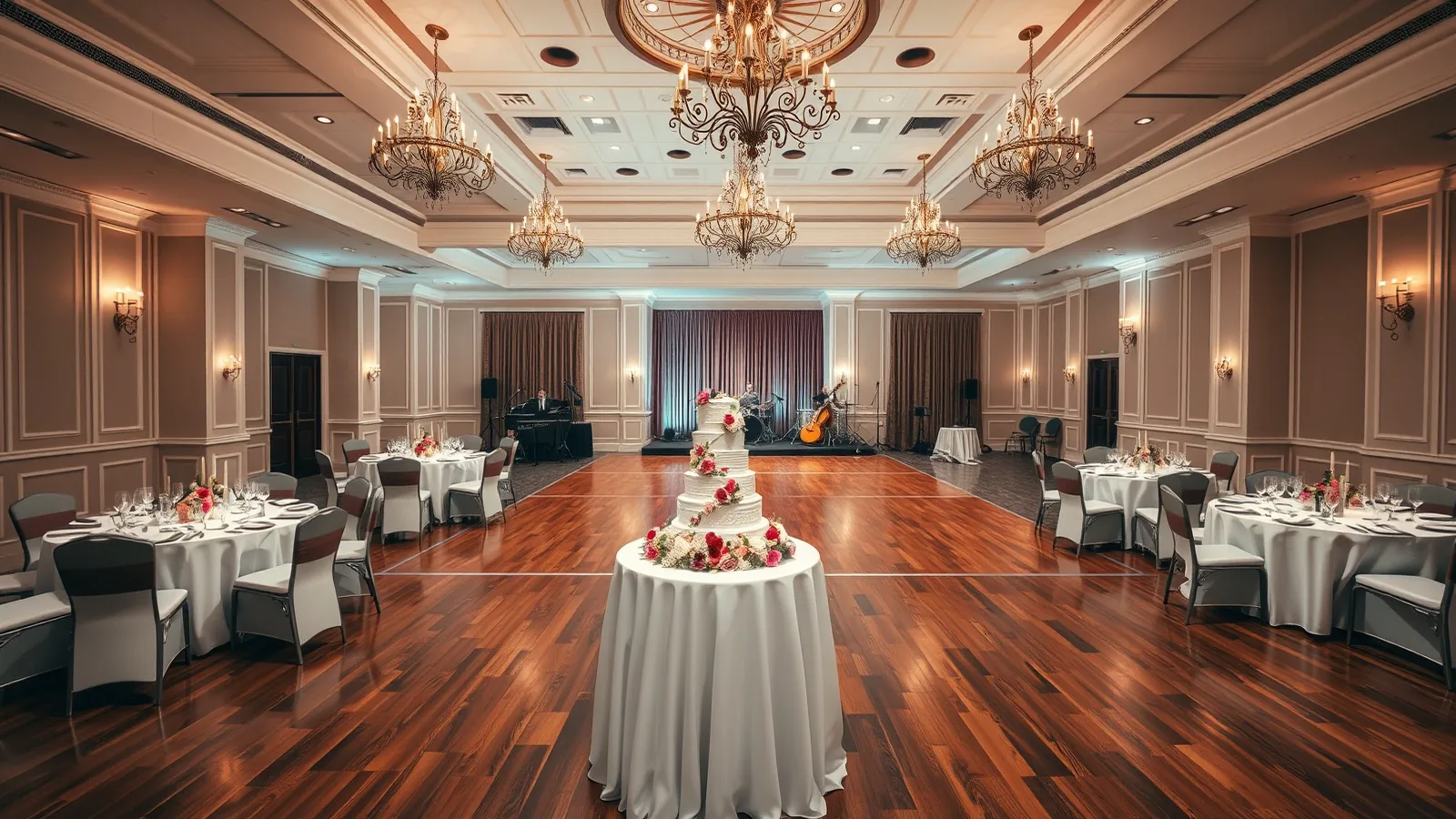
The ball is the heart of an Anglo-Indian wedding reception. A live band plays, and the evening is danced: the bride and groom open the floor with the bridal waltz, and the guests follow with waltzes, foxtrots, jive, rock and roll and the latest hits. Anglo-Indian families are famous for their dancing, and generations dance together. Many Anglo-Indian communities still hold regular dances and balls, especially around Christmas and New Year, and a wedding ball is in that tradition. Book a band that can play the classics as well as current music, and a hall with a proper dance floor.
The food
Anglo-Indian cuisine blends British and Indian cooking into something unique, and the wedding dinner shows it off: ball curry, meatballs in a spiced coconut gravy; pepper water, a peppery broth eaten with rice; jalfrezi; mince cutlets; coconut rice; devil chutney, a sweet and spicy red chutney; roasts, and often a pulao or biryani. Desserts include caramel custard, trifle and the wedding cake. Many families have a recipe for each dish that has been handed down, and the menu is a matter of pride. A caterer who knows Anglo-Indian food is worth finding.
The bridal shower and the stag night
Many Anglo-Indian families hold a bridal shower for the bride, a gathering of her women friends and relatives with games, food and gifts for the new home, a week or two before the wedding. The groom’s friends hold a stag night. Both are borrowed from British custom and are part of the community’s wedding season, along with family dinners as relatives arrive from other cities and abroad.
What guests wear
Guests at an Anglo-Indian wedding usually dress formally in Western clothes: suits for men, dresses or gowns for women, though sarees are common too. Guests should come ready to dance. Hats and fascinators are worn by some women at the church, in the British tradition. The bridal party’s colours are often reflected in the decor.
Decor and photography
Reception decor is classic: round tables with white linen and centrepieces, flowers in white and pastel, a cake table with the tiered cake as its centrepiece, and a head table for the bridal party. The photographs families want are the bride’s entrance and the vows at the church, the bridal party, the toast, the cutting of the cake, and above all the bridal waltz and the generations dancing together. Ask the photographer to stay for the ball.
What drives the cost
The main costs of an Anglo-Indian wedding are the reception hall, the dinner, the bar, the live band and the cake, followed by the bride’s gown and the bridal party’s outfits. The bar and the band are larger lines than at many Indian weddings, because the evening is built around dancing and toasting. Church costs are usually modest. Our wedding live band cost guide covers what bands charge.
Venues
Anglo-Indian receptions are held in church halls, clubs, institute halls, banquet halls and hotels with a good dance floor. In Kolkata, Chennai and Bengaluru, some clubs and institutes associated with the community have hosted dances and receptions for generations. The key requirements are a dance floor large enough for everyone, space for a live band, and a bar. Our Kolkata wedding cost guide, Chennai wedding cost guide and Bengaluru wedding cost guide cover venues in those cities.
A sample wedding day
| Time | What happens |
|---|---|
| 3.30 pm | The church service |
| 5.00 pm | Photographs outside the church |
| 7.00 pm | Guests arrive at the reception; the bridal party enters |
| 7.30 pm | The toast and the cutting of the cake |
| 8.00 pm | The bridal waltz opens the ball |
| 9.00 pm | Dinner, then dancing until late |
Check the venue’s music finishing time: outdoor amplified music is restricted after 10 pm in most cities, so an indoor hall is usually the right choice for a ball that will go late.
Music beyond the band
Music runs deep in Anglo-Indian culture, and many families have musicians in them. Beyond the band, weddings often feature a family member singing at the church, a hymn the family has sung at every wedding for generations, and impromptu singing late in the evening. Kolkata’s and Bengaluru’s live music scenes owe much to Anglo-Indian musicians, and many bands that play weddings today grew out of that tradition. Ask the band for a set list that includes the older songs the elders will want to dance to.
Anglo-Indian Christmas and wedding season
Christmas and New Year are the highlight of the Anglo-Indian social calendar, with dances, cake and family gatherings, and many families like to hold weddings in the same season so that relatives travelling home for Christmas can attend. That makes December and January busy for churches, bakers and bands; book early. Lent is usually avoided by Catholic families.
Families abroad coming home
Many Anglo-Indian families have relatives in Australia, the United Kingdom and Canada, and weddings in India often become reunions. Relatives travelling from abroad need their documents for any church role, such as sponsor or witness, and rooms near the church and reception. Some families hold the wedding abroad and a reception or a dance in India for the relatives who stayed. Our outstation guest planning guide covers travelling guests.
McCluskieganj and the smaller towns
Outside the big cities, Anglo-Indian communities grew up around the railways, in towns such as Kharagpur, Asansol, Jhansi and Bilaspur, and in McCluskieganj in Jharkhand, founded in the 1930s as a homeland for the community. Weddings in these places are smaller and closer-knit, often in the local church with a reception at a railway institute or community hall, and the whole community helps. Many families from these towns now live in the cities or abroad and return for family weddings.
Mixed weddings
Anglo-Indians have long married into other communities, and many Anglo-Indian weddings now blend traditions: a church service and an Anglo-Indian ball with a Hindu, Muslim or Parsi ceremony or reception for the other family. The ball travels well: guests from every community enjoy it, and a few dance lessons for the couple before the wedding go a long way.
What to settle beforehand
- The church, the date and the church’s requirements.
- The bridal party.
- Who proposes and responds to the toasts.
- The wedding cake: who bakes it, and how many tiers.
- The band and the dance floor.
- The Anglo-Indian menu and the caterer.
Frequently Asked Questions
What is an Anglo-Indian wedding like?
A church wedding with the bride in white, followed by a reception with toasts, a rich fruit wedding cake, an Anglo-Indian dinner and a ball with ballroom dancing to a live band.
Who is an Anglo-Indian?
Under Article 366(2) of the Constitution, a person whose father or male ancestor in the male line is or was of European descent and who is domiciled in India.
What food is served at an Anglo-Indian wedding?
Ball curry, pepper water, jalfrezi, mince cutlets, coconut rice, devil chutney, roasts and desserts such as caramel custard and trifle.
What is an Anglo-Indian wedding cake?
A rich fruit cake soaked in rum or brandy, covered in marzipan and white icing, built in tiers and cut by the couple after the toast.
What dances are danced at an Anglo-Indian wedding?
The bridal waltz opens the ball, followed by waltzes, foxtrots, jive, rock and roll and current music.
When do Anglo-Indian families usually hold weddings?
Many prefer the Christmas and New Year season, when relatives come home, and Catholic families usually avoid Lent. Churches, bakers and bands book early for December and January.
Where do Anglo-Indian weddings take place?
In churches for the service, and in church halls, clubs, institutes, banquet halls or hotels with a good dance floor for the reception.
Is alcohol served at Anglo-Indian weddings?
Usually yes. A toast and a bar are part of most Anglo-Indian receptions, though practice varies by family, and some hold the reception in a church hall where a bar may not be allowed, so check the venue’s rules.
Do Anglo-Indian weddings have a bridal shower?
Many do, a week or two before the wedding, along with a stag night for the groom. Both are borrowed from British custom and are now part of the community’s wedding season.
Sources and further reading
Planning an Anglo-Indian wedding with a ball to remember? Tell us your dates and guest count and we will send a tailored plan and quote.
Begin Your Engagement
Want a real number for your wedding?
Tell us your city, guest count and dates. Team Velvet Knot will come back within 24 hours with an itemised budget.