Inter-Caste & Inter-Religion Marriage in India 2026: Law
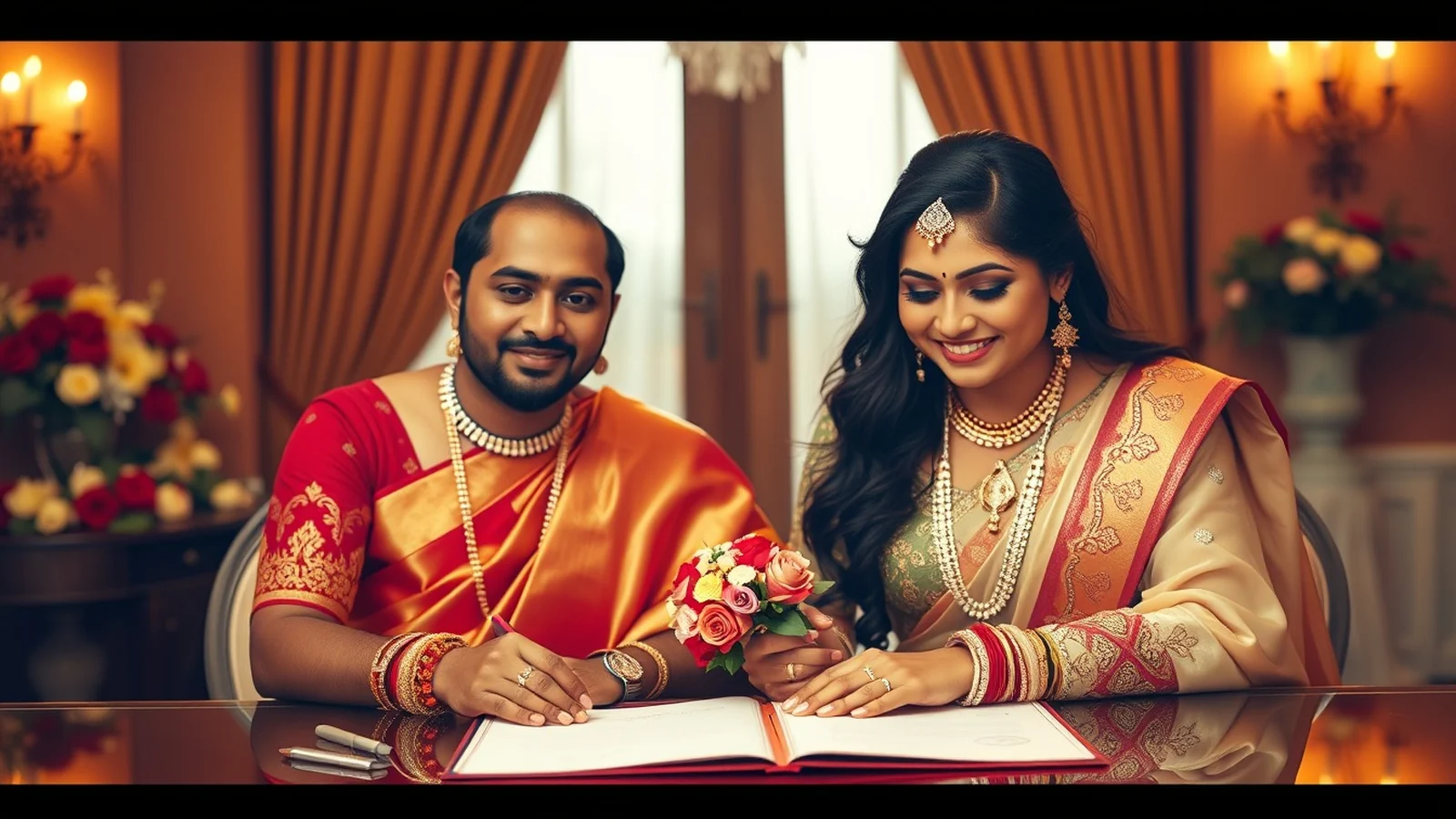
- Is inter-caste and inter-religion marriage legal in India?
- The Special Marriage Act 1954: the route that needs no conversion
- The 30-day notice process, step by step
- Documents required
- Inter-religion specifics: conversion, personal law and a note of caution
- The parental-consent myth and the right to choose your partner
- State incentive schemes for inter-caste marriage
- Real challenges couples face, and the safeguards available
- The court-marriage route: registering and getting the certificate
- Practical tips and a note on legal advice
- Frequently Asked Questions
- Sources and further reading
Inter-caste and inter-religion marriages in India are legally valid and most commonly registered under the Special Marriage Act, 1954, a civil route open to any two Indians with no conversion required. The Supreme Court has affirmed every adult’s right to choose their partner, and both central and state incentive schemes support eligible inter-caste couples.
Is inter-caste and inter-religion marriage legal in India?
Yes. There is no law in India that prohibits two consenting adults from marrying because they belong to different castes or different religions. Every citizen who has reached the legal age of marriage, currently 21 years for men and 18 years for women, is free to marry the partner of their choice, and no caste panchayat, community body or family member has any legal authority to forbid it. The Constitution protects personal liberty and dignity under Article 21, and the courts have consistently read the freedom to marry into that guarantee.
The practical question is not whether such a marriage is allowed, but which law it should be registered under. Personal laws such as the Hindu Marriage Act, 1955 apply only when both partners share the same faith, and inter-faith couples usually do not want either person to give up their religion. This is exactly the gap the Special Marriage Act 1954 was designed to fill. It is a secular, civil law that lets any two Indians marry regardless of caste or creed, and it sits at the heart of almost every inter-caste and inter-religion wedding in the country.
The Special Marriage Act 1954: the route that needs no conversion
The Special Marriage Act, 1954 is a central Act that provides a purely civil form of marriage. Its biggest advantage for mixed couples is simple: neither partner has to convert, adopt the other’s religion, or perform any religious ceremony. The marriage is solemnised before a government-appointed Marriage Officer, not a priest, and the union is recognised on equal terms across India.
Because the Act is secular, a Hindu can marry a Muslim, a Christian can marry a Sikh, and a person from a Scheduled Caste can marry someone from any other community, all under the same set of rules. The couple keeps their individual faiths, and the children of the marriage inherit under the Indian Succession Act, 1925 rather than under either partner’s personal law. For most inter-caste and inter-faith couples this is the cleanest legal path, which is why it is also the law behind the familiar court marriage process in India. For the wider picture of how any wedding is recorded, see the pillar overview at marriage registration in India.
The 30-day notice process, step by step
The Special Marriage Act follows a fixed sequence built around a mandatory 30-day notice. Knowing the stages in advance helps couples plan realistically, because the timeline cannot be shortened.
- Notice of intended marriage. The couple submits a written notice to the Marriage Officer of a district where at least one of them has lived for 30 days or more immediately before the date of notice. Many states now accept this notice online before an in-person visit.
- Publication and 30-day objection window. The Marriage Officer publishes the notice by displaying it at the office. Anyone may file an objection within these 30 days, but an objection is only valid if the marriage would breach a condition of the Act, for example if a party is already married or below the legal age. Objections based purely on caste or religion have no legal standing.
- Solemnisation. After the 30-day period ends, and assuming no valid objection stands, the marriage is solemnised at the Marriage Officer’s office or a chosen venue. The couple and three witnesses sign a declaration in the presence of the Marriage Officer.
- Marriage certificate. The Marriage Officer enters the marriage in the Marriage Certificate Book and issues a certificate. Under the Act this certificate is conclusive proof that the marriage took place.
In total the process takes a minimum of 30 days from the date of notice, and often a little longer once appointment scheduling is factored in. Couples should build this waiting period into their plans rather than expecting a same-day wedding.
Documents required
The documents for a Special Marriage Act registration are standard, but getting them consistent in advance avoids delays at the Sub-Registrar or Marriage Officer’s office. Typically each partner will need the following.
Proof of age and identity such as a birth certificate, passport, or matriculation certificate, together with a PAN card or Aadhaar. Proof of current address, and separately proof that one partner has resided in the notice district for at least 30 days. Passport-size photographs of both partners. A declaration or affidavit confirming marital status, age, and that the couple is not within the prohibited degrees of relationship barred by the Act. Divorced persons must attach the decree of divorce, and widowed persons the death certificate of the former spouse. Finally, three witnesses must attend the solemnisation, each carrying their own identity and address proof.
Requirements vary slightly from state to state, so it is worth cross-checking against our detailed documents required for marriage registration checklist and the procedural notes in the Special Marriage Act 1954 guide before booking an appointment. Keep names and dates spelt identically across every document, as mismatches are the most common cause of rejection.
Inter-religion specifics: conversion, personal law and a note of caution
Inter-faith couples have, broadly, two options. The first is to marry under the Special Marriage Act with both partners keeping their own religion, which is the route this guide recommends because it sidesteps the conversion question entirely. The second is for one partner to convert to the other’s faith and then marry under that religion’s personal law, for example a Hindu ceremony after conversion or a Muslim nikah. Conversion is a serious personal decision with lasting effects on inheritance, succession and, in some cases, guardianship, so it should never be treated as a mere formality to enable a wedding.
Several states have enacted laws that regulate religious conversion, and some of these specifically scrutinise conversions connected to marriage. The rules differ from state to state and have changed in recent years, so a conversion that is straightforward in one state may attract additional procedures, notice, or district-official involvement in another. Because this area is sensitive, fast-moving and genuinely state-specific, any couple considering conversion should verify the current position in their own state and take proper legal advice before proceeding. The clear takeaway remains that the civil Special Marriage Act route lets an inter-faith couple marry without either person converting at all.
It is also worth understanding what changes and what does not when a couple marries under the civil route. The marriage is fully valid and recognised everywhere in India, but because it is secular, matters of succession and inheritance for the couple and their children are governed by the Indian Succession Act, 1925 rather than by either partner’s religious personal law. For most couples this is a neutral or even welcome outcome, but a few may prefer their personal-law framework, which is another reason to think through the choice carefully rather than defaulting to conversion under social pressure. When in doubt, a short consultation with a family lawyer before the wedding is far cheaper than untangling a rushed decision afterwards.
The parental-consent myth and the right to choose your partner
One of the most widespread misunderstandings in India is that an adult needs a parent’s permission, or a family’s blessing, to marry. Legally this is false. Once a man is 21 and a woman is 18, each is an adult in the eyes of the law and can marry without anyone else’s consent. Parents, relatives and community elders have no legal power to veto the marriage of two consenting adults, and a marriage does not become invalid simply because a family disapproves.
The Supreme Court of India has affirmed this repeatedly. In its rulings the Court has held that the choice of a life partner is an intrinsic part of an individual’s liberty and dignity, that the right to marry a person of one’s choice is protected, and that neither the State nor parents nor khap or caste panchayats can interfere with the decision of two consenting adults. Courts have directed the police to protect couples who face threats for marrying across caste or religious lines. This does not mean family opposition never causes real difficulty, but it does mean the law is firmly on the side of the couple’s freedom to choose.
A related myth is that a marriage without the traditional saat pheras, a nikah, or a church blessing is somehow not a real marriage. Under the Special Marriage Act the signing of the declaration before the Marriage Officer and three witnesses is itself the marriage, and the certificate is conclusive legal proof of it. Couples are of course free to hold whatever social or religious celebration they wish afterwards, but the legal validity of their union does not depend on any ceremony or on any relative’s attendance. Understanding this distinction between the legal act and the social celebration removes a great deal of unnecessary anxiety for mixed couples.
Want a real number for your wedding? Send us your dates and guest count and we will come back with an itemised estimate for your wedding, not a range copied off a price list.
State incentive schemes for inter-caste marriage
Far from discouraging inter-caste unions, the Indian state actively rewards them as a means of breaking down caste barriers. At the central level, the Dr. Ambedkar Scheme for Social Integration through Inter-Caste Marriages, run through the Department of Social Justice and Empowerment, offers a financial incentive to eligible couples where one partner belongs to a Scheduled Caste and the other does not. The incentive is a substantial one-time amount, and the marriage must be the first for both partners, legally valid, and registered, with the couple applying within the scheme’s time window. A registered marriage certificate is a firm prerequisite before any application can be made.
Many states run their own parallel schemes with their own amounts and conditions. For example, several state social-welfare and SC/ST development departments provide cash incentives, ranging from figures like Rs 50,000 up to a few lakh depending on the state, to couples in an inter-caste marriage where one spouse is from a Scheduled Caste or Scheduled Tribe. Some states extend support to inter-caste couples more broadly. Because eligibility rules, amounts, and application deadlines vary widely and are revised from time to time, couples should confirm the current details with the relevant state department or the National Portal of India before applying. In every case, a valid registered marriage is the gateway to the incentive.
Real challenges couples face, and the safeguards available
The law being clear does not always make the path easy. Couples who marry across caste or religious lines sometimes face family pressure, social hostility, threats, or in the worst cases the danger associated with so-called honour crimes. It is important to be honest about this, and equally important to know that concrete legal safeguards exist for couples who feel unsafe.
Couples who anticipate or face opposition can approach the High Court or the local police for protection. The Supreme Court has laid down that authorities must protect consenting adults who choose to marry, and courts routinely grant protection orders directing the police to ensure a couple’s safety. Some states and districts operate safe houses or shelters where a threatened couple can stay temporarily, and police often designate officers or helplines to handle such cases. Practical steps help too: keep certified copies of your marriage certificate and identity documents in more than one place, note down a lawyer’s and a local police contact before the wedding if opposition is likely, and use the private, civil nature of the Special Marriage Act to keep the process low-profile. Seeking protection is a legitimate legal right, not an admission of wrongdoing, and using it early is far wiser than waiting for a situation to escalate.
The court-marriage route: registering and getting the certificate
What people commonly call a court marriage is, in practice, a marriage solemnised and registered under the Special Marriage Act before a Marriage Officer. There is no separate court that marries couples; the Marriage Officer is a government official, and the marriage takes place at the registration office or an approved venue rather than in a courtroom. This is the preferred route for inter-caste and inter-faith couples precisely because it is quick to complete once the 30-day notice is over, requires no religious rites, and produces a legally conclusive certificate straight away.
The certificate itself is the single most valuable document the couple receives. It is conclusive proof of marriage and unlocks almost everything that follows: it supports a name change after marriage if either partner chooses, it is needed to open joint accounts and update nominations, and it is essential for couples planning to move abroad, where it underpins a spouse visa application, as explained in our NRI marriage registration guide. Couples who instead marry through a religious ceremony after a conversion should still register that marriage under the relevant law, for instance through Christian marriage registration in India where applicable, so that they too hold a certificate. Whichever path you take, treat the certificate as the finish line of the legal process, request extra certified copies at the outset, and store them safely.
Practical tips and a note on legal advice
A few habits make the whole process smoother. Plan your calendar around the unavoidable 30-day notice rather than fighting it. Line up your three witnesses early and confirm they can attend on the solemnisation day with their own ID. Keep the spelling of names, parents’ names and dates identical across every document, because the smallest mismatch can send you back to correct paperwork. If you expect family opposition, marry under the Special Marriage Act for its civil, private character, and know in advance how to reach a lawyer and the local police for protection if you need it. After the wedding, collect several certified copies of the certificate at once, since you will need them for banking, passports, visas and scheme applications.
Finally, remember that this is general information for 2026, not legal advice. Marriage in India is governed by central Acts but administered state by state, so forms, fees, timelines, conversion rules and incentive schemes vary and change over time. Always confirm the current process on your official state portal or with your local Sub-Registrar or Marriage Officer, and consult a qualified lawyer for anything specific to your situation, especially where conversion, family opposition, or safety is involved.
Planning a luxury wedding?
Speak to our team for a tailored shortlist and cost plan.
Related services: read planning an interfaith wedding.
Couples whose families object for other reasons face many of the same planning questions around guests and privacy. Our same-sex wedding planning page and guide to family, guests and privacy cover them for LGBTQ+ couples.
Also on Velvet Knot: love marriage vs arranged marriage.
Frequently Asked Questions
How do inter-caste and inter-religion couples marry in India?
Most commonly under the Special Marriage Act, 1954, a civil marriage open to any two Indians regardless of caste or religion, with no requirement to convert. The couple gives a 30-day notice to the Marriage Officer, the marriage is solemnised before three witnesses after that period, and a marriage certificate is issued.
Do we need to convert for an inter-religion marriage?
No. The Special Marriage Act is a secular civil marriage that does not require either partner to convert or perform any religious ceremony. It is the standard route for inter-faith couples who wish to keep their own religions. Conversion is only involved if a couple chooses to marry under one partner’s personal law instead.
Do adults need parental consent for an inter-caste or inter-religion marriage?
No. Once a man is 21 and a woman is 18 they are adults and can marry without anyone’s permission. Parents, relatives and caste or community bodies have no legal power to stop the marriage of two consenting adults, and the Supreme Court has affirmed the right to choose one’s partner.
Is there a government incentive for inter-caste marriage?
Yes. The central Dr. Ambedkar Scheme for Social Integration through Inter-Caste Marriages offers a financial incentive to eligible couples where one partner is from a Scheduled Caste, subject to conditions such as a first, valid and registered marriage. Several states run their own schemes with amounts from around Rs 50,000 upward. A registered marriage certificate is required.
How long does an inter-caste marriage registration take?
Under the Special Marriage Act it takes at least 30 days because the notice of intended marriage must be published for a mandatory 30-day objection period before the marriage can be solemnised. In practice it can take slightly longer once appointment scheduling is included.
What safeguards exist if a couple faces opposition or threats?
Couples can seek protection from the High Court or the police, and courts routinely issue protection orders directing the police to ensure a couple’s safety. Some states run safe houses or shelters for threatened couples. Seeking such protection is a legal right, and using it early is advisable if there is any risk to safety.
Sources and further reading
Begin Your Engagement
Want a real number for your wedding?
Tell us your city, guest count and dates. Team Velvet Knot will come back within 24 hours with an itemised budget.