Sikkimese Wedding Traditions: Bhutia and Lepcha Weddings, and Marrying in Sikkim
- Sikkim’s peoples
- Bhutia weddings
- The khada
- Chhaang and the feast
- The bride’s family’s role
- Bhutia wedding dress
- Lepcha weddings
- The wedding in order
- Marrying in Sikkim if you are from outside
- Gifts
- Guests from outside Sikkim
- Respecting local customs
- A sample destination wedding in Gangtok
- Festivals and dates to plan around
- Decor and photography
- What drives the cost
- Related Himalayan traditions
- Mixed weddings
- What to settle beforehand
- Frequently Asked Questions
- Sources and further reading
Sikkim’s weddings belong to its three main communities: the Bhutia, the Lepcha and the Nepali. Bhutia weddings are Buddhist, with lamas fixing the dates, white khada scarves offered to the couple and chhaang, millet beer, served to guests. Lepcha weddings keep the customs of Sikkim’s oldest people, with their own ritual specialists. Couples from outside should plan for Gangtok’s hill roads, the season and the permits some guests need.
Sikkim’s peoples
Sikkim, the small Himalayan state between Nepal, Tibet and Bhutan, has three main communities. The Lepcha, who call themselves Rongkup, are the oldest inhabitants of the land. The Bhutia came from Tibet centuries ago and founded the Buddhist kingdom of Sikkim. The Nepali-speaking communities, now the largest group, have their own Hindu and Buddhist traditions, covered in our Nepali wedding traditions guide. This guide covers Bhutia and Lepcha weddings, and the practicalities of marrying in Sikkim.
Customs vary between families, villages and monasteries, and many weddings now blend traditions, especially between communities. Treat what follows as the common pattern.
Bhutia weddings
Bhutia weddings follow Tibetan Buddhist custom. The process begins with negotiation between the families through intermediaries, who carry the proposal with gifts, including chhaang and khada scarves, and agree the terms. A lama is consulted to examine the couple’s horoscopes and fix auspicious dates for the engagement and the wedding.
The wedding itself centres on prayers and blessings by lamas, the offering of khada, the white silk scarves of Tibetan Buddhist culture, to the couple by every guest, and a long celebration with food, chhaang and dancing. Gifts from the bride’s family to the couple, and between the families, are part of the ceremony, and in many families the celebrations run over more than a day, at the homes of both families.
The khada
The khada, called khatak or khata elsewhere in the Himalaya, is a white silk scarf offered as a sign of respect and good wishes. At a Bhutia wedding, guests line up to place khadas around the necks of the bride and groom, and by the end the couple may be wrapped in dozens. Guests from outside Sikkim should bring a khada, which can be bought in any Gangtok market, and offer it with both hands.
Chhaang and the feast
Chhaang, a mildly alcoholic drink made from fermented millet, is the traditional drink of Sikkimese celebrations. It is often served in a tall bamboo container, the tongba, topped up with hot water and sipped through a bamboo straw. At a wedding it is offered to every guest, alongside butter tea. The feast includes momos, thukpa, meat dishes, rice and greens, and sel roti in Nepali households. Hosts who expect guests who do not drink alcohol should make sure tea and other drinks are equally available.
The bride’s family’s role
In Bhutia custom, the bride’s family receives the groom’s family’s representatives with hospitality at every stage, and the bride’s maternal uncle has a respected place in the proceedings. The bride’s family gives her gifts for her new home, and in many families the couple stay with the groom’s family after the wedding. Practice varies between families, and many young couples now set up their own homes in Gangtok or elsewhere.
Bhutia wedding dress
Bhutia men and women both wear the bakhu, a long robe tied at the waist. A woman’s bakhu is worn over a silk blouse called the honju, and married women wear the pangden, a striped woven apron, over the front: putting it on is one of the signs of married status. Brides wear their finest brocade bakhu with heavy jewellery of gold, turquoise and coral. Grooms wear a brocade bakhu and a hat.
Lepcha weddings
Lepcha weddings preserve the customs of Sikkim’s indigenous people, who have their own language, script and religion, alongside the Buddhism many Lepchas also practise. The traditional Lepcha faith has its own ritual specialists, the bongthing, usually male, and the mun, usually female, who conduct prayers and rites at life events, including weddings. Marriage is negotiated between the families through intermediaries with gifts, and the wedding involves the blessing of the ritual specialists, offerings to the deities of the land and the mountains, and a feast for the community.
Lepcha men traditionally wear the dumvum, a woven cotton garment worn over a shirt, and women the dumdyam, an ankle-length dress, with a blouse and jewellery. Many Lepcha couples today blend traditional rites with Buddhist ceremonies or church weddings, and families decide which customs to keep.
The wedding in order
| Stage | Bhutia | Lepcha |
|---|---|---|
| Proposal | Intermediaries carry chhaang and khada to the bride’s family | Intermediaries carry gifts to the bride’s family |
| Dates | A lama reads the horoscopes | Fixed with the ritual specialists and elders |
| Ceremony | Prayers by lamas, khada for the couple | Blessings by the bongthing or mun, offerings to local deities |
| Celebration | Feast, chhaang, dancing at both homes | Community feast |
The table is a simplification of traditions that vary between families and villages. Ask the families for their own order.
Marrying in Sikkim if you are from outside
Sikkim’s mountains, monasteries and clean towns make it attractive for small destination weddings, and Gangtok has hotels and resorts that host them. A few practicalities shape every Sikkim wedding.
- Permits. Indian citizens do not need a permit for Gangtok, but permits are needed for some areas, such as parts of North Sikkim and the border passes. Foreign nationals need a permit to enter Sikkim and additional permits for restricted areas. Check the current rules before inviting guests.
- Getting there. Most guests fly to Bagdogra, in West Bengal, and drive about four hours to Gangtok. Pakyong airport near Gangtok has had limited flights. The roads are mountain roads and are affected by landslides in the monsoon.
- Season. October to December and March to May are the best months. The monsoon, roughly June to September, brings heavy rain and road disruptions, and winter at higher altitudes is cold.
- Scale. Gangtok’s hotels suit weddings of up to a few hundred guests; most destination weddings are smaller.
Our Gangtok wedding cost guide covers venues and budgets in detail.
Gifts
At a Bhutia wedding, guests bring a khada and usually a gift or an envelope for the couple, and close relatives give more substantial gifts, sometimes household goods for the new home. The families exchange gifts during the negotiations and at the wedding itself, and the bride’s family traditionally gives her items for her new household. At Lepcha weddings, gifts between the families and contributions to the feast follow the community’s own customs. Guests from outside should ask the hosts what is appropriate; a khada and a modest envelope are always welcome.
Guests from outside Sikkim
Guests should know that the drive from Bagdogra is long and winding, so motion-sickness tablets and a comfortable vehicle help. Gangtok is at about 1,650 metres, high enough for cool evenings but not high enough for altitude sickness for most people; higher excursions, such as to Tsomgo Lake or Nathu La, are a different matter and need permits and care. Bring warm layers in every season. Our outstation guest planning guide covers how to organise rooms and transport.
Respecting local customs
Couples who marry in Sikkim are guests in a living Buddhist and indigenous culture. Ask before photographing people, monasteries and ceremonies; offer a khada when you are welcomed; dress modestly at religious sites; and remember that Sikkim takes environmental rules seriously, including restrictions on plastic. Monasteries are religious sites, not wedding venues, but a respectful visit can be part of a guest itinerary.
A sample destination wedding in Gangtok
| Day | Plan |
|---|---|
| Day 1 | Guests fly to Bagdogra and drive to Gangtok; welcome dinner |
| Day 2 | Sightseeing for guests; mehendi or a cultural evening with local dancers |
| Day 3 | The wedding ceremony in daylight, followed by a reception |
| Day 4 | Optional excursion for guests with permits; departures |
Daylight ceremonies suit the hills, where evenings turn cold quickly. Build in time for the long drive from Bagdogra, especially for elderly guests.
Festivals and dates to plan around
Sikkim’s calendar has several festivals that fill hotels and roads. Losar, the Tibetan New Year, usually falls in February or March and is a major Bhutia celebration. Pang Lhabsol, honouring the guardian deity of Sikkim, Mount Khangchendzonga, falls in late summer, and Dasain and Tihar, the major Nepali festivals, fall in the autumn. Families often prefer to avoid holding a wedding during these festivals, both because relatives are busy and because rooms are scarce. Check the dates for the year before fixing a destination wedding.
Decor and photography
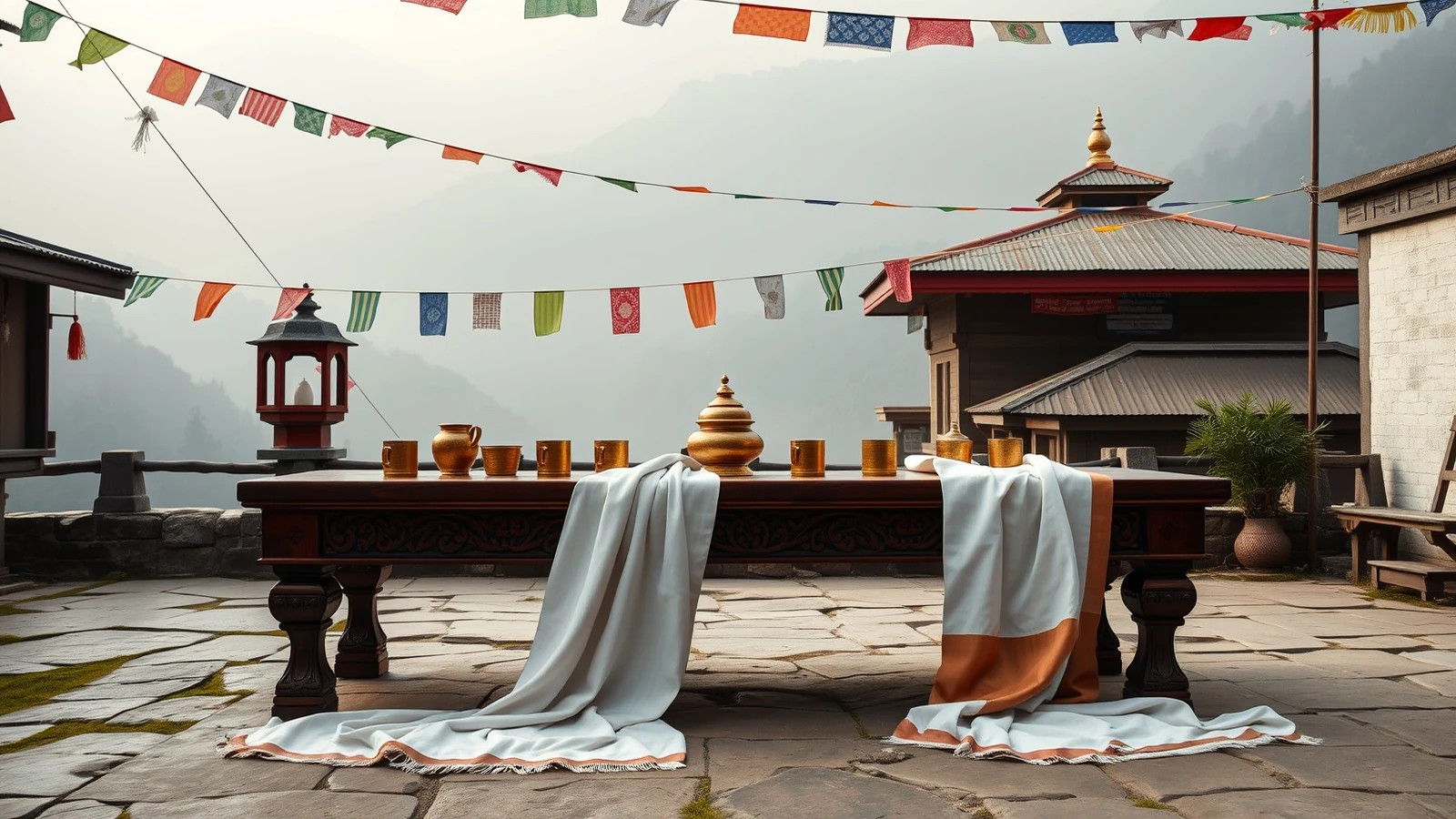
Sikkimese wedding decor draws on the Buddhist and mountain setting: prayer flags, white khadas, brass and copper, carved and painted wooden furniture, and the mountains themselves as a backdrop. A daylight ceremony on a hotel lawn facing the peaks, when the weather is clear, is the photograph most destination couples come for. Mountain views are often hidden by cloud by late morning, so plan portraits for early in the day.
What drives the cost
A destination wedding in Sikkim costs more per guest than a city wedding, mainly because of travel: flights to Bagdogra, the long drive in hired vehicles, and rooms in a town with limited premium inventory. Decor and production are usually modest because much of it must come from Siliguri or further. Our destination wedding guest guide covers guest travel, and our guide to hill station wedding venues compares other mountain destinations.
Related Himalayan traditions
Sikkim’s Bhutia customs share much with those of Ladakh, from the khada to the barley and millet beer. Our Ladakhi wedding traditions guide covers the western Himalaya.
Mixed weddings
Marriages between Sikkim’s communities, and between Sikkimese and people from elsewhere, are common. A Bhutia and a Nepali family, for example, may hold Buddhist prayers and a Hindu ceremony on different days, with a joint feast. The khada is the easiest custom for any family to share, and offering one to the couple is a gesture every guest can make.
What to settle beforehand
- Which communities’ customs will be followed, and in what order.
- The lama or ritual specialists, and the dates they fix.
- Traditional dress for the bride, the groom and the families.
- The feast, chhaang and alternatives for guests who do not drink.
- Permits and travel for guests from outside Sikkim.
Frequently Asked Questions
What is a Bhutia wedding like?
A Buddhist wedding with dates fixed by a lama, prayers for the couple, white khada scarves from every guest, and a feast with chhaang, momos and dancing.
What is a khada?
A white silk scarf offered as a sign of respect and good wishes. Guests place khadas around the necks of the bride and groom.
What do Bhutia brides wear?
A brocade bakhu over a silk honju, with gold, turquoise and coral jewellery. Married women wear the striped pangden apron.
Who conducts a Lepcha wedding?
Traditionally the bongthing and the mun, the ritual specialists of the Lepcha faith, though many Lepcha couples also hold Buddhist or church ceremonies.
Do guests need permits for a wedding in Gangtok?
Indian citizens do not need a permit for Gangtok itself. Foreign nationals need a permit for Sikkim, and some areas need further permits, so check the current rules before sending invitations to guests from abroad.
When is the best time for a wedding in Sikkim?
October to December and March to May, avoiding the monsoon and its landslides on the mountain roads.
What is chhaang?
A mildly alcoholic drink of fermented millet, often served in a bamboo tongba with hot water, offered to guests at Sikkimese celebrations.
Can a couple from outside Sikkim marry in a monastery?
Monasteries are religious sites, not wedding venues. Couples from outside usually marry at a hotel or resort and may visit a monastery respectfully as part of the trip.
Sources and further reading
Planning a wedding in Gangtok or bringing Sikkimese and other traditions together? Tell us your dates and guest count and we will send a tailored plan and quote.
Begin Your Engagement
Want a real number for your wedding?
Tell us your city, guest count and dates. Team Velvet Knot will come back within 24 hours with an itemised budget.