Sangeet Performance Ideas: Dance and Entertainment for the Big Night
- Why the sangeet is your family’s stage
- Performance formats that always land
- Choosing songs and building medleys
- Structuring the running order
- Rehearsals, choreographer or DIY
- Props, costumes and coordinating outfits
- MC, games and roast segments
- Coordinating with lighting and stage
- What a sangeet costs
- The running order that keeps a sangeet under two hours
- The audio spec that decides whether any of it lands
- Frequently Asked Questions
- Sources and further reading
The best sangeet performance ideas mix a bride-side vs groom-side face-off, a couple dance, parents and sibling acts, a friends group number and a surprise flash mob. Structure the running order, rehearse early, choose the right medleys, and sync every act with lighting and stage.
Why the sangeet is your family’s stage
The sangeet is the one night where your families stop being hosts and become performers. It is loose, loud and personal in a way the ceremony never can be, which is exactly why guests remember it long after the pheras. A great sangeet is not about professional-grade dancing. It is about grandmothers attempting a hook step, cousins roasting the groom and the couple finally dancing together after months of long-distance planning.
Before you lock a single song, decide what you want the night to feel like. A high-energy Bollywood blowout, an elegant retro evening or an intimate roast among 40 people all call for different acts. If you are still shaping the overall look and flow, our sangeet planning guide walks through timelines, guest count and budget, and our sangeet theme ideas help you anchor the performances to a single visual world.
Performance formats that always land
The strongest sangeet lineups mix a few reliable formats rather than stacking ten similar group dances. Here are the ones that consistently work:
- Bride’s side vs groom’s side face-off: The crown jewel of any sangeet. Each family choreographs a number, then a shared finale where both sides dance together. The friendly rivalry writes its own comedy.
- The couple dance: One slow, romantic song into one upbeat track. Even two left feet look magical here because the emotion carries it.
- Parents’ dance: When the mothers or fathers take the floor, the room goes quiet then erupts. Keep it short and let them enjoy it.
- Sibling and friends group: Usually the most ambitious act, with formation changes and a surprise reveal. This is where the roast energy lives.
- Kids’ act: Nieces, nephews and young cousins doing a 90-second number. Foolproof crowd-pleaser, best placed early before bedtime.
- Surprise flash mob: Guests planted in the crowd who suddenly join a growing dance. Works beautifully as an opener or a mid-show jolt.
- Live band or dhol entry: A live band for the cocktail hour and a dhol player to announce the couple’s entrance add texture that recorded tracks cannot.
Choosing songs and building medleys
Song selection makes or breaks each act. The safest formula is a three-to-four-song medley of 90 seconds each, so no single track outstays its welcome and the choreography keeps surprising the room.
- Bollywood classics: Timeless floor-fillers that every generation knows the words to. Great for family group acts because the aunts and uncles already know the hooks.
- Regional and South Indian hits: For a Hyderabad or Telugu-Tamil crowd, weave in Tollywood and Kollywood chartbusters. They land harder with a home audience than a pure Hindi set.
- Retro: The disco and old-melody era is gold for parents’ acts and a nostalgia segment.
- Current hits: One or two of the year’s biggest party songs keep the younger guests on their feet and the reels fresh.
Assign a signature song to the couple and avoid repeating tracks across acts. Send every performer their cut audio well in advance so nobody rehearses to the wrong edit. Keep the finale a track everyone can flood the floor to.
Structuring the running order
A sangeet lives or dies on pacing. The goal is a rising energy curve with small breathers, not ten back-to-back dances that blur together. A running order that works for most weddings looks like this:
- Opener: A flash mob or a punchy group number to grab attention.
- Kids’ act: Early, while the little ones are still awake.
- Parents’ dance: An emotional high in the first third.
- Face-off round one: Bride’s side, then groom’s side.
- Games or MC segment: A breather to reset energy and let the floor cool.
- Friends and sibling act: The ambitious, roast-heavy showstopper.
- Couple dance: The romantic peak.
- Finale: Both families together, rolling straight into the open dance floor.
Keep the scripted portion under 75 to 90 minutes. Guests came to dance themselves too, and dinner service has to breathe. Print a one-page cue sheet for your MC, DJ and lighting operator so every transition is anticipated, not improvised.
Rehearsals, choreographer or DIY
Start rehearsals four to six weeks out. Ambitious formation-heavy acts need eight. The single biggest sangeet failure is under-rehearsing, and it always shows on the night.
Deciding between a professional choreographer and a DIY approach comes down to time, group size and how polished you want it to look. A choreographer earns their fee when you have large groups, complex formations or performers who need serious hand-holding. They handle steps, counts, spacing and a proper final rehearsal on the actual stage. DIY works well for small, confident groups doing a simple two-song set. Our breakdown of wedding choreographer cost in India helps you decide what is worth outsourcing.
Whichever route you pick, schedule a full dress run on the venue stage a day or two before. Rehearsing in a living room and performing on a raised, lit stage with a live crowd are two very different experiences, and the stage run catches spacing and entry-exit problems before they become live mistakes.
Props, costumes and coordinating outfits
Props and costumes turn a decent dance into a memorable one. Think LED sticks and cold-spark friendly accents for high-energy numbers, dupattas and canes for retro acts, placards for the roast segment, and colour-coded outfits so each act reads as a unit from the back of the hall.
Coordinate palettes across acts so photos look cohesive rather than chaotic. A common approach is to give each family a signature colour for the face-off, which instantly makes the rivalry legible on camera. For guidance on what flatters under stage lighting and photographs well, see our sangeet outfit ideas. Comfort matters as much as looks here. Anyone dancing needs to move, breathe and not worry about a pin coming loose mid-formation.
MC, games and roast segments
The MC is the glue between acts. A good host fills the gaps while the next group lines up, keeps energy high and knows when to cut a segment that is dragging. Brief them thoroughly on names, running order and any inside jokes they can safely use.
Games between acts give the stage crew time to reset and pull guests into the fun. Reliable ones include the shoe game (couple answers who is more likely to, holding up each other’s shoe), a quick dance-off between the two families, and a how-well-do-you-know-the-couple quiz. Keep each game under five minutes.
The roast and video montage are sangeet staples. A three-to-four-minute video of childhood photos, bloopers and messages from friends who could not attend hits every emotional note. If you script a roast, keep it warm. The best ones tease without embarrassing, and always end on genuine affection.
Coordinating with lighting and stage
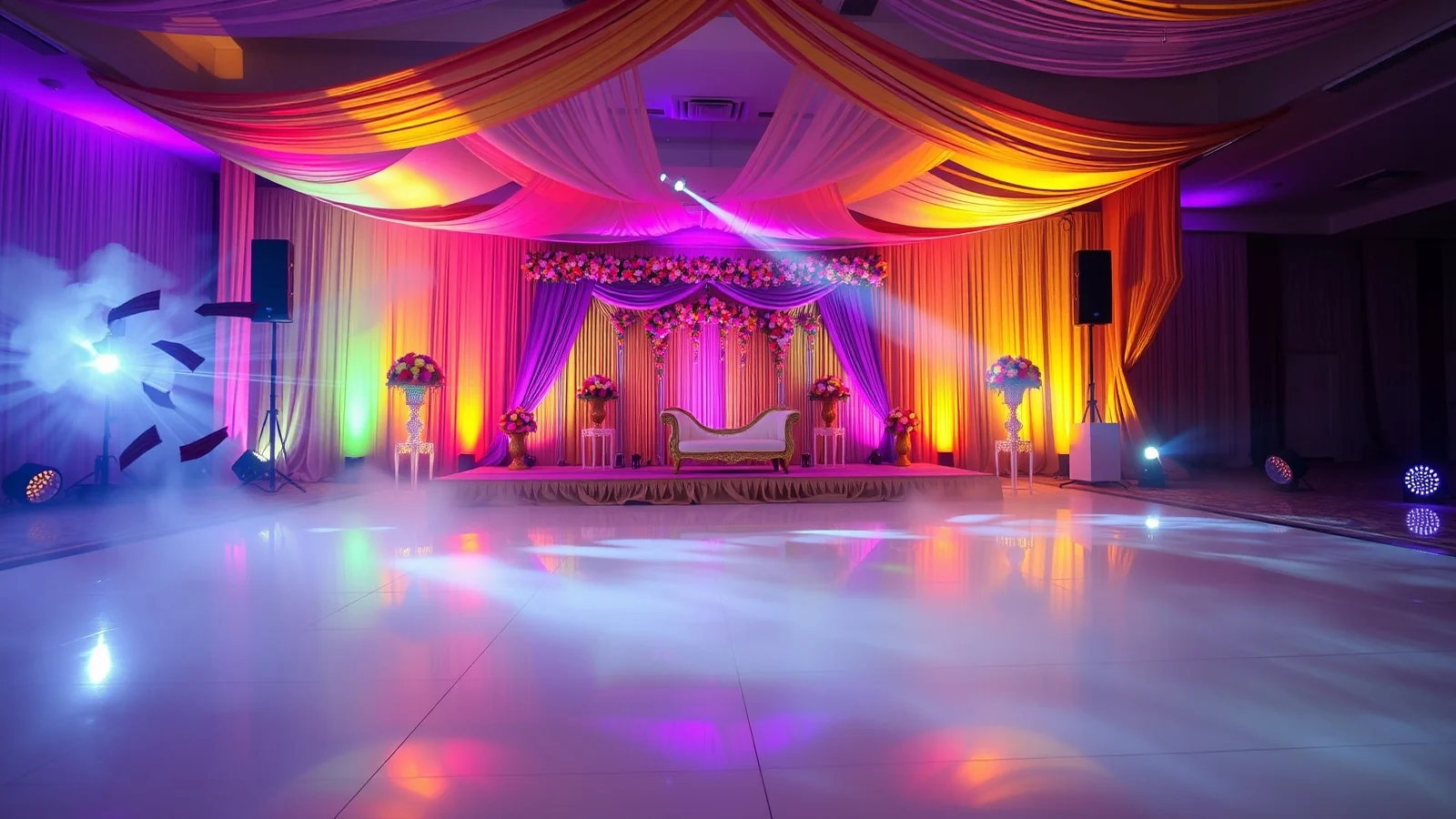
The difference between a home-video sangeet and a produced show is almost entirely lighting and stage cues. Every act should have a lighting look assigned in advance: a soft warm wash for the parents’ dance, punchy colour chases for the group numbers, a tight spotlight for the couple dance, and a full blackout-to-reveal for the flash mob.
Walk your lighting and sound operators through the cue sheet during the stage rehearsal so they know exactly when to shift looks, drop the spotlight or trigger effects. Our wedding lighting ideas cover the setups that photograph best, and if you are building the sangeet around a bigger visual concept, our wedding theme ideas tie the stage, decor and performances into one look.
Planning a full sangeet with this many moving parts is exactly where a flat-fee planner earns their keep. If you want the running order, choreography, lighting and stage handled as one coordinated show, get a quote and we will build the night around your family.
Planning a luxury wedding?
Tell us your dates and vision. Team Velvet Knot will put together a tailored plan and an honest budget.
What a sangeet costs
The running order that keeps a sangeet under two hours
The single most common sangeet failure is length. Families rehearse for weeks, everyone
wants their turn, and by the eleventh performance the guests are at the bar and the couple
are watching an empty floor. A sangeet is a show, and a show needs an edit.
| Slot | Who | Keep it to | Why it sits here |
|---|---|---|---|
| Opening | Cousins or the youngest performers | One number | High energy while the room is still filling and forgiving |
| Early block | Friends of the couple | Two to three numbers | The crowd is warm and attention is at its peak |
| Parents and elders | Both families | One each | The emotional high point, and it must not land after people have drifted |
| Interval | Nobody | A short break | Guests need it, and it resets attention for the second half |
| The couple | Bride and groom | One number | The thing every guest came to see, so it goes late but not last |
| Finale | Everyone on the floor | One medley | Ends the show and turns the room into a party rather than an audience |
Two rules make this work. Cap the number of performances before rehearsals start, because
cutting an act that has already rehearsed for a month is a family problem you do not want. And put the open dancing immediately after the finale rather than at the end of a long tail
of solo acts, so the show closes on its own high point.
The audio spec that decides whether any of it lands
Choreography gets months of attention and sound gets none, which is why so many sangeet
videos are unwatchable. The requirements are simple and worth writing into the vendor
brief.
- Send every track in advance, in order, labelled. A phone handed to the
DJ between acts is how a performance starts to the wrong song. One person owns the playlist
and the running order, and it is tested before guests arrive. - Get a proper sound check on the actual stage. Not in the afternoon with
an empty room, which sounds nothing like a full one, but as close to the event as the
schedule allows. - Two radio microphones minimum for the MC and speeches, plus a spare. Speeches on a handheld passed around a table are inaudible three rows back and unusable in
the film. - Agree the monitor arrangement. Performers need to hear the track on
stage. Without a monitor they drift off the beat and nobody on stage knows why. - Brief the lighting operator with the running order. A cue sheet that
matches the acts is the difference between a show and a room with lights on.
One scheduling constraint worth confirming early: amplified sound at night is legally
restricted in India and enforcement varies by city and venue. It bears directly on when a
sangeet can start and when it must wind down, and we cover the detail in our
baraat and procession guide. Ask the venue
what applies on your date before the running order is fixed.
Frequently Asked Questions
How long should a sangeet performance segment be?
Keep the scripted performances to 75 to 90 minutes total, with each act running two to four minutes. Anything longer and guests start checking phones instead of the stage. Leave plenty of time afterward for the open dance floor, which is often the part people enjoy most.
How many weeks before the wedding should we start rehearsing?
Start four to six weeks out for simple acts and eight weeks for large groups with complex formations. Always schedule one full dress rehearsal on the actual venue stage a day or two before, since dancing on a lit, raised stage is very different from practising in a living room.
Do we need a professional choreographer for the sangeet?
Not always. A choreographer is worth it for big groups, intricate formations or performers who need structured guidance. Small, confident groups doing a two-song set can manage DIY with online tutorials. Many families hire a choreographer only for the ambitious face-off and group acts.
What is the best song mix for a sangeet?
Build three-to-four-song medleys of about 90 seconds each, mixing Bollywood classics everyone knows, one or two current party hits, and regional or Tollywood tracks for a South Indian crowd. Give the couple a signature song and avoid repeating the same track across different acts.
What performance formats work best at a sangeet?
The reliable winners are a bride-side vs groom-side face-off, a couple dance, a parents’ dance, a friends and sibling group act, a short kids’ act and a surprise flash mob. Mixing formats keeps the energy varied instead of stacking ten similar group dances.
How do we coordinate performances with the lighting and stage?
Assign each act a specific lighting look in advance, such as a warm wash for parents, colour chases for group numbers and a spotlight for the couple dance. Give your lighting and sound operators a printed cue sheet and walk them through it during the stage rehearsal.
Sources and further reading
Begin Your Engagement
Want a real number for your wedding?
Tell us your city, guest count and dates. Team Velvet Knot will come back within 24 hours with an itemised budget.