Indian Jewish Wedding Traditions: Bene Israel, Cochin and Baghdadi Weddings
- India’s Jewish communities
- The elements every Jewish wedding shares
- Bene Israel weddings
- Cochin Jewish weddings
- Baghdadi Jewish weddings
- The food
- Synagogues and venues
- The legal side
- The bride’s and groom’s dress
- The ketubah as a keepsake
- Interfaith weddings
- A sample wedding
- Music and dancing
- Photography in a synagogue
- City by city
- Heritage and memory
- What to settle beforehand
- Frequently Asked Questions
- Sources and further reading
India has three historic Jewish communities: the Bene Israel of the Konkan coast and Mumbai, the Cochin Jews of Kerala and the Baghdadi Jews of Mumbai and Kolkata. Their weddings keep the universal Jewish elements: the ketubah marriage contract, the chuppah canopy, the seven blessings and the breaking of the glass. Around them sit Indian customs, such as the Bene Israel mehendi night and the malida offering, and the Cochin Jews’ wedding songs in Judeo-Malayalam.
India’s Jewish communities
Jews have lived in India for many centuries, and the country is known for having been free of the persecution Jews faced elsewhere. There are three main historic communities, each with its own origins, language and customs.
- The Bene Israel, the largest, whose tradition holds that their ancestors were shipwrecked on the Konkan coast long ago. They lived in villages along the coast, many as oil pressers, and later moved to Mumbai, Thane and Pune. They speak Marathi and have absorbed many Maharashtrian customs.
- The Cochin Jews of Kerala, Malayalam-speaking, with a history on the Malabar coast going back many centuries. Their Paradesi Synagogue in Kochi, built in 1568, is one of the oldest active synagogues in the Commonwealth. Most of the community emigrated to Israel in the 1950s.
- The Baghdadi Jews, who arrived from Iraq and the Middle East from the late eighteenth century, settling in Mumbai and Kolkata as traders, and who built synagogues such as Maghen David in Kolkata, completed in 1884.
Most Indian Jews emigrated to Israel after 1948, and the communities in India today are small, centred on Mumbai and Thane, with smaller groups in Kolkata, Kochi, Pune and Ahmedabad. A Jewish wedding in India is therefore rare and treasured. Customs vary between communities and families, so treat what follows as the common pattern.
The elements every Jewish wedding shares
| Element | What it is |
|---|---|
| Ketubah | The marriage contract, setting out the husband’s obligations, signed before witnesses and read during the ceremony. |
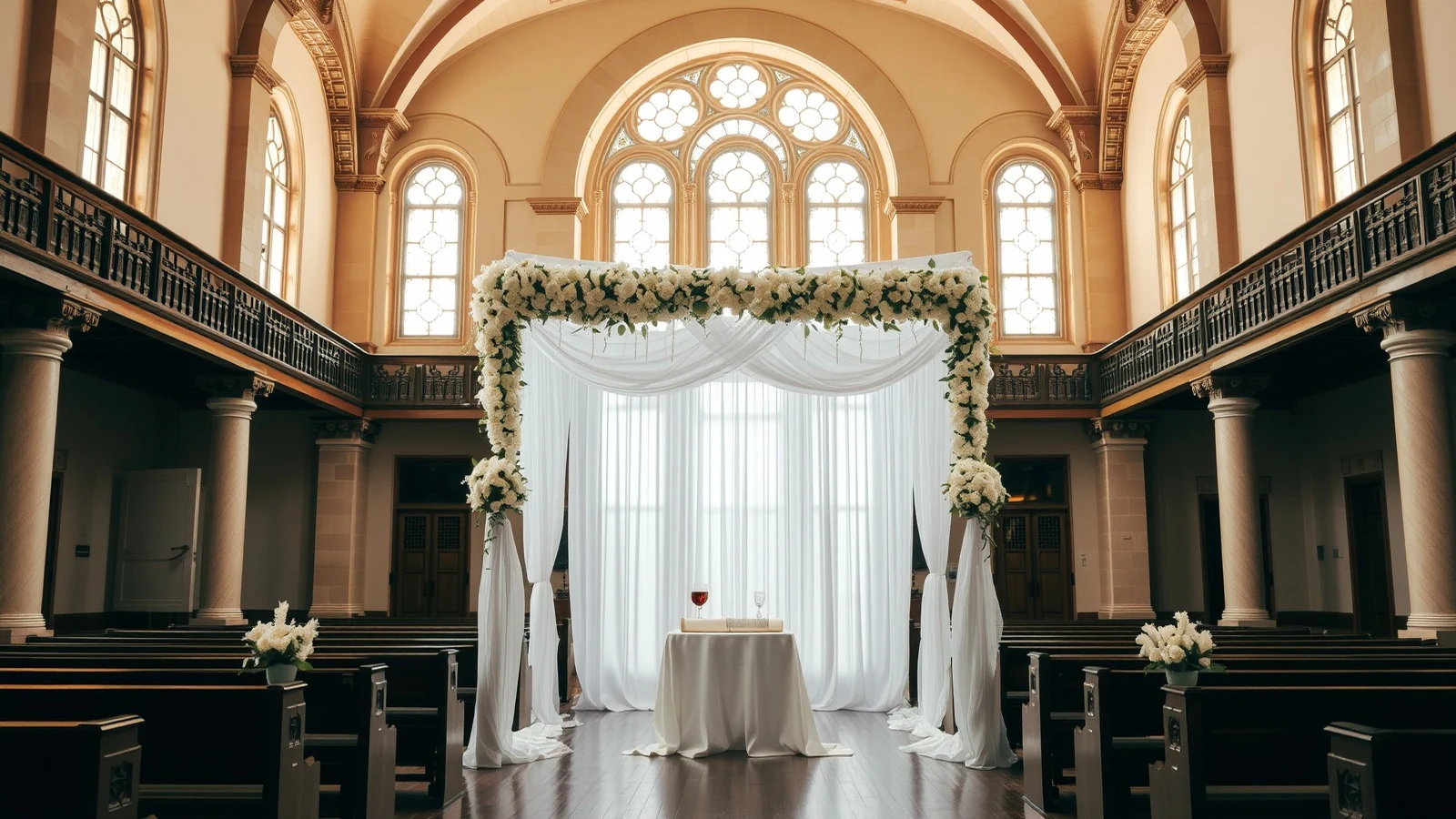
| Chuppah | The canopy under which the couple stand, representing their new home. |
| Kiddushin | The betrothal, when the groom gives the bride a ring and says the formula of marriage. |
| Sheva brachot | The seven blessings recited over wine. |
| Breaking the glass | The groom breaks a glass at the end of the ceremony, remembering the destruction of the Temple, and the guests call out “mazal tov”. |
The ceremony is conducted by a rabbi or, where no rabbi is available, by a qualified member of the community, with two witnesses. Indian Jewish communities have long had to manage without resident rabbis at times, and their own leaders and cantors have kept the traditions going.
Bene Israel weddings
Bene Israel weddings combine the Jewish ceremony with customs absorbed from centuries of life on the Konkan coast. Two are especially distinctive.
The malida. The malida is a thanksgiving offering associated with Eliyahu Hannabi, the prophet Elijah, who holds a special place in Bene Israel tradition. A platter of flattened rice, poha, mixed with grated coconut, sugar and spices, is arranged with fruit, flowers and sweets, prayers and songs are offered, and the malida is shared. It is held at many joyful occasions, including before a wedding, to give thanks and seek blessing.
The mehendi night. Like their Maharashtrian neighbours, Bene Israel families hold a mehendi ceremony before the wedding, when henna is applied to the bride, and often a small amount to the groom, with songs, food and family gathered. Many families also have the bride wear a white saree or a white gown for the ceremony, and a coloured saree for other events.
Cochin Jewish weddings
Cochin Jewish weddings were famous for their music: the women sang wedding songs in Judeo-Malayalam, a form of Malayalam with Hebrew words, over the days of celebration. The songs, which have been recorded and studied, praise the bride and groom and tell stories from the Bible. The weddings themselves were elaborate, with processions, the ceremony in the synagogue, and feasts. Most Cochin Jewish weddings today take place in Israel, where the community preserves its songs and customs, and the synagogues of Kochi are cared for as heritage sites.
Baghdadi Jewish weddings
Baghdadi Jewish weddings follow the customs of the Iraqi Jewish tradition, with Arabic and Hebrew songs and Middle Eastern dishes, adapted over generations in Mumbai and Kolkata. The Baghdadi communities were known for their grand synagogues and for weddings that combined Middle Eastern tradition with the colonial-era social life of the two cities. The Baghdadi community in India today is very small, and most of its weddings take place abroad.
The food
Jewish dietary law, kashrut, governs the wedding food for observant families: kosher meat, no mixing of meat and dairy, and no pork or shellfish. In India, many families have historically kept these rules with local ingredients, and Bene Israel cooking has absorbed Konkan flavours: fish curries, coconut, rice and sweets, alongside the malida. Baghdadi Jewish food includes dishes such as aloo makalla, crisp fried potatoes, and chicken dishes from the Iraqi tradition. Kosher catering in India is limited, so families planning a wedding usually work with the community and the synagogue to arrange the food.
Synagogues and venues
Jewish weddings in India are usually held in a synagogue or in a hall with a chuppah set up for the ceremony, followed by a reception. Mumbai and Thane have the largest number of active synagogues, including historic Bene Israel and Baghdadi synagogues. Synagogues are places of worship with their own rules and communities, so the first step is always to contact the synagogue’s committee. For a reception, any good hotel or hall can be used, as long as the catering meets the family’s dietary requirements.
The legal side
India has no separately codified personal law for Jewish marriages, and the position on how a religious Jewish marriage is recognised is not as clear as for communities with their own statutes. Many couples therefore also register their marriage under the Special Marriage Act, 1954, which gives a clear civil record, especially important if they will live or travel abroad. Take legal advice for your own situation. Our Special Marriage Act guide explains the notice period and the process.
The bride’s and groom’s dress
Many Indian Jewish brides wear a white gown or a white saree for the ceremony under the chuppah, and a coloured saree, often a silk Paithani or Kanjeevaram among Bene Israel families, for the mehendi and the reception. The groom wears a suit or a sherwani with a kippah, the skullcap, as do the men attending the ceremony; kippot are usually provided at the door. Married women in observant families may cover their hair in the synagogue.
The ketubah as a keepsake
The ketubah is a legal document in Jewish law, but it is also a work of art in many families, written on decorated paper and later framed in the couple’s home. Some Indian Jewish families have kept ketubot from generations of weddings, illuminated with designs that blend Jewish symbols with Indian motifs. Couples can commission a ketubah from a scribe or artist, in Hebrew or Aramaic with an English or Marathi translation, months before the wedding.
Interfaith weddings
Because the community is small, many Indian Jews marry partners from other communities. Whether a Jewish religious ceremony is possible in an interfaith marriage depends on the rabbi and the community, and many couples choose a civil marriage under the Special Marriage Act with a celebration that honours both families’ traditions. Our interfaith wedding planning page covers how we plan such weddings.
A sample wedding
| When | What happens |
|---|---|
| Days before | Malida and family gatherings |
| Night before | Mehendi for the bride (Bene Israel) |
| Wedding day | Signing of the ketubah before witnesses |
| Wedding day | The ceremony under the chuppah: rings, seven blessings, breaking the glass |
| Evening | Reception and dinner with music and dancing |
Jewish weddings are not held on the Sabbath, from Friday evening to Saturday evening, or on certain festivals and fast days. The synagogue or the rabbi will advise on the dates.
Music and dancing
Music at Indian Jewish weddings mixes Hebrew liturgy and songs with the music of each community’s region: Marathi songs and Bollywood hits at Bene Israel celebrations, Judeo-Malayalam songs in the Cochin tradition, and Arabic and Hebrew songs among Baghdadi families, alongside Israeli dances such as the hora, in which guests lift the couple on chairs. A reception band or DJ who can play all of these will make the evening.
Photography in a synagogue
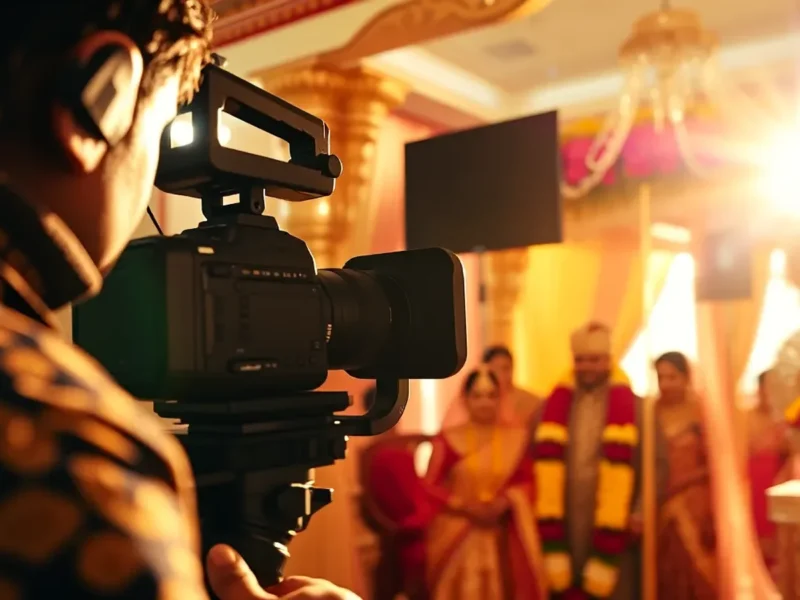
Synagogues have their own rules about photography, and some do not allow it during prayers or on certain days. Ask the synagogue committee in advance, brief the photographer, and plan portraits outside or at the reception. The moments families want are the signing of the ketubah, the couple under the chuppah, the breaking of the glass, and the hora.
City by city
In Mumbai and Thane, the active Bene Israel and Baghdadi communities and synagogues make a full Jewish wedding most practical, and hotels can host receptions with arranged kosher-style catering; see our Mumbai wedding cost guide. In Kochi, the historic synagogues are heritage sites rather than active wedding venues, but the setting draws families with Cochin Jewish roots for heritage visits and celebrations; see our Kochi wedding cost guide. In Kolkata, the restored Baghdadi synagogues are cared for as heritage sites, and the city’s Jewish history can be part of a guest itinerary; see our Kolkata wedding cost guide.
Heritage and memory
For many Indian Jewish families, a wedding in India is also an act of continuity: a link to grandparents’ synagogues, songs and recipes in a country many relatives have left. Families travelling from Israel, the United Kingdom, the United States or Canada sometimes hold a ceremony or a celebration in Mumbai or Kochi for exactly this reason. If that is the plan, contact the synagogue a year ahead, and plan heritage visits to the old synagogues as part of the guest itinerary. Our guide to destination wedding guests covers travel for guests from abroad.
What to settle beforehand
- The synagogue, the rabbi or officiant, and the witnesses.
- The ketubah and its text.
- Kosher catering, arranged with the community.
- Dates that avoid the Sabbath and festivals.
- Civil registration under the Special Marriage Act, if wanted.
- The malida and mehendi, for Bene Israel families.
Frequently Asked Questions
What are the Jewish communities of India?
Three historic communities: the Bene Israel of the Konkan coast and Mumbai, the Cochin Jews of Kerala, and the Baghdadi Jews of Mumbai and Kolkata.
What is the malida?
A Bene Israel thanksgiving offering of flattened rice with coconut, sugar, fruit and flowers, associated with the prophet Elijah and held before weddings and other joyful occasions.
Do Bene Israel weddings have a mehendi ceremony?
Yes. Many Bene Israel families hold a mehendi night before the wedding, a custom absorbed from their Maharashtrian neighbours.
What is a ketubah?
The Jewish marriage contract, setting out the husband’s obligations, signed before witnesses and read at the ceremony. Many couples have it decorated and framed in their home.
Where are Jewish weddings held in India?
Usually in a synagogue in Mumbai or Thane, or in a hall or hotel with a chuppah set up for the ceremony, followed by a reception. Contact the synagogue committee first.
How are Jewish marriages registered in India?
India has no separate codified Jewish marriage law, and many couples also register under the Special Marriage Act, 1954. Take legal advice for your situation.
Can Jewish weddings be held on any day?
No. They are not held on the Sabbath, from Friday evening to Saturday evening, or on certain festivals and fast days. The synagogue or rabbi will advise on suitable dates, which is why the date is usually fixed with them first.
Sources and further reading
Planning a Jewish or interfaith wedding in Mumbai, Kochi or Kolkata? Tell us your dates and guest count and we will send a tailored plan and quote.
Begin Your Engagement
Want a real number for your wedding?
Tell us your city, guest count and dates. Team Velvet Knot will come back within 24 hours with an itemised budget.