Noor Mahal Karnal Wedding Cost 2026: Sheesh Mahal, Lawns and Real Numbers
- The short answer: what a Noor Mahal Karnal wedding costs
- Cost breakdown for a Noor Mahal wedding
- The 16 event spaces, and what each is actually for
- 125 rooms against a 1,000-guest list
- Karnal: the Delhi and Chandigarh middle ground
- A three-day plan at this scale
- Lead times and negotiation
- Planning a Noor Mahal wedding
- Worked example: 800 guests over three days
- Parking and arrival when 600 guests self-drive
- Season and date pressure in the North Indian calendar
- Noor Mahal or a Delhi NCR farmhouse
- Who this venue is wrong for
- Feeding 800 people well
- What is included, and what is charged separately
- Questions worth asking before you sign
- Frequently Asked Questions
- Sources and further reading
A wedding at Noor Mahal, Karnal runs roughly Rs 1 to 3 crore for 500 to 1,000 guests across three days. The Autograph Collection property has 125 rooms and 16 event spaces, including the Sheesh Mahal ballroom at around 2,000 and the Rani Bagh Lawn at around 3,200, which makes it one of the largest wedding venues within driving distance of both Delhi and Chandigarh.
The short answer: what a Noor Mahal Karnal wedding costs
Budget Rs 1 to 3 crore for a three-day wedding with 500 to 1,000 guests. At the lower end that is a large but conventional North Indian wedding. At the upper end it is a full-property event with heavy production.
Noor Mahal exists for a specific kind of wedding: the very large Punjabi or Haryanvi celebration where the guest list is not negotiable and 800 people is normal rather than exceptional. Very few venues in the region take that comfortably. This one does.
Costs move more with the venue and the guest count than with anything else, so it is worth talking to a wedding planner in Chandigarh before the shortlist is fixed.
Cost breakdown for a Noor Mahal wedding
| Line | Typical range | What moves it |
|---|---|---|
| Rooms, 3 nights | Rs 25 to 70 lakh | 125 keys, and reported rates run wide by category |
| Food and beverage | Rs 40 lakh to 1.4 crore | At 800 plus guests this dominates everything |
| Decor and production | Rs 25 lakh to 1 crore | Lawn builds at Rani Bagh scale are the big line |
| Entertainment | Rs 8 to 60 lakh | Punjabi artists at this scale are a real budget item |
| Photography and film | Rs 8 to 30 lakh | Crew size across a large site |
| Transfers | Rs 5 to 20 lakh | Most guests self-drive from Delhi or Chandigarh |
The line that separates a Rs 1 crore wedding here from a Rs 3 crore one is almost always food and entertainment, not the venue.
The 16 event spaces, and what each is actually for
Noor Mahal runs roughly 16 wedding spaces across indoor halls, poolside settings and outdoor lawns.
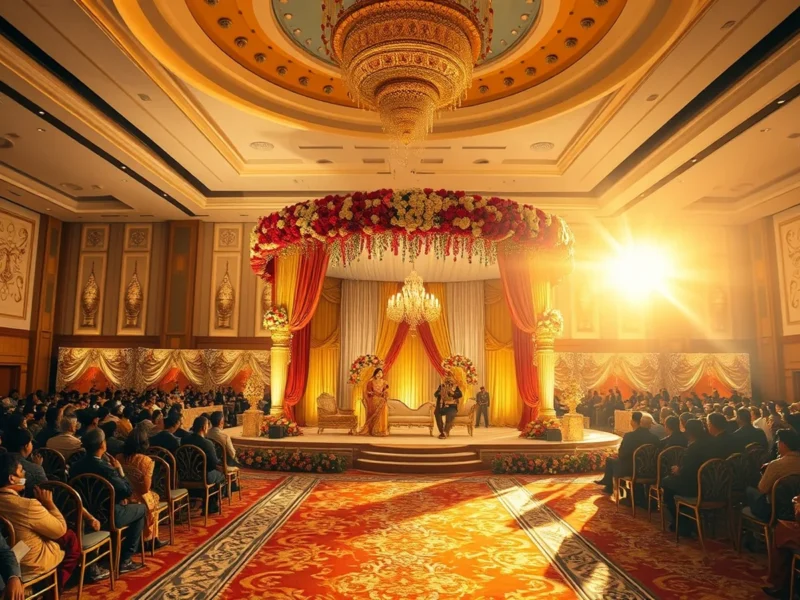
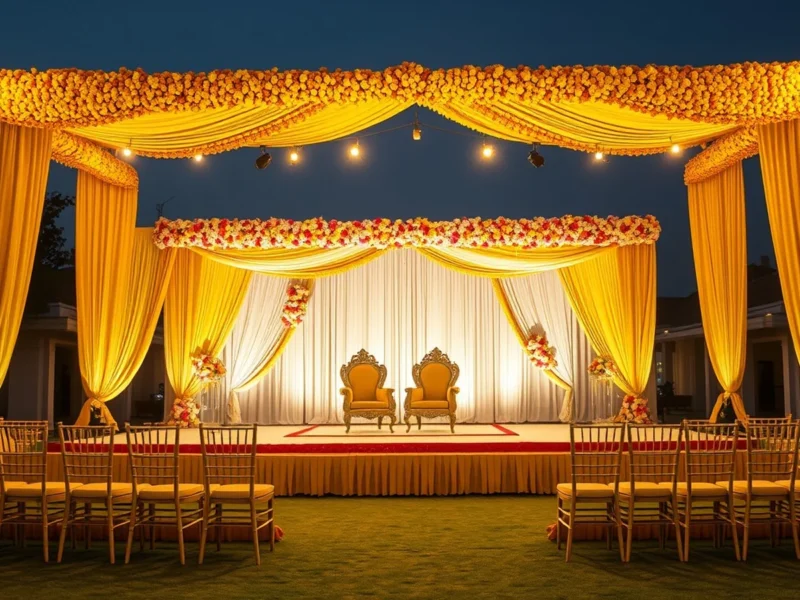
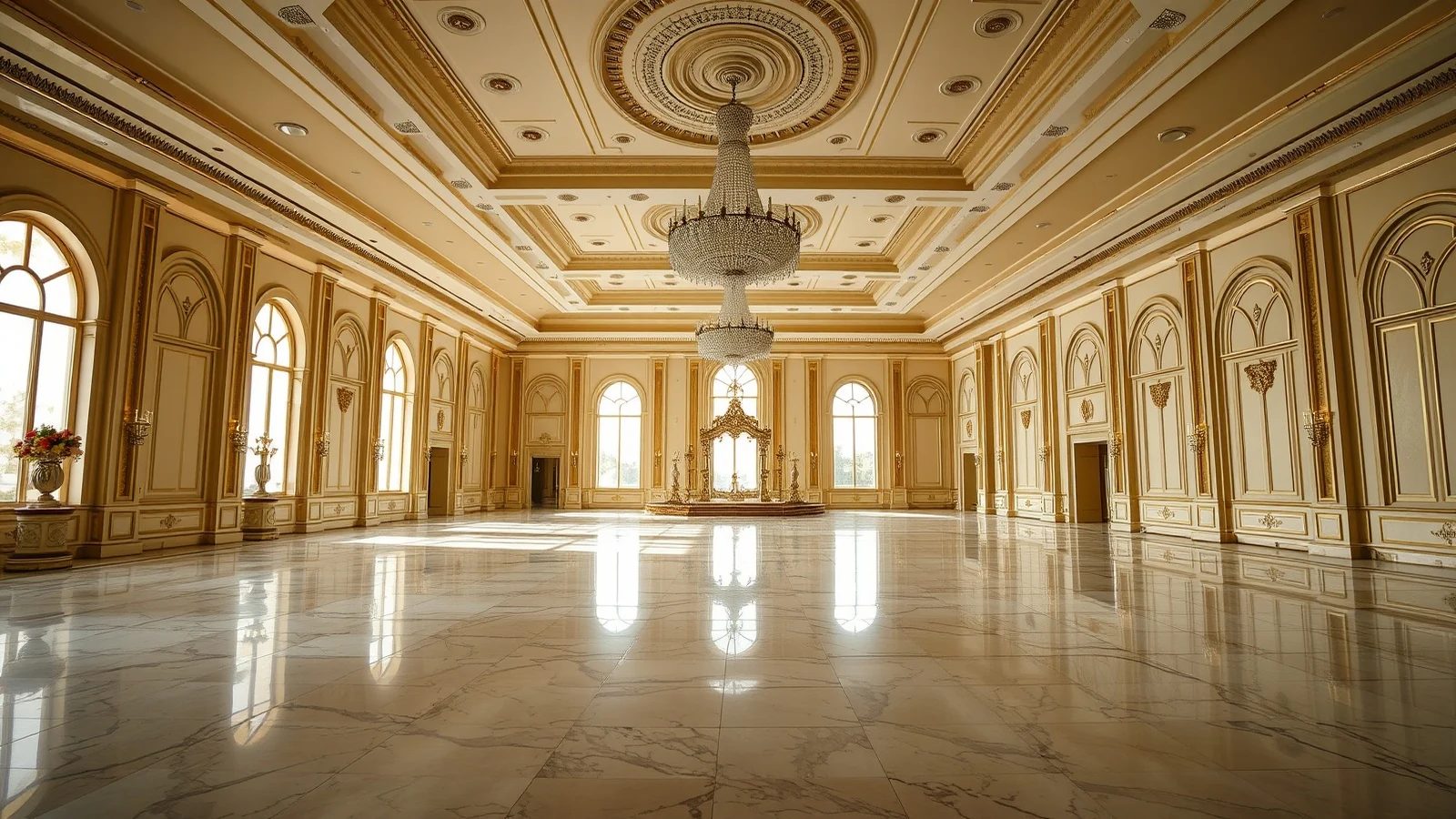
The Sheesh Mahal is the flagship: a large column-free ballroom quoted at around 2,000, which is what makes seated dinners at scale possible without pillars blocking sightlines. The Rani Bagh Lawn is quoted at around 3,200 and is where the very large functions go. Noor-E-Mehtab handles around 500, the Darbar Hall carries the palace-style formality, and smaller rooms such as Rang Mahal at around 150, plus Mischief, The Regal and the Ball Room at around 100 each, cover intimate functions.
The genuinely useful feature is that column-free ballroom. At 800 seated guests, a hall with pillars means a meaningful number of tables cannot see the stage, and that is the complaint families hear about afterwards.
125 rooms against a 1,000-guest list
The hotel has around 125 rooms, with reported rates spanning roughly Rs 9,500 to well over Rs 1 lakh depending on category and season.
That houses roughly 250 people at double occupancy. Against a 1,000-guest wedding, the majority of your guests are not staying on site, and at Noor Mahal that is usually fine rather than a problem, because most guests drive in from Delhi, Chandigarh, Panipat or Ambala for a function and drive home.
This is the structural difference between a Karnal wedding and a Rajasthan destination wedding. Here the room block is for family and genuinely out-of-town guests. There, it is the whole event. Budget accordingly, and do not price this venue as though everybody sleeps over.
Karnal: the Delhi and Chandigarh middle ground
Karnal sits on the NH44 corridor between Delhi and Chandigarh, which is the entire strategic logic of the venue. Families split between the two cities can meet in the middle, and a large proportion of guests will simply drive.
Practically: build parking and arrival management into your plan properly, because a self-driving guest body of 600 people arrives in a much narrower window than a coach schedule does, and the first forty minutes of your function are decided in the car park.
For city comparisons, see our Delhi wedding cost breakdown and the 5-star hotel wedding cost guide.
A three-day plan at this scale
Large weddings here typically run a smaller family function and welcome dinner on day one, mehndi and sangeet on day two using a lawn and a mid-size hall, and the wedding and reception on day three across the Rani Bagh Lawn and Sheesh Mahal.
At 800 plus guests, service timing is the thing that decides whether the evening works. Food service for that many people takes materially longer than families expect, and a schedule that allocates the same time it would for 250 guests will run an hour late by the reception.
Lead times and negotiation
The North Indian peak wedding season concentrates demand hard into a handful of dates, and Noor Mahal is a known name. For a saubhagya date in season, twelve months is not early. Off-peak and weekday dates are dramatically easier and cheaper.
Your leverage is the food and beverage commitment, because at this guest count that is the venue’s main revenue rather than rooms. Settle the per-plate structure and what is included before discussing anything else.
Planning a Noor Mahal wedding
A thousand-guest wedding is an operations problem before it is a design problem. Parking, service timing, guest flow between spaces and a plan for the fifty people who arrive two hours late all matter more than the centrepieces.
Velvet Knot plans weddings at this scale and takes the coordination off the family entirely. Send your dates and guest count through our enquiry form and we will come back with an itemised estimate. See also our wedding venue cost guide and the wedding planner cost guide.
Worked example: 800 guests over three days
A concrete version, peak season, 100 of the 125 rooms held for two nights, most guests driving in for individual functions.
| Line | Assumption | Cost |
|---|---|---|
| Rooms | 200 room-nights at an average of Rs 18,000 | Rs 36 lakh |
| Food and beverage | 800 guests, 6 services, Rs 2,600 average per plate | Rs 1.25 crore |
| Decor and production | Rani Bagh lawn build plus Sheesh Mahal setup | Rs 55 lakh |
| Entertainment | Punjabi artist, live band, DJ across three nights | Rs 35 lakh |
| Photography and film | Three teams across a large site | Rs 16 lakh |
| Logistics, parking, guest management | Valet, marshals, signage | Rs 9 lakh |
| Total | about Rs 2.76 crore |
Food is 45 percent of that total, which is the defining characteristic of a very large North Indian wedding. Every conversation about saving money here is really a conversation about guest count or about the number of services, not about decor.
Parking and arrival when 600 guests self-drive
This is the operational detail that separates a Karnal wedding from a destination one, and it is almost never in anybody’s budget.
Six hundred guests arriving by car is roughly 250 to 350 vehicles landing inside a ninety-minute window. Without marshals, a valet operation and clear signage from the highway, your function starts late regardless of how good everything else is, because the first impression of your wedding is a queue.
Three things worth budgeting explicitly. Valet capacity sized to the peak arrival rate, not the total. Marshals on the highway approach, because NH44 at speed with a turning wedding convoy is a genuine safety matter. And a separate drop-off for elderly guests that does not queue behind the main flow.
The same logic applies at the end of the night. Six hundred people leaving at once is a longer operation than arriving, because nobody leaves on a schedule.
Season and date pressure in the North Indian calendar
The North Indian wedding calendar concentrates demand into a small number of auspicious dates, and Noor Mahal is a recognised name across Haryana, Punjab and Delhi NCR. On a peak saubhagya date the property is competing for itself.
Twelve months out is not early for such a date. Conversely, a weekday in an off-peak month can often be secured within four months and at a materially better rate, because the venue’s alternative is an empty lawn.
If your family is flexible on the date at all, that flexibility is worth more here than at almost any other venue type, because the demand curve is so sharply peaked. A two-day shift can move the total meaningfully.
Noor Mahal or a Delhi NCR farmhouse
Most families considering Noor Mahal are also looking at the Chattarpur and Gurgaon farmhouse belt, and the two options behave very differently.
A farmhouse keeps guests close to home, which suits a wedding where almost everybody is Delhi-based. It usually means bringing in everything, catering, furniture, power, and the flexibility that offers is real. So is the coordination burden.
Noor Mahal is a full-service hotel. Kitchen, rooms, staff and power are the venue’s problem rather than yours, which materially reduces the number of vendors you manage. The trade is a two-hour drive from Delhi and a venue that is not exclusively yours.
The honest deciding question is where the guests are. If your list is genuinely split between Delhi and Punjab or Chandigarh, Karnal is the fair meeting point and a farmhouse is not. If ninety percent of your guests live in Delhi NCR, asking them to drive two hours each way for three functions will cost you attendance no matter how good the venue is.
Who this venue is wrong for
Noor Mahal is built for scale, and scale is not what every family wants.
An intimate or design-led wedding. At 150 guests you are renting a fraction of a very large venue, and the experience will feel like a small event inside a big hall. Smaller properties will do it better.
A destination wedding where guests stay for three days. With 125 rooms against a four-figure guest list, this venue works because most people drive home. If you want the shared multi-day residential experience, a Rajasthan property is the right model.
A family that wants exclusivity. Across 16 spaces, concurrent events are normal. If the thought of another wedding running on the same evening bothers you, ask about exclusivity early and expect it to cost.
Where it is genuinely the right answer: a very large North Indian wedding, a guest list that will not be cut, families split between Delhi and Chandigarh, and a preference for guests driving in rather than flying. On those criteria few venues in the region compete.
Feeding 800 people well
At this guest count, food is nearly half the budget and almost all of the memory. Three things decide whether it works.
Counter design. Live counters are what guests remember, and they are also where queues form. The ratio of counters to guests matters more than the number of dishes. Eight well-staffed counters beat fourteen understaffed ones.
Service sequencing. Ask the kitchen how long a full service actually takes at your guest count, then build the schedule backwards from that number rather than from when you would like dinner to start.
The vegetarian split. Get the ratio right and confirm it affects the rate. At 800 guests, an assumption that is ten percent out is a meaningful sum and a visible shortage on the night.
The venue has fed this many people many times. Ask directly for their operational advice rather than only their menu, because the useful expertise sits with the banquet team rather than the sales team.
What is included, and what is charged separately
At a venue built for volume, the per-plate structure is the contract. Everything else is secondary.
Usually included: the hall or lawn for contracted hours, banquet furniture, standard lighting and sound, service staff, and house crockery and linen.
Usually charged separately: extended hours, outside decor and production access, additional power, bar and corkage, valet and parking operations at scale, and taxes and service charge.
Interrogate the per-plate number carefully. Ask what counts as a service, whether live counters are included or extra, what the vegetarian and non-vegetarian split does to the rate, and whether children and staff are charged. At 800 guests, a Rs 200 difference per plate across six services is close to Rs 10 lakh.
Questions worth asking before you sign
What is the guaranteed minimum guest count we are billed for, regardless of attendance? At large venues this is standard and it is negotiable.
How many other events will run concurrently across the 16 spaces, and will our guests share access routes or parking with them?
What is the actual parking capacity, and is valet included or an extra line?
What is the service ratio per table, and does it change for the lawn versus the ballroom?
Is the Sheesh Mahal held as our wet-weather alternative if the Rani Bagh function is rained off, and at what cost?
What is the kitchen’s realistic service time for our guest count, function by function?
That final question is the most useful one on the list and almost nobody asks it. The honest answer determines your entire schedule, and a venue that has served 800 people many times will give you a real number if you ask directly.
Frequently Asked Questions
How much does a wedding at Noor Mahal Karnal cost?
Roughly Rs 1 to 3 crore for a three-day wedding with 500 to 1,000 guests. Food and entertainment, not the venue, decide where in that range you land.
How many guests can Noor Mahal hold?
The Rani Bagh Lawn is quoted at around 3,200 and the Sheesh Mahal ballroom at around 2,000. Across 16 spaces the property handles anything from about 20 guests to well over a thousand.
How many rooms does Noor Mahal have?
Around 125, housing roughly 250 guests at double occupancy. Most guests at a Karnal wedding drive in rather than stay over.
Where is Noor Mahal and how do guests reach it?
Karnal, Haryana, on the NH44 corridor between Delhi and Chandigarh. Most guests self-drive from either city or from Panipat and Ambala.
How far ahead should we book?
Twelve months for a peak-season auspicious date. Weekday and off-season dates are far easier and cheaper.
Sources and further reading
Begin Your Engagement
Want a real number for your wedding?
Tell us your city, guest count and dates. Team Velvet Knot will come back within 24 hours with an itemised budget.